

Despite a year of regulatory easing in the United States, cryptocurrencies across the board have seen their values depreciate sharply during US President Donald Trump’s first year in office.
What was at first a highly anticipated positive shift for crypto turned out to generate more losses than wins for investors. The biggest winner of crypto’s deeper integration into traditional finance seemed to be the President himself.
Crypto Optimism in Washington
The crypto community entered January 2025 with heightened expectations as Trump prepared for his return to the White House.
Sponsored
Sponsored
On the campaign trail, he branded himself a “Bitcoin president” and pledged to make the United States the world’s crypto capital. Those statements raised industry optimism, which intensified further when Trump launched his own meme coin just two days before his inauguration.
To a degree, Trump has followed through on those commitments.
Almost immediately, he appointed a crypto czar and installed a crypto-friendly chair at the helm of the Securities and Exchange Commission (SEC). He also signed the Genius Act into law, marking the first federal legislation to regulate any segment of the crypto industry.
To a degree, expectations were modest to begin with.
Years of criticism directed at the Gensler-led SEC and its regulation-by-enforcement approach had left many in the industry willing to welcome almost any shift in direction.
Trump’s vocal backing of crypto has also remained consistent. Speaking this week at the World Economic Forum in Davos, he reiterated his support and pointed to expectations surrounding the potential passage of the Clarity Act.
Still, as Trump highlighted his administration’s achievements, the cryptocurrency market continued to register losses, with prices trending lower.
Sponsored
Sponsored
Crypto Prices Slide Despite Regulatory Progress
In an assessment of price performance among leading cryptocurrencies, BeInCrypto found that all major assets have recorded negative returns over the past year. At the time of writing, Bitcoin was down 13.4% since January, while Ethereum had declined by just under 9%.
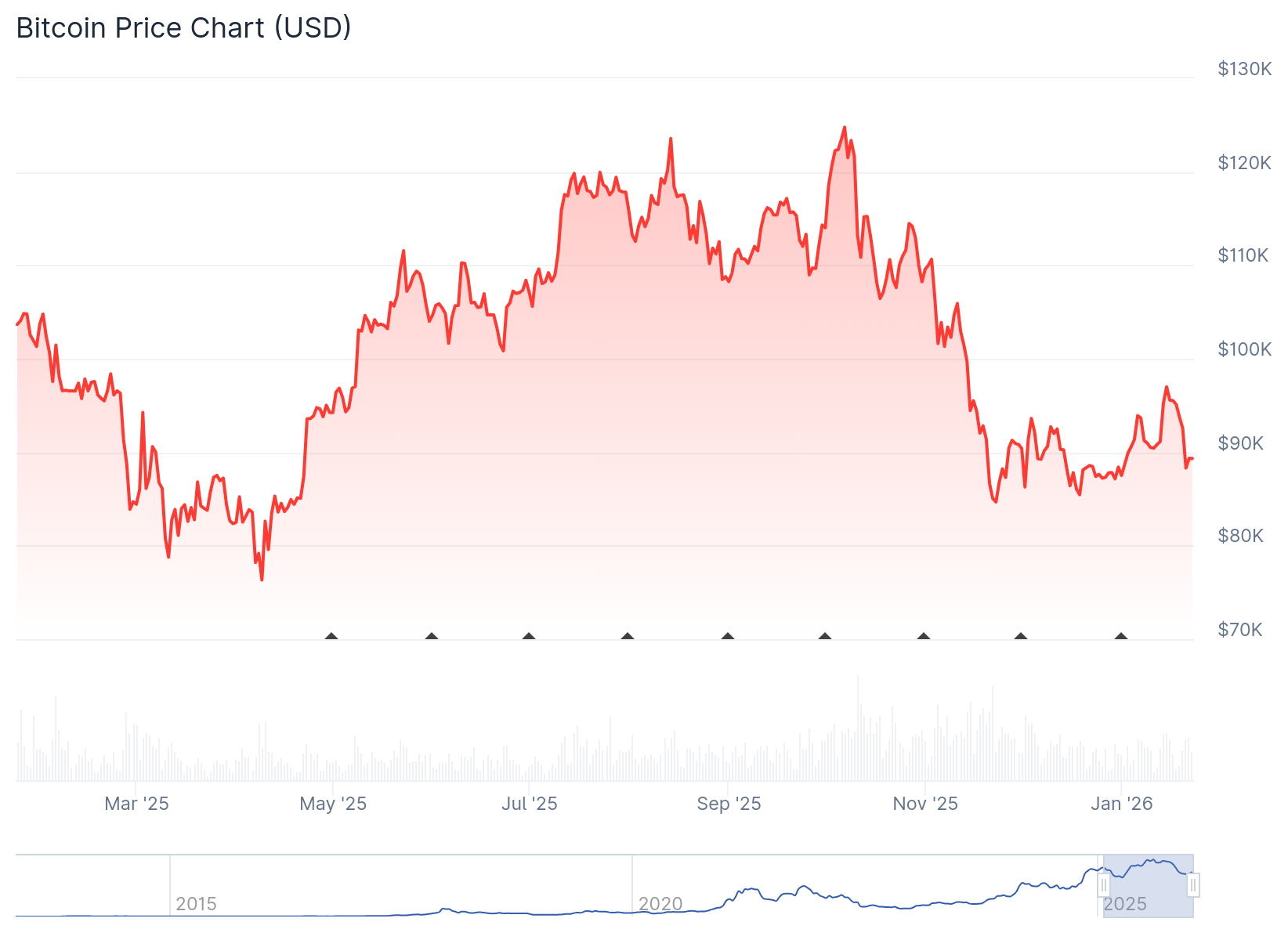
Other altcoins performed considerably worse.
Ripple’s XRP fell by 39%, Solana’s SOL dropped roughly 50%, and Cardano’s ADA declined by 63%.
These figures suggest that, despite the regulatory momentum the crypto industry gained in 2025, broader forces have continued to weigh on market performance.
As with equities, Trump’s tariff policies have significantly shaped expectations for sustained, stable growth. Despite meaningful structural progress, crypto remains a largely speculative asset class. In periods of heightened uncertainty, it is often among the first markets to absorb the impact.
Following Trump’s announcement of Liberation Day tariffs last April, Bitcoin slid to $76,300, its lowest level since November 2024. On October 10, after the administration announced a 100% reciprocal tariff on China, Bitcoin fell by 8% to 10% in a single session. The wider crypto market saw billions of dollars in liquidations.
Sponsored
Sponsored
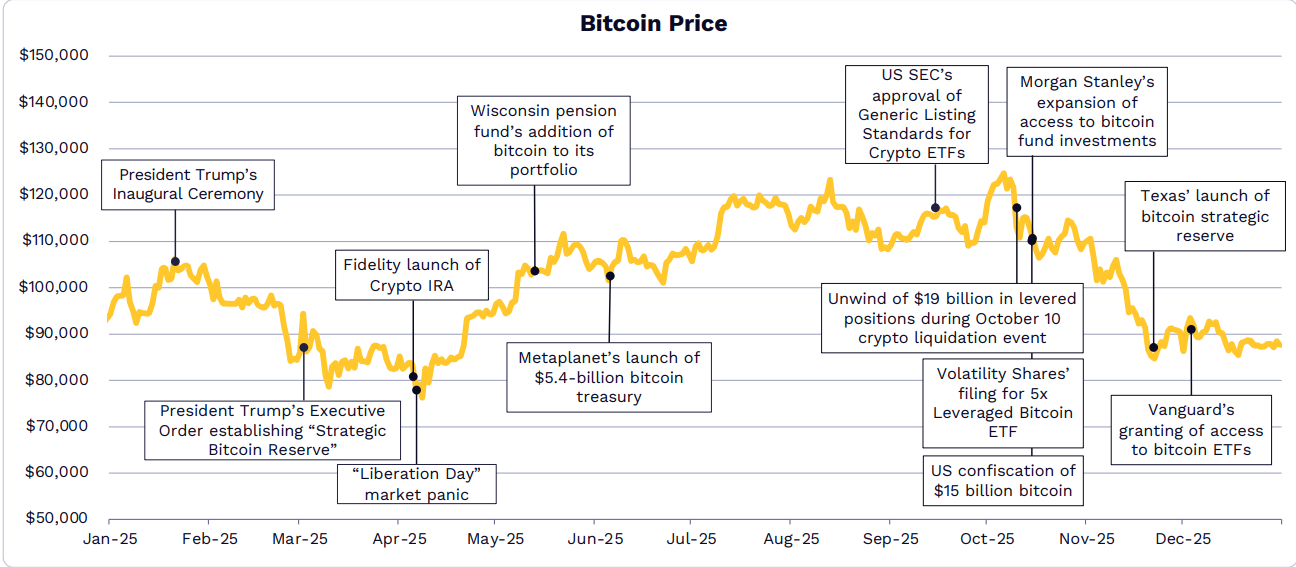
Tariffs alone did not account for this volatility.
Additional pressures, including repeated challenges to the Federal Reserve’s independence and rising geopolitical tensions, have further intensified market swings.
Uncertainty persists over whether the administration will maintain its current trajectory. Should it do so, some crypto investors may begin to reassess the balance between regulatory support and broader macroeconomic risks.
Still, losses have not been universal.
Trump and his family, in particular, have emerged as notable beneficiaries of the sector’s expansion.
Sponsored
Sponsored
Presidential Profits Amid Greater Market Decline
Trump’s investment portfolio became more diversified over the past year, with a notable portion shifting toward crypto-related ventures.
These initiatives have ranged from a namesake meme coin to the decentralized finance platform World Liberty Financial. Members of his family have also participated, launching projects either jointly or independently.
As cryptocurrency valuations declined, Trump’s personal wealth moved in the opposite direction.
According to a recent Bloomberg analysis, the Trump family has generated approximately $1.4 billion from its crypto-related activities. At present, digital assets account for more than 20% of the family’s total wealth.
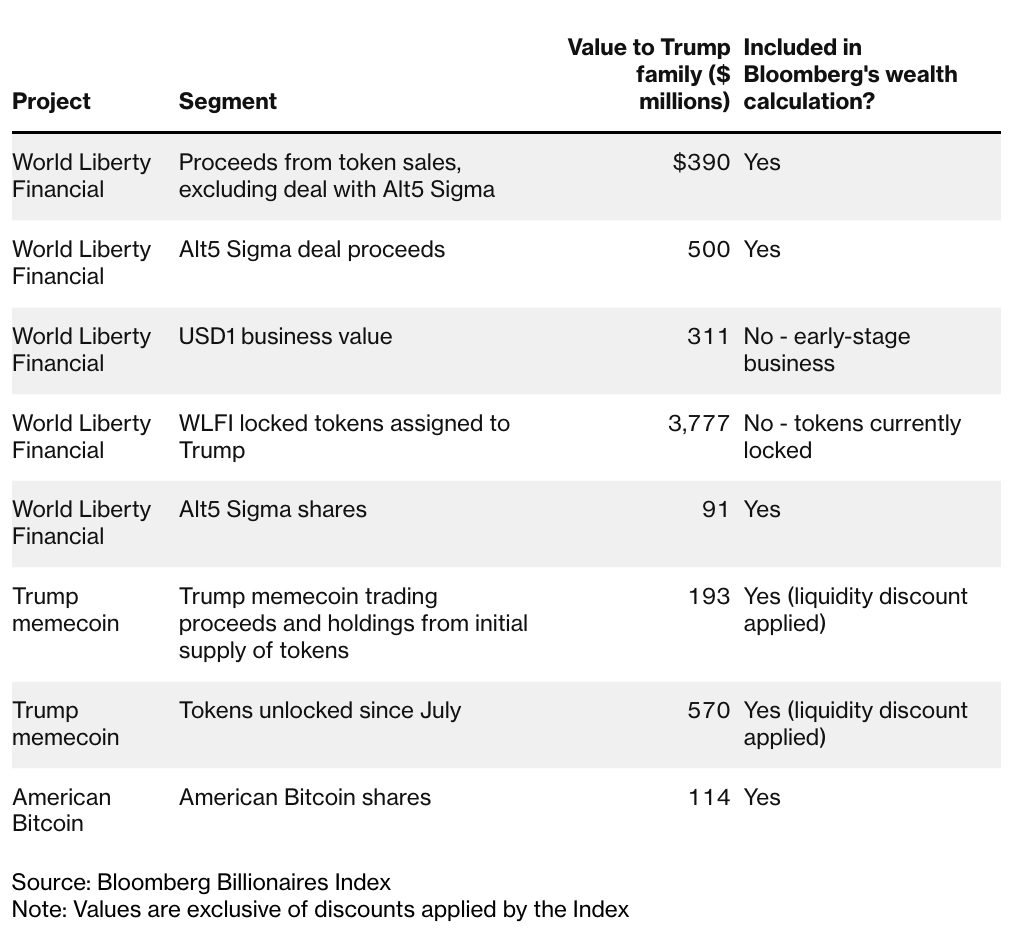
These ventures have not gone unnoticed.
The administration has faced repeated questions about potential conflicts of interest, even as Trump has continued to pursue these projects.
As scrutiny continues and investor losses mount, the scale of Trump’s crypto wealth has stood in stark contrast to the experience of many traders, whose portfolios have suffered significant losses over the past year.