

Bitcoin and Ethereum are trading tightly around key options “max pain” levels as more than $2.2 billion worth of crypto options are set to expire on Deribit.
Meanwhile, traders and investors are bracing for a volatile convergence of two critical macro catalysts later today.
Sponsored
Sponsored
Over $2.2 Billion Bitcoin and Ethereum Options Expire at 8:00 UTC
At the time of writing, Bitcoin was trading near $90,985, almost exactly aligned with its $90,000 max pain level.
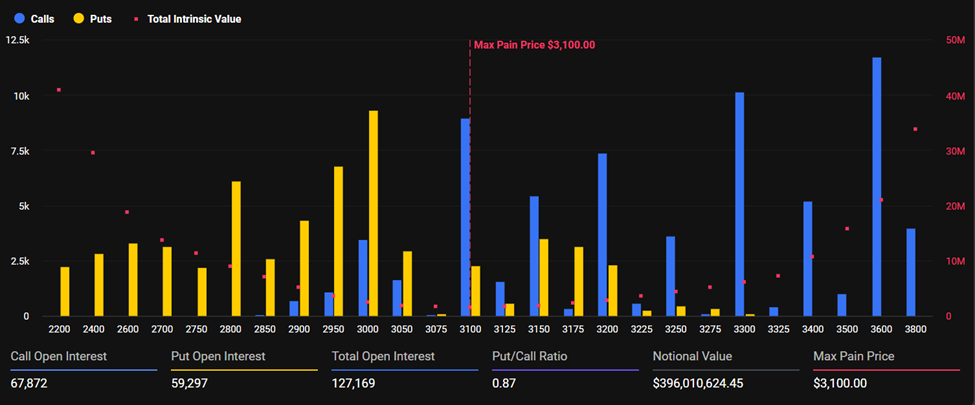
Ethereum, meanwhile, traded around $3,113, just above its $3,100 max pain. Together, the two assets account for roughly $1.89 billion in BTC options and $396 million in ETH options, placing the market in a classic pre-expiry standoff.
Bitcoin’s options market appears finely balanced. The call open interest stands at 10,105 contracts, compared with 10,633 puts, resulting in a put-to-call ratio of 1.05.
That symmetry reinforces dealer hedging behavior, effectively pinning spot price and suppressing volatility into expiry.
Ethereum’s positioning, however, tells a more asymmetric story. ETH options show 67,872 calls versus 59,297 puts, with a put-to-call ratio of 0.87, pointing to heavier upside exposure.
Sponsored
Sponsored
“ETH call positioning is concentrated above $3,000. If spot holds above max pain, post expiry positioning may leave dealers more reactive to upside continuation,” Deribit analysts noted.
Analyst Kyle Doops echoes this outlook, noting that the Ethereum price holding above maximum pain could leave dealers chasing spot after expiry.
“Volatility likely compresses into expiry. Direction usually shows up after,” he added.
This volatility compression is already visible across crypto markets as traders scale back directional bets and wait for options settlement to pass. However, the options expiry is only one layer of today’s risk stack.
NFP, Dollar Strength, and Trump Tariffs Stack the Macro Deck Against Crypto
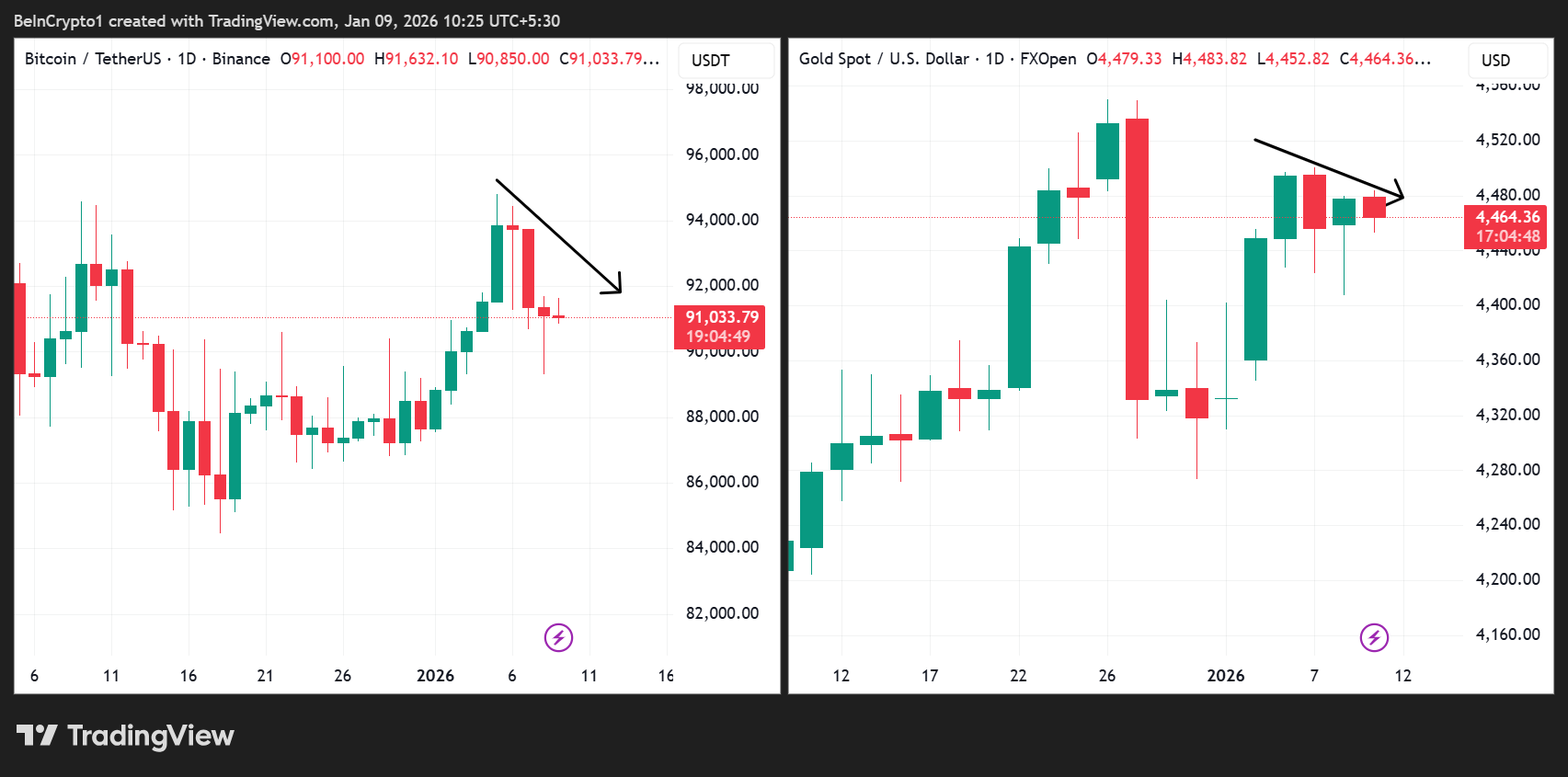
Macro pressure is building ahead of the US December employment report, due at 8:30 a.m. ET, which remains the dominant near-term catalyst. The US dollar has strengthened in anticipation, with the DXY index up around 0.5% over the past week. This has weighed on non-yielding assets such as gold and Bitcoin.
Sponsored
Sponsored
That dynamic helps explain why both assets have dipped despite no major crypto-specific negative developments.
Economists surveyed by MarketWatch expect 73,000 nonfarm payroll jobs, compared with the previously reported 64,000. Meanwhile, the unemployment rate is forecast at 4.5%, slightly lower than the prior 4.6%.
The headline jobs number may matter less than the underlying details, particularly Average Hourly Earnings. Sticky wage growth would complicate the Federal Reserve’s inflation outlook, push yields higher, and pressure Bitcoin.
Sponsored
Sponsored
Conversely, softer job gains alongside moderating wages could reinforce expectations for policy easing and open the door to a late-week risk-on move.
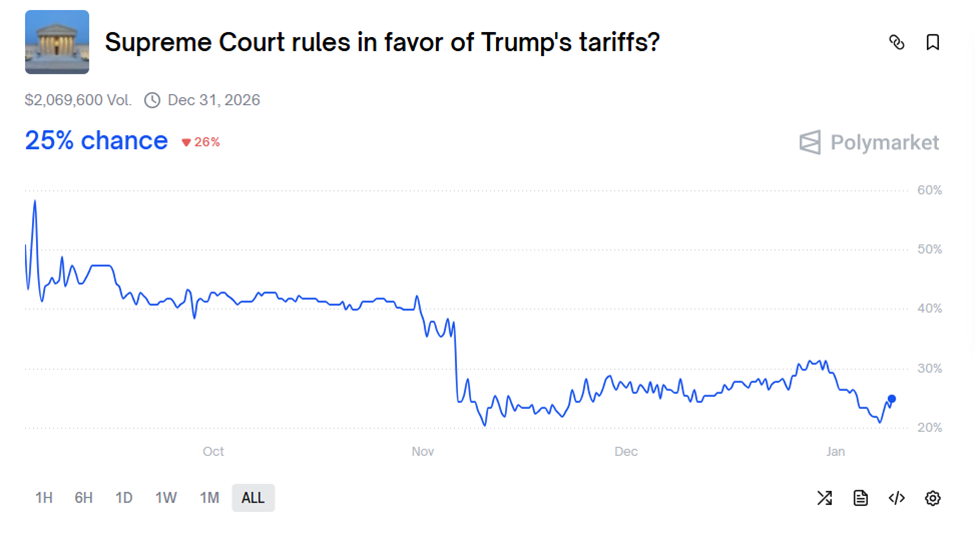
Adding another layer of uncertainty, the US Supreme Court is expected to rule on the legality of tariffs imposed by the Trump administration under emergency presidential powers. The ruling is due today, Friday, January 9, 2026.
Prediction markets currently lean toward a decision that limits tariff authority, a result that could introduce short-term trade and growth risks.
Crypto markets have shown sensitivity to tariff headlines before. Last year, Bitcoin slid to around $74,000 following tariff announcements, before rebounding as trade negotiations progressed.
With options pinning prices in the short term and major macro signals still unresolved, traders largely view current positioning as defensive rather than outright bearish.
Directional clarity is more likely to emerge after expiry, once dealer hedging fades and the combined impact of labor data and the Supreme Court ruling takes hold.