

Cambodia has detained and extradited Chen Zhi, the alleged operator of a sprawling “pig-butchering” and online fraud network, to China, creating a new question for crypto markets and law enforcement: what happens to the Bitcoin still linked to him on-chain.
The arrest and handover were announced by Cambodian authorities this week after what officials described as months of joint investigative cooperation with Beijing. Chen’s Cambodian citizenship had been revoked by royal decree in December 2025, according to reporting from regional and international outlets.
Reuters reported on Tuesday that Cambodia extradited three Chinese nationals: Chen Zhi, Xu Ji Liang, and Shao Ji Hui, and that officials did not provide details of the underlying allegations in their public statement.
Bitcoin Windfall For China?
For Bitcoin, the immediate hook is the size and apparent stasis of the remaining BTC footprint that Galaxy Digital’s head of firmwide research Alex Thorn says can be traced to Chen’s orbit. In a series of posts on X, Thorn highlighted that US authorities previously seized 127,000 BTC connected to the group, information that was unsealed in October 2025, but that Chen “still has more than $2bn in BTC.”
pig-butchering scam king Chen Zhi arrested in Cambodia, extradited to China. the US previously seized 127k BTC from wallets associated with this group (info unsealed in october 2025)
but zhi still has more than $2bn in BTC. that’s a nice pile of corn for the chinese 🌽 pic.twitter.com/jPQaflER8i
— Alex Thorn (@intangiblecoins) January 7, 2026
Thorn added: “we identified 23,191 BTC associated with him,” split between 7,234 BTC still sitting in wallets tagged to Prince Group/LuBian and 15,957 BTC that, he said, was moved out of OFAC-sanctioned wallets into new addresses shortly after the October unsealing.
Thorn framed the jurisdictional dilemma bluntly. “The US has an indictment for him but now that China is holding him there’s no way the US will seize him,” he wrote. “Remains to be seen what happens with these 23k BTC we’ve identified. None of it has moved since he was arrested or extradited.”
Thorn also pointed back to a detail that has lingered over the US forfeiture: the “Milk Sad” weak-entropy issue tied to LuBian wallets, which created a long-running theory that the 2020 compromise of a major mining wallet cluster was less straightforward than it appeared.
A Galaxy Research brief published in October described the DOJ’s action as its “largest-ever asset forfeiture,” saying US authorities seized 127,271 bitcoin and centered the case on Chen, whom prosecutors accused of running a “vertically integrated criminal conglomerate” spanning online gambling, forced-labor compounds, and pig-butchering scams.
The brief argued that the court documents listed wallet addresses that matched “1-for-1” a set of weak-entropy LuBian wallets identified by cybersecurity researchers, but that those wallets “had nearly zero bitcoin in them at the time of seizure,” with the seized BTC coming “almost exclusively from wallets associated with the Lubian.com exploiter.”
That history matters because it reframes the open question around the 23,191 BTC Thorn says remains identifiable today. If Thorn’s tracking is right, the next move is about which jurisdiction, if any, can actually reach the coins.
At press time, BTC traded at $90,374.
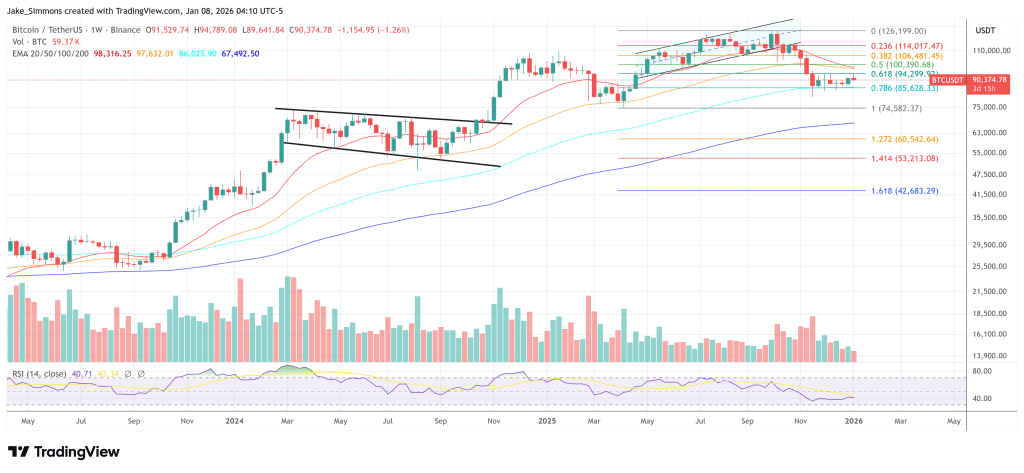
Featured image created with DALL.E, chart from TradingView.com

Editorial Process for bitcoinist is centered on delivering thoroughly researched, accurate, and unbiased content. We uphold strict sourcing standards, and each page undergoes diligent review by our team of top technology experts and seasoned editors. This process ensures the integrity, relevance, and value of our content for our readers.