
People have been debating the meaning of the term “indie game” for years. What is an indie game? On paper, Hades 2 and Hollow Knight Silksong are both indie games, as they’re games self-published by developers that are not connected to a larger publisher.
But they’re also both huge sequels to huge games—essentially guaranteed success, to some degree, unless things go spectacularly wrong. (They didn’t.) Compare that to something like Blue Prince, an original puzzle game that barely anyone had heard of before it hit storefronts this spring.
There are other games that seem to better fit the indie designation, like Clair Obscur: Expedition 33. But that game was developed by 30-plus people, along with a number of contractors—that’s even more than Hades 2, which had a team of approximately 25 people.
So as we look at indie games to include in this list, we’re trying to think about the spirit of an indie game, and will be excluding bigger games that might fit the paper definition. What we want here is a small team, working on something unique or weird, without the backing of a massive publisher like Epic, Microsoft, or Electronic Arts. With all of that in mind, let’s dive in.
Editor’s note: All of the games on this list are traditional “Web2” games without crypto or blockchain integrations. But you might enjoy ’em anyway!
Ball x Pit
Styled as “BALL x PIT” and pronounced simply as “ball pit,” this game’s title can make for a confusing time when trying to search for or discuss it with friends. But this one is worth seeking out. You manage a city that’s sat on the edge of a massive pit, and for the city to survive, you have to venture into the pit for money and resources.
Ball x Pit takes a page from games like Vampire Survivors, offering a variety of unlockable characters—each with their own quirk—which you take through a time-locked gauntlet. Instead of wandering around an infinite castle, though, you’re marching forward into the pit with enemies meeting you with resistance.
You’ll defeat these enemies by launching balls at them, Arkanoid/Breakout-style, trying to hit as many enemies as possible with each launch. As you level up, you’ll pick up new modifiers for these balls like electricity or fire. Balls and abilities can be combined or evolved, completely changing the course of a run and giving each attempt a different feel and flow.
If Vampire Survivors hit for you at all, then Ball x Pit almost certainly will, too.
Blue Prince
We mentioned it up top, so we might as well put it first. Blue Prince is a first-person puzzle game that’s drawn rave reviews this year. You’re the heir to a mansion whose layout resets every day, and is established as the occupants and staff open doors.
As the heir, your goal is to get to the secret 46th room and decipher the secrets of the house. This game pulls from the drafting mechanic of tabletop card games, where you’re picking the card (aka room) you think best fits the situation based on what you know and any strategies you’ve developed.
Developed by one person, Blue Prince weaves a web of creative puzzles and nigh-indecipherable mysteries. If you’re determined, then it’s all there right on the walls and shelves for you to find. But it’s never quite that easy, is it? You might want to have a notebook and pen out, like the game suggests, as you’ll be taking pages of notes.
Look Outside
The original PlayStation’s release brought us the first true survival horror game in Resident Evil, but what would a game in the same genre look like on a Super Nintendo? Look Outside is the answer—this survival horror game features an overhead perspective, turn-based combat, and pixel graphics that look like they belong in the 90s.
In Look Outside, you’re trapped inside your apartment building, with something outside that turns people into grotesque monsters if they even so much as look out their window. It’s hard to resist the temptation to look out the window, and even more so when you know you shouldn’t.
Your apartment building is full of people who didn’t know better or gave into the temptation, and you’ll encounter these twisted forms as you scavenge around the building for food and resources, along with the few people whose minds and bodies are still intact.
Luto
This psychological horror title takes a cue from Hideo Kojima’s PT, in which you’re trapped in a loop through a realistically rendered, nondescript house that becomes scarier the longer you spend in it. But Luto goes further and does its own thing.
As you explore, your once-safe home shifts around you, making less and less sense the further you go and breaking out of the mold of a house and into new, stranger spaces. If anyone was ever going to make a House of Leaves game, this might be as close as we get—in the best way possible.
No I’m Not a Human
The world is ending. You’re safe inside your house, as long as you keep the doors and blinds closed. People know you’re there, though, and come to your door asking for help. They might be people, but they also might be Visitors—people masquerading as humans, and doing a very good job of it. If you let the wrong one in, then you might end up dead.
No I’m Not a Human uses a mechanic similar to Papers, Please; you have to collect as much information as you can about the person at your door and make a judgment based on that, and decide whether you should let them in, giving them protection. Isolation, unfortunately, is not an option.
The story about apocalyptic paranoia is helped along by some truly haunting art. As you meet people, you’ll find that none of them really look that human, making every encounter a tense and fraught one.
Schedule I
If you’re a really old kid, then you might remember having a graphing calculator in high school—and you might also remember that you used it to play games that your friend sent to you over a link cable more than actually doing any graphing or science on it. And one of those games that made an impression on many young minds was called Drug War.
Schedule I is basically that: You’re a drug dealer in a new town, with the goal of establishing your own drug empire. You’ll manufacture and distribute drugs via hand-crafted facilities, while dealing with NPC rivals and the law, sometimes getting into gun fights over territory and price. There’s also a co-op mode where you can run an empire with a friend.
The Drifter
From Powerhoof, the team behind cosmic-horror multiplayer game Crawl, comes The Drifter, an adventure game set in the studio’s home country of Australia. Mick Carter, the titular drifter, has returned to his hometown for a funeral. This game is a gritty thriller experienced through the mechanics of a point-and-click adventure game, plus a time-loop mechanic that allows for creative approaches to problem-solving.
Wanderstop
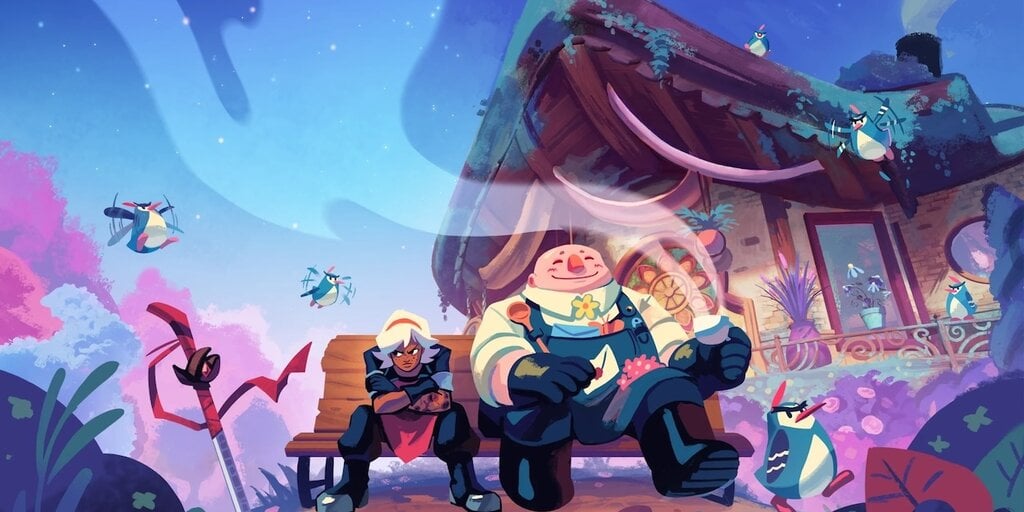
A great warrior has experienced her first loss in battle. In the aftermath, she finds a quiet tea shop in the woods—and discovers that she can’t leave, or really even wield her sword.
Wanderstop, created by the mind behind The Stanley Parable, is a cozy game about burnout, and about dissecting what it means to be a cozy game. Many players will find the lack of progression mechanics frustrating, while others will find it freeing. This game isn’t quite so self-aware as The Stanley Parable, but it has as much to say about the genre it sits in as that game did about first-person games. It’s well worth checking out.
GG Newsletter
Get the latest web3 gaming news, hear directly from gaming studios and influencers covering the space, and receive power-ups from our partners.