
Key Takeaways
- A Ledger Wallet is a hardware device that stores private keys offline, a method known as cold storage.
- Security in crypto is not optional; it is the core requirement for protecting your assets long-term, since there’s no way to recover lost access or reverse transactions.
- A hardware wallet can secure multiple asset types in one place, simplifying portfolio protection across networks.
Imagine losing access to your bank account, but there’s no customer service to call, no identity verification process, and no way to regain access. That’s the reality of crypto. Once access is gone, it’s gone for good. This is the trade-off that comes with true financial freedom. Crypto puts you in complete control of your money, with no middlemen, no gatekeepers, and no one to answer to. But that same independence means there’s no one to bail you out either.
So how do serious crypto holders protect what they own? The answer, for millions of people worldwide, is a hardware wallet, and Ledger is the name most trusted to do it. A Ledger Wallet stores your crypto completely offline, creating a physical barrier between your assets and hackers, scammers, and other online threats.
In this article, we’ll break down exactly what a Ledger Wallet is, how it works, and why it might be the most important investment you make alongside your crypto.
Understanding What a Ledger Wallet Is
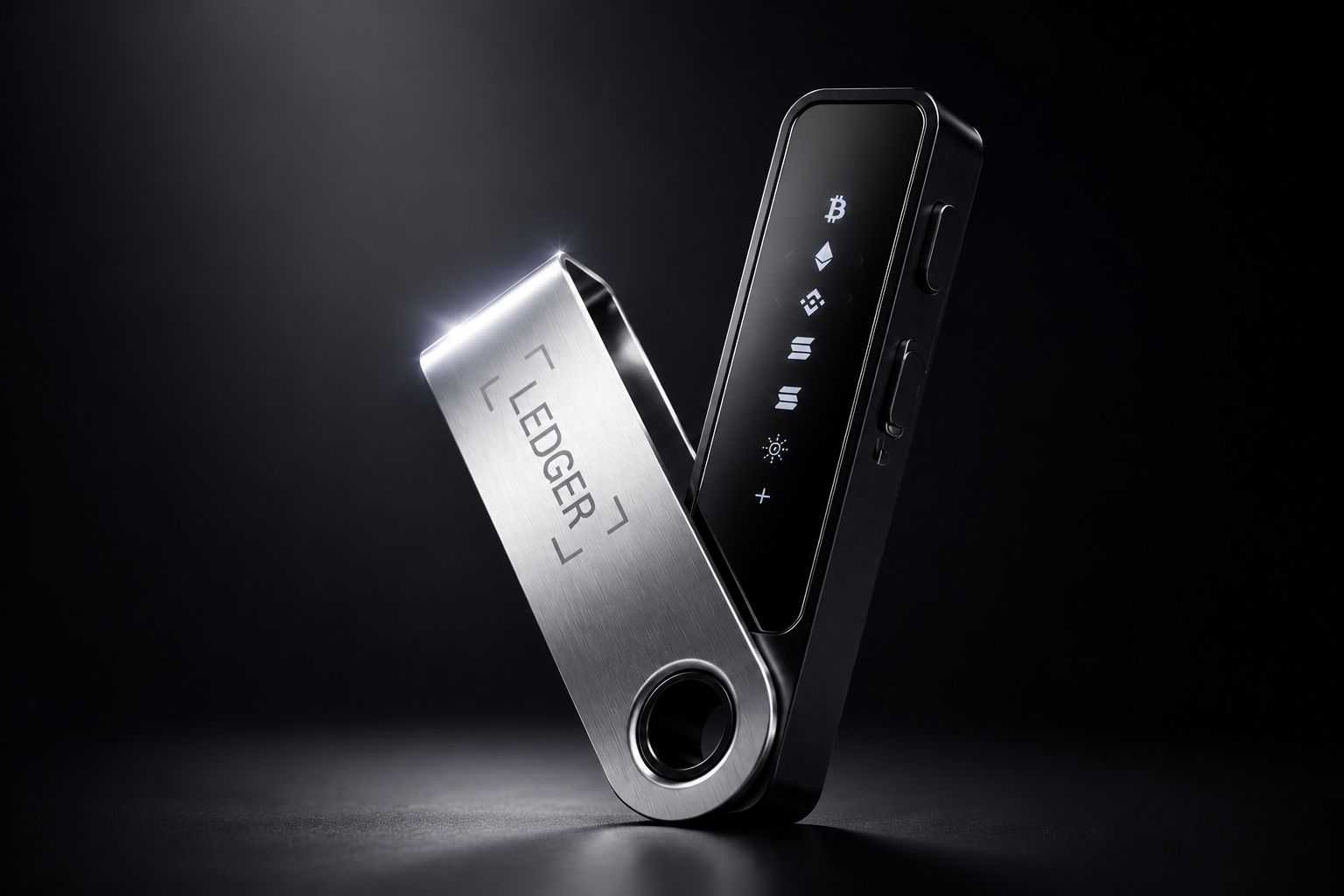
A Ledger Wallet is a small physical device that stores the private keys needed to access and manage your cryptocurrency. Private keys are essentially the master password to your funds. Whoever holds them controls the crypto.
Unlike storing keys on a phone or computer, a Ledger keeps them completely offline inside the device itself, out of reach from any online threat. This is what’s known as cold storage, and it’s a far more secure alternative to keeping crypto on an exchange or software wallet where keys are constantly exposed to risk. When a transaction needs to be made, the Ledger connects briefly to a computer or mobile device to sign it.
The private key never leaves the device. Only the signed transaction goes through. Once done, the device returns to being fully offline, keeping your keys sealed inside the hardware where only you can access them.
How a Ledger Wallet Works
A Ledger Wallet is a hardware device that separates transaction creation from transaction approval, using a secure internal process.
When a user connects the device to a computer or mobile app, the workflow follows a structured sequence:
- Private keys remain stored inside the hardware wallet at all times.
- Transactions are initiated through a companion app such as Ledger Live.
- The transaction details are sent to the device for verification.
- The device signs the transaction internally.
- The signed transaction is returned to the app and submitted to the blockchain.
This design ensures that the approval step happens inside the hardware wallet rather than on the connected device. The Ledger ecosystem relies on its companion app to manage accounts, view balances, and interact with different blockchain networks, while the hardware device handles all signing operations.
Why Security Matters in Crypto Storage
Crypto ownership depends on secure access credentials that control funds on the blockchain. If these are exposed, the assets can be compromised.
A. Exposure Risks in Connected Systems
Most crypto storage methods that rely on internet-connected devices face constant security threats, including:
- Phishing attempts designed to steal login details or recovery phrases
- Malware that targets devices to capture sensitive data
- Exchange breaches that expose user accounts and stored funds
- Unauthorized access through compromised systems or credentials
These risks exist because online environments are always connected and continuously targeted.
B. Human Error as a Security Weak Point
Beyond technical attacks, simple mistakes also create major risks in crypto storage. Common issues include sending funds to the wrong address, storing recovery phrases insecurely, or falling for fake websites that closely mimic real platforms. Since blockchain transactions are irreversible, even small errors can lead to permanent loss.
C. Limits of Centralized Storage
Keeping crypto on exchanges or custodial wallets means trusting a third party to hold and protect the assets. While convenient, this creates a single point of failure. If the platform is hacked, mismanaged, or restricted, users may lose access to their funds or experience withdrawal delays.
D. Offline Security Advantage
A hardware wallet lowers risk by keeping sensitive credentials stored in a fully offline device. Since these credentials never connect to the internet, they are not directly exposed to online threats like hacking or malware.
Transactions are still made through a connected app, but approval and signing happen inside the device itself. This offline setup adds a clear security advantage by separating everyday online use from the important step of confirming transactions.
Types of Assets Supported
Ledger Wallets are designed to support a wide range of digital assets across multiple blockchain networks, making them suitable for diverse crypto portfolios.
They can store and manage:
- Major cryptocurrencies such as Bitcoin and Ethereum.
- Stablecoins used for value transfer and trading stability.
- Tokens from various blockchain ecosystems, including DeFi and utility tokens.
- NFTs on supported blockchains, depending on network compatibility.
Each asset is managed through the same secure hardware setup, while the Ledger companion app helps users view balances, organize holdings, and interact with different networks. This multi-asset support allows users to keep multiple crypto assets in a single secure environment, without relying on separate wallets for each blockchain.
How Ledger Fits Into The Crypto Ecosystem
1. Self-Custody and Direct Ownership
Ledger supports the self-custody model, where users retain full control of their assets without relying on third parties. Private keys are stored on the device, meaning ownership stays entirely with the user rather than an exchange or platform. This approach reduces dependency on centralized services while giving users direct control over their funds.
2. Interaction with Decentralized Applications
Even with offline key storage, Ledger still connects to the broader crypto ecosystem. Users can interact with decentralized applications, exchanges, and blockchain networks through a connected interface while keeping transaction approvals secure on the device. This allows users to participate in trading, staking, and DeFi activities without exposing sensitive credentials.
3. Balancing Security and Usability
Ledger is designed to balance strong security with everyday usability. While the hardware device protects transaction signing operations, the companion app provides access to portfolio management, transactions, and network interactions. This structure allows users to manage crypto efficiently without sacrificing security.
4. Supporting Financial Independence
By combining self-custody with access to the wider ecosystem, Ledger supports greater financial independence in crypto. Users keep direct control of their assets while still being able to interact with decentralized financial systems when needed.
Limitations to Consider
While Ledger Wallets offer strong security through a non-custodial setup, they also place full responsibility on the user to manage and protect access to their assets.
A. Responsibility for Backup and Recovery
Users must securely store their recovery phrase, which is the only way to restore access if the device is lost or damaged. If this backup is not kept safe, funds may become permanently inaccessible.
B. Dependence on Physical Device
Unlike software wallets, transactions with Ledger devices require physical access to the device. This adds an extra step to every transaction, which may feel less convenient for frequent or fast-paced trading.
C. User Learning and Setup Requirements
Ledger wallets have a short learning curve, especially for beginners new to hardware wallets or self-custody. Proper setup and understanding of recovery processes are important to avoid mistakes.
D. Need for Careful Handling
Since security depends on both the device and the recovery phrase, careful handling is essential. Small user errors, rather than technical flaws, are often the main source of issues.
Final Thoughts
Ledger Wallets provide a secure way to store crypto by keeping private keys offline while still allowing access to blockchain networks through a connected app. This gives users full control over their assets without relying on centralized platforms. At the same time, it comes with responsibility, as users must properly manage their recovery information and device access. Overall, Ledger offers a practical balance between security, control, and everyday usability for managing digital assets.
You Might Also Like: