
Key Takeaways
- SWIFT confirms that over 50 major banks are adopting crypto rails, marking a big step toward faster and cheaper global cross-border payments.
- Big banks like JPMorgan, Bank of America, and Deutsche Bank are joining SWIFT’s push for crypto rails, showing strong confidence in the system.
- Early rollout focuses on major remittance routes like the US, UK, China, India, and Southeast Asia, where cross-border demand is highest.
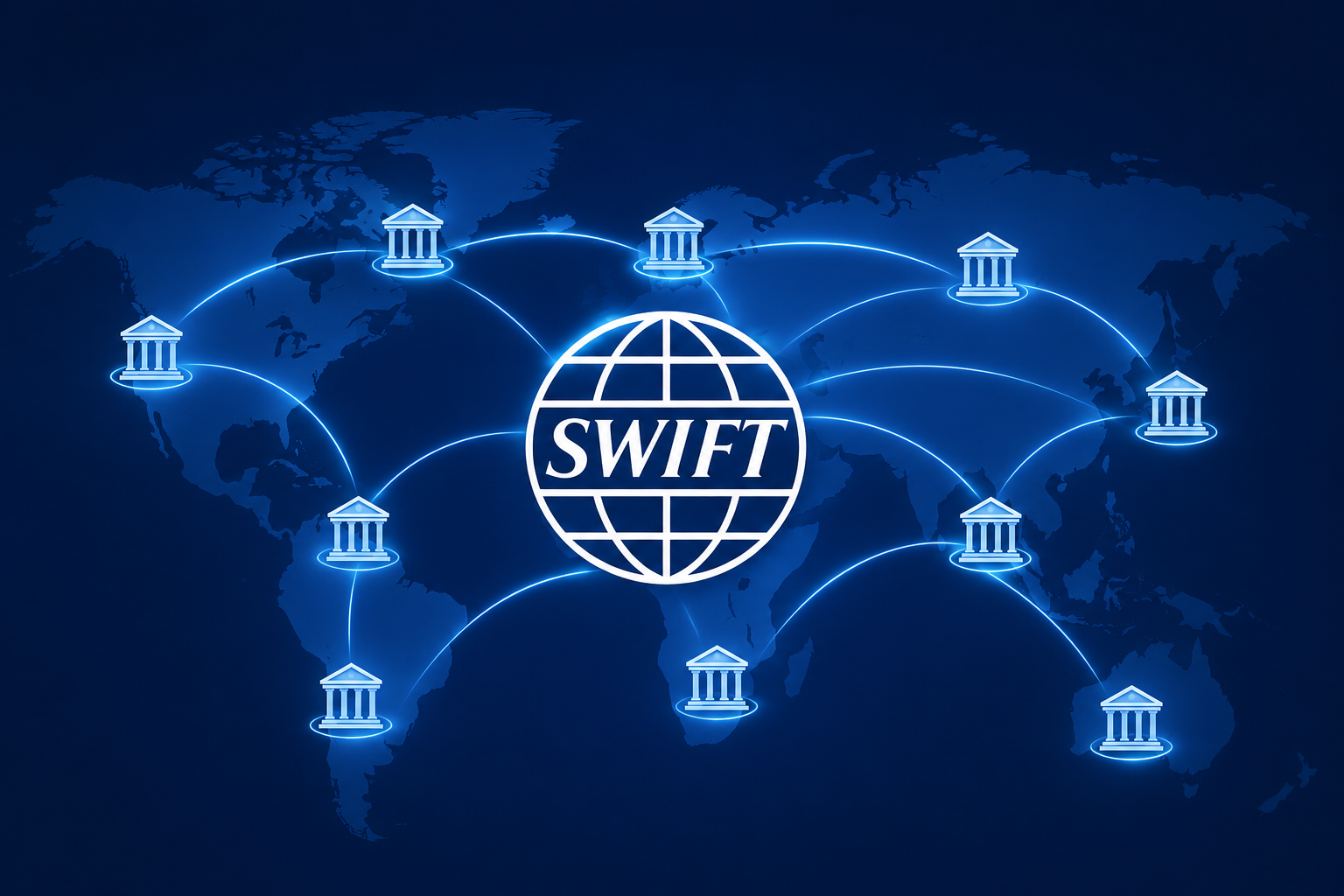
The network that quietly moves trillions of dollars around the world every day just made a very loud announcement. SWIFT, connecting more than 11,000 financial institutions globally, has confirmed a major expansion of its next-generation payment framework, with over 50 major international banks now on board.
The biggest piece of that plan has a striking name: “crypto rails,” a rebuilt payment infrastructure that borrows the speed and transparency of blockchain technology, without abandoning the trusted systems traditional banks rely on. The goal is simple: move money across borders faster, cheaper, and with far less red tape.
For decades, SWIFT has worked silently in the background of global banking. Now, it’s making a bold move to change how money travels between countries. This isn’t a network playing catch-up. It’s one writing the next chapter.
Banks Leading the Transition
The rollout isn’t a small pilot. More than 50 of the world’s biggest banks have already committed to the framework, a sign that serious institutional weight is behind this shift.
The list of participating banks reads like a who’s who of global finance, spanning continents and currencies:
- Bank of America
- JPMorgan Chase
- Deutsche Bank
- Bank of China
- State Bank of India (SBI)
- Alongside dozens of other global and regional lenders
Collectively, more than 50 banks have already committed to the framework, with adoption timelines varying by institution and jurisdiction. The biggest names in banking aren’t waiting to see how this plays out. They’re already in.
Live Rollout Expected by June
The timeline is closer than many expected. SWIFT has confirmed that over 25 banks will begin processing real transactions under the new framework by June 2026, marking the first live test of crypto rails at scale.
These early adopters will focus on high-volume remittance corridors, with initial coverage spanning some of the world’s busiest payment routes:
- United States
- United Kingdom
- China
- India
- Germany
- Australia
- Southeast Asia and select emerging markets
The early rollout phase isn’t just about speed. It’s about fixing the pain points that have frustrated businesses and everyday users for years. The priority areas reflect that:
- Faster settlement times, including near-instant transfers where possible
- Full-value delivery with fewer deductions from intermediaries
- End-to-end payment traceability so senders know exactly where their money is
- Predictable pricing that removes the guesswork from cross-border transfers
For the millions of people and businesses that move money across these corridors daily, the shift could be felt almost immediately.
How the Crypto Rails Work
SWIFT isn’t tearing down what it built. Instead, it’s layering new technology onto its existing infrastructure to make the entire system smarter and faster.
The “crypto rails” concept works by pulling the best parts of blockchain technology into traditional banking without forcing institutions to abandon the systems they already trust. In practice, that means:
- Tokenized deposits and regulated digital assets used for faster, cleaner settlement.
- Seamless connectivity between traditional banking systems and blockchain networks.
- Round-the-clock payment processing, no more waiting for business hours or banking windows.
- Smart contract validation that automatically checks and confirms transactions without manual intervention.
The result is a hybrid model, one foot in the old world of regulated banking, the other stepping into the efficiency of blockchain. Banks gain the speed and transparency of crypto infrastructure while staying within the legal and compliance boundaries they must operate within.
It is not a revolution. It is a carefully engineered upgrade, and that is precisely what makes it viable at this scale.
Why This Matters for Global Payments
Sending money across borders has never been as simple as it should be. A payment leaving New York might pass through three or four intermediary banks before reaching its destination in Manila or Nairobi, each one taking a cut, adding a delay, and reducing visibility along the way. For businesses managing international operations and families relying on remittances, that friction has real costs.
SWIFT’s new framework takes direct aim at those problems:
- Faster settlement that cuts transfer times from days to potentially minutes.
- Clear, upfront fee visibility so senders know exactly what a transfer will cost before sending.
- Smoother liquidity movement that makes it easier for banks to fund transfers across borders.
- Greater reliability that reduces the risk of failed or delayed payments.
The numbers behind global payments are enormous, and even small improvements add up fast. For everyday people sending money internationally and businesses moving funds across borders, this could mean real savings and fewer headaches. If it delivers, it will be one of the biggest quiet upgrades to global banking in years.
Final Thoughts
What started as a quiet infrastructure upgrade is shaping up to be one of the boldest moves in modern banking. Backed by over 50 of the world’s biggest banks, with a live rollout already on the calendar, this is as real as it gets. The technology may be new, but the goal is simple: make sending money across borders faster, cheaper, and more reliable for everyone. The world moves money every second of every day. SWIFT is betting it can do that job a whole lot better. With this much support behind it, that bet looks very hard to lose.
Frequently Asked Questions
What are crypto rails in SWIFT’s new system?
Crypto rails are a new payment infrastructure that uses blockchain-style technology to help banks move money faster, cheaper, and with better tracking across borders.
How many banks are adopting SWIFT crypto rails?
SWIFT has confirmed that over 50 major global banks are adopting crypto rails, with more expected to join as the system expands.
Which major banks are involved?
Leading global banks including JPMorgan Chase, Bank of America, Deutsche Bank, Bank of China, and State Bank of India are part of the rollout.
Does SWIFT replace traditional banking systems?
No. SWIFT is upgrading its existing system by adding blockchain-inspired features while keeping traditional banking infrastructure in place.
Are crypto rails the same as cryptocurrency payments?
No. Crypto rails use regulated digital tools and tokenized assets, but they are designed for banks and compliance systems, not public crypto transfers.
You Might Also Like: