

Japan’s ruling party has called for the creation of the long-awaited rules for crypto exchange-traded funds (ETFs) and promotion of yen-denominated stablecoins in the region in a new proposal to the government.
Japan’s Ruling Party Pushes For Crypto ETF Rules
On Monday, Japan’s Liberal Democratic Party (LDP) asked the government to develop a legal framework to allow crypto-based ETFs in the country, seeking to strengthen the local digital assets sector, Reuters reported.
In a proposal to the government, the ruling party affirmed that “Crypto-ETFs would provide investors with easy-to-understand ways of investment,” urging the government to “position the product as an official means of investment in the financial market.”
According to the report, LDP’s panel on the promotion of blockchain technology submitted its proposal to Finance Minister Satsuki Katayama, who oversees the Financial Services Agency (FSA).
It’s worth noting that Japanese authorities have been cautious about crypto-based investment products over the past few years, with the main financial regulator repeatedly expressing its reservations about the funds.
Earlier this year, reports indicated that the FSA plans to amend the Investment Trust Act’s enforcement order to add cryptocurrencies to the list of specified assets for ETFs, with stronger safeguards to protect investors.
Reportedly, the country will likely approve and list its first wave of crypto ETFs in the next two years, with some industry leaders affirming that the rollout could come as early as next year if the law’s revision allows it.
In an April interview, Hiromi Yamaji, CEO of Japan Exchange Group (JPX), the parent company of the Tokyo Stock Exchange, stated that asset management firms are interested in creating crypto investment products.
“We’re ready to work on it once legislation and tax treatment are made clear,” JPX CEO told Bloomberg, but noted that listings could come in 2028, if progress on the law’s amendments stalls.
Lawmakers Eye Yen-Stablecoin Boost In Asia
After Monday’s meeting with Katayama, Junichi Kanda, a lawmaker on the panel, told reporters that the ruling party had also pushed the government to boost the use of yen stablecoins in the region.
“We urged the government to take steps to promote yen stablecoins for settlement in Asia in the future,” he said, adding that Japan could promote yen stablecoins and its efforts on blockchain innovation next year, when the country hosts the Asian Development Bank’s annual meeting.
Japan’s legal framework for stablecoins was established through the 2022 amendment to the Payment Services Act. Under these rules, only licensed money transfer companies, trust companies, and banks are allowed to issue yen-denominated tokens.
Last year, Tokyo fintech company JPYC launched the first yen-pegged stablecoin, backed by Japanese yen reserves, including bank deposits and government debt. The FSA also endorsed a project by three major Japanese banks to jointly issue a yen-backed token.
This May, the financial regulator expanded the Cabinet Office Ordinance to recognize certain trust-type stablecoins issued by foreign trust banks and similar entities as “electronic payment instruments” under the Payment Services Act, starting June 1.
The revisions remove foreign trust-backed stablecoins from the Financial Instruments and Exchange Act (FIEA) “securities” classification, allowing domestic registered operators to manage them legally.
Similarly, authorities amended the FIEA earlier this year to classify crypto assets as financial instruments and outlined compliance requirements for the use of crypto in real estate deals.
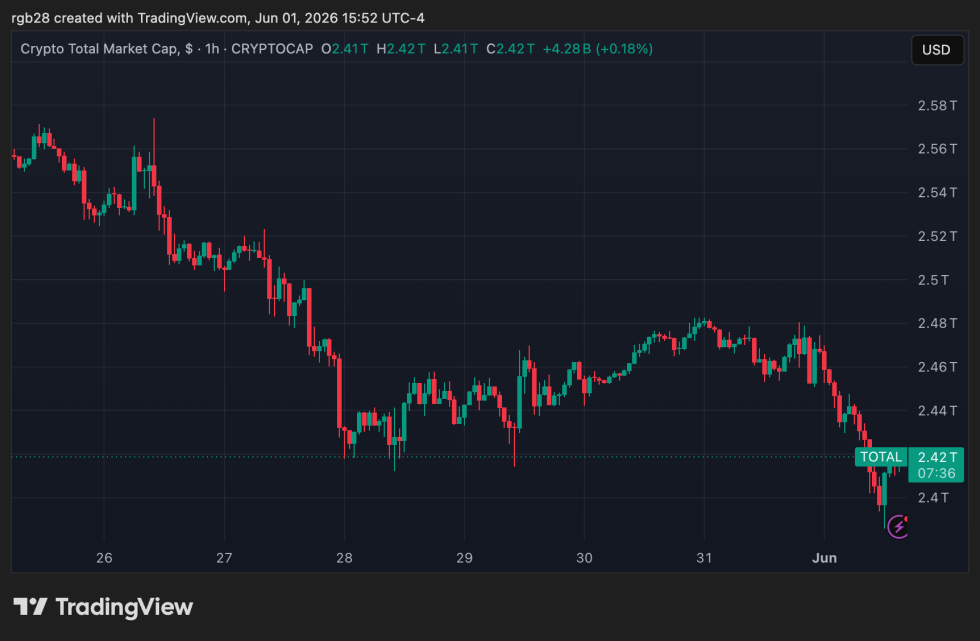
The total crypto market capitalization is at $2.42 trillion in the one-week chart. Source: TOTAL on TradingView
Featured Image from Unsplash.com, Chart from TradingView.com

Editorial Process for bitcoinist is centered on delivering thoroughly researched, accurate, and unbiased content. We uphold strict sourcing standards, and each page undergoes diligent review by our team of top technology experts and seasoned editors. This process ensures the integrity, relevance, and value of our content for our readers.