
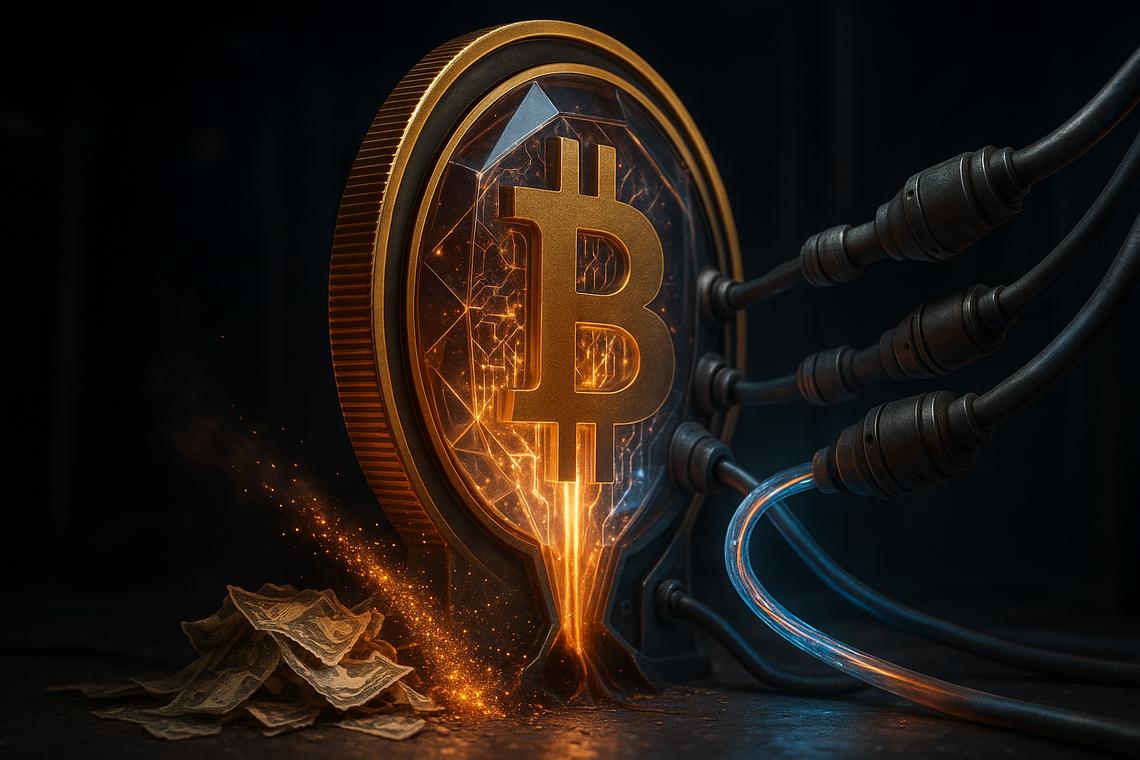
In a wide-ranging conversation about the future of technology and society, Elon Musk sketched a world where energy currency shapes value as artificial intelligence transforms the economy.
How does Musk envision money disappearing in an AI and robotics economy?
Elon Musk, speaking as Tesla CEO, argued that in a sufficiently advanced AI– and robotics‑driven future, traditional money would fade as a tool for organizing labor. In his view, once intelligent machines can perform most productive tasks, the need to allocate human work through wages and prices declines sharply.
He told Indian entrepreneur and investor Nikhil Kamath during a podcast that money might ultimately “disappear as a concept.” According to Musk, if AI and robots can cover virtually all human needs, currency stops functioning as a meaningful mechanism for labor and production. However, he noted that this scenario remains speculative and depends on major technological breakthroughs.
“If AI and robotics are big enough to satisfy all human needs, then money is no longer… its relevance declines dramatically,” Musk said. That said, he stressed that this future is not imminent, and that current economic structures still rely heavily on conventional payment and wage systems.
Why does Musk call energy the “true currency”?
Despite predicting a decline in conventional cash, Musk insisted that certain forms of value would remain central. He described energy as a “fundamental currency” grounded in physics rather than politics or monetary policy. Moreover, he suggested that control over efficient and abundant power sources would translate into real economic strength.
“Energy is the true currency,” Musk said, arguing that power generation itself could become a de facto unit of account in a post‑scarcity environment. In that world, he suggested, the ability to produce and manage large amounts of energy would be more important than traditional banking or fiat systems.
Musk emphasized that energy production cannot simply be created through regulation. “You can’t legislate energy,” he stated. “You can’t just, you know, pass a law and suddenly have a lot of energy.” However, he added that technological innovation in power generation and storage could dramatically reshape global economic power balances.
What role does Bitcoin play in Musk’s energy-based vision?
Musk linked this framework directly to Bitcoin, highlighting its proof‑of‑work mechanism as an energy‑backed foundation for digital value. He argued that Bitcoin’s security model, which requires miners to expend electricity and computational power, ties its monetary properties to real‑world physical resources.
In his view, Bitcoin and other energy‑backed assets represent an early example of how an energy‑anchored system might operate. The network converts electricity and specialized hardware into digital scarcity, which supporters say cannot be easily manipulated by central banks or governments. That said, Musk did not claim that Bitcoin would replace all national currencies, at least under current conditions.
The idea of energy currency also underpins his argument that Bitcoin’s value is not purely abstract. By requiring ongoing power expenditure to secure transactions and issue new coins, proof of work creates a cost structure that some investors see as analogous to mining commodities like gold.
How does science fiction shape Musk’s post-scarcity outlook?
Musk referenced the Culture series by Scottish author Iain Banks as an illustration of a fictional post‑scarcity civilization. In that universe, advanced technology eliminates material shortages, allowing people to obtain whatever goods they want without using money.
He pointed to that narrative to explain how a society might function when AI and robotics can meet nearly all human needs. However, Musk acknowledged that our current world remains far from such conditions, and that economic trade‑offs and constraints still apply today.
For now, he suggested, fiat currencies and established monetary systems remain indispensable. Conventional banking infrastructure and government‑issued money continue to underwrite wages, savings and global commerce, despite the rapid progress in automation and machine learning.
Why is Bitcoin’s energy use so controversial?
Bitcoin’s proof‑of‑work model has made it central to the bitcoin energy debate. The network’s energy consumption continues to draw scrutiny from policymakers and environmental organizations concerned about carbon emissions and stress on electrical grids.
Critics argue that large‑scale mining operations, often concentrated in regions with cheap electricity, may increase fossil fuel demand or crowd out other power uses. Moreover, regulators in several jurisdictions have examined whether new rules are needed to limit or redirect such activity.
Supporters counter that Bitcoin mining can actually accelerate renewable energy deployment. They claim flexible mining loads can absorb excess generation from solar, wind or hydro projects, improving grid efficiency and financing new infrastructure. That said, empirical assessments of these claims remain contested in academic and policy circles.
Is an energy-based economic system already emerging?
Musk suggested that as AI and robotics improve, power generation and management could become the core drivers of economic value. Under this outlook, whoever commands the most efficient energy systems would hold a decisive advantage, whether in manufacturing, data centers or autonomous robotics.
He linked this to Bitcoin’s proof‑of‑work design, which turns electricity and hardware into verifiable digital units. Although he did not specify a date, he implied that advances in automation could push societies toward frameworks where energy, rather than traditional money, is the primary reference for value.
However, Musk declined to provide a concrete timeline for any transition to an energy‑centric model. The technologies required for truly post‑scarcity conditions—particularly in AI, robotics and clean energy—are still developing and may take decades to mature.
What does Musk expect in the near term for money and Bitcoin?
For the foreseeable future, Musk expects national currencies to remain the backbone of the global financial system. Government‑issued money and conventional payment rails still dominate everyday transactions, cross‑border trade and savings strategies in 2025 and beyond.
At the same time, he views Bitcoin as both a tradable asset and an alternative monetary network that reflects some principles of a future energy‑anchored economy. While traditional cash and digital payment systems continue to handle salaries, bills and retail purchases, Bitcoin offers a parallel structure that experiments with energy‑backed scarcity and decentralized governance.
In summary, Musk’s thesis ties the long‑term evolution of money to the rise of AI, robotics and abundant power generation. He believes energy will remain the ultimate measure of value even if conventional currency recedes, with Bitcoin illustrating how an energy‑based digital system might function alongside, or eventually beyond, today’s fiat frameworks.