

Ethereum’s network has been buzzing. Blocks are full, wallets show new activity, and on-chain counters are ticking up fast. But not all of that motion looks like real people using the chain.
Address Poisoning On The Spotlight
In a recent blog post, researcher Andrey Sergeenkov warned that a recent Ethereum upgrade is being exploited to send tiny transactions that create misleading wallet history entries, a tactic known as address poisoning.
According to the expert, a big slice of the traffic may be the result of “dusting” or address poisoning attacks. Small, almost worthless transfers — sometimes less than a dollar — are being sent to a wide range of addresses.
Record-high Ethereum activity that everyone’s celebrating is an address poisoning attack.
– Over $740K already stolen, and growing
– This became possible thanks to the Fusaka upgrade
– This attack is ongoing right nowhttps://t.co/cqoEvqttQd— Andrey Sergeenkov (@Nikopolos) January 19, 2026
These tiny transfers create fake-looking entries in a wallet’s history. People who skim their recent transactions or copy addresses from a short list of past contacts can be tricked into sending funds to a scammer by mistake. It is a basic trick that gets more power when fees fall.
Why It Happened
Reports say that after recent updates and lower average gas costs, sending millions of tiny transactions became affordable. When fees drop, attackers can spray dust across large numbers of wallets and run follow-up scams at scale.
The tactic uses two steps: first, make a history entry that looks like a real counterparty; second, hope a user copies that wrong entry. Some attacks aim to deanonymize users, while others are pure bait to steal funds later.
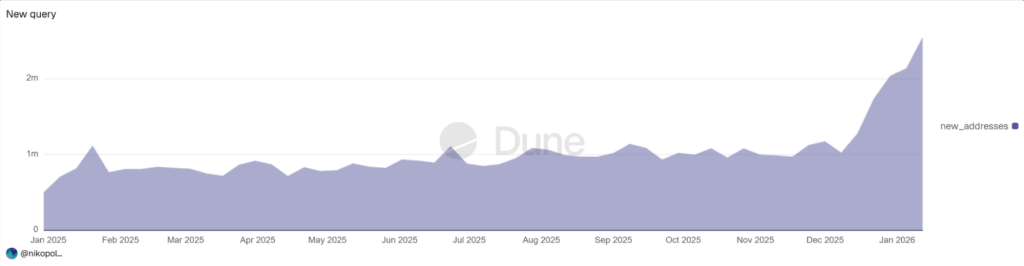
New Ethereum addresses have seen a sharp increase in activity.
Simple Mistakes With Big Consequences
An Ethereum wallet owner might glance at a list and use the wrong address. Or they might be prompted by a message that seems to match a past transfer. Either way, if funds are sent to the attacker, those funds are usually gone.
Reports estimate that hundreds of thousands of dollars have been siphoned from victims who fell for different versions of this trick. The sums are not always massive per case, but they add up when many victims are targeted.

Small Transfers From Strange Addresses
Look for small incoming transfers from addresses you do not recognize, especially when those transfers appear in large batches. Watch for identical token amounts or for many transfers with the same memo or pattern.
Wallets that show sudden clusters of tiny token receipts are worth extra caution. Security tools and some wallets can hide tiny transfers or warn users about unusual incoming dust. Use those features if they are available.
What Experts Advise
Based on reports, researchers urge people to verify the full address they are sending to, not just the start or end of it. Use address book features, QR codes, or trusted contacts to confirm destinations.
Avoid copying addresses from a short recent-history view. If you receive a small, unexpected deposit, take it as a warning sign, not an invitation.
Featured image from Pexels, chart from TradingView

Editorial Process for bitcoinist is centered on delivering thoroughly researched, accurate, and unbiased content. We uphold strict sourcing standards, and each page undergoes diligent review by our team of top technology experts and seasoned editors. This process ensures the integrity, relevance, and value of our content for our readers.