
In brief
- The Fed has scrapped its 2023 crypto-restrictive policy, replacing it with a framework that welcomes “responsible innovation” and withdraws prior crypto guidance.
- The move follows a broader Trump-era shift, including the rollback of restrictive supervisory letters and the end of the Fed’s Novel Activities Supervision Program.
- Industry figures hailed the reversal, though experts warned execution will determine how quickly banks can adopt digital-asset services.
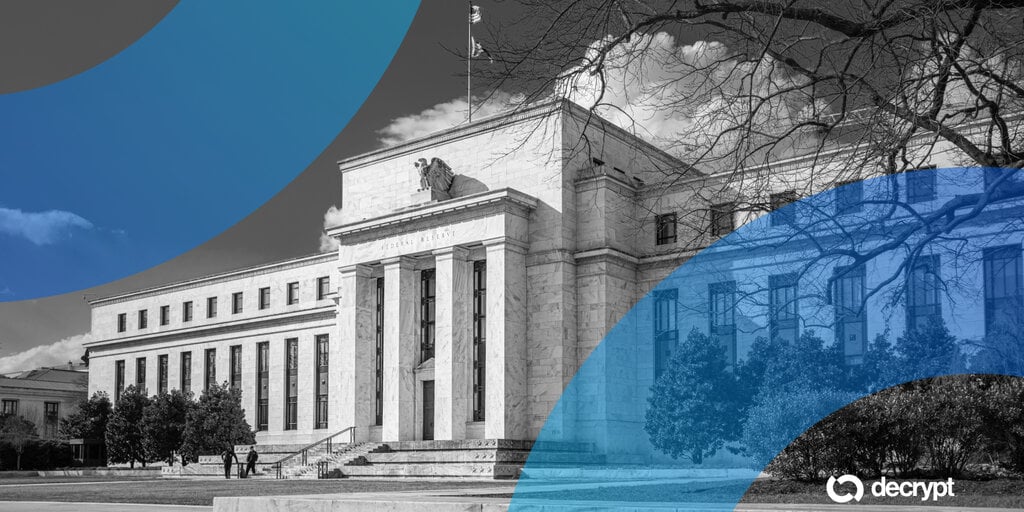
The Federal Reserve has walked back a nearly three-year-old policy that had curtailed the ability for state member banks to engage in crypto-related activities, replacing it with a new framework that encourages “responsible innovation.”
The new policy is being pegged as a means to “facilitate innovation by state member banks in a manner that is consistent with bank safety and soundness and preserving the stability of the U.S. financial system,” the central bank said in a statement.
The reversal is part of a broader policy shift under President Donald Trump: this year, the Fed scrapped two crypto-restrictive supervisory letters and shut down its Novel Activities Supervision Program, folding digital-asset oversight back into the “normal supervisory process.”
“New technologies offer efficiencies to banks and improved products and services to bank customers,” Vice Chair for Supervision Michelle W. Bowman said in a statement on Wednesday.
The Board said the old guidance is “no longer appropriate given its evolving understanding of the risks of the crypto-asset sector.”
Breaking Operation Chokepoint 2.0
Caitlin Long, founder and CEO of Wyoming-based Custodia Bank, celebrated the policy reversal, calling the 2023 guidance “Operation Chokepoint 2.0 at its finest.”
Long alleged “the Fed broke the law” by using the unofficial guidance to deny Custodia’s application for a master account, and claimed insiders told her that Michael Barr, Fed’s Vice Chair for Supervision, who dissented in Wednesday’s vote, directed staff to “find something” to reject the bank shortly after FTX’s 2022 collapse.
“But most of that team is now gone or out of power at the Fed. Nature is healing,” she wrote on X on Wednesday.
Custodia, which lost its October appeal challenging the Fed’s denial of its master-account application, has since asked the 10th Circuit for an en banc rehearing, a full-court review the judiciary reserves for truly exceptional cases.
“The original 2023 policy statement was Operation Chokepoint 2.0 at its finest and unfairly targeted Wyoming. This is a win for digital assets and State financial innovation,” Wyoming Senator Cynthia Lummis tweeted Wednesday.
Industry response
“The policy reversal is both a significant change in regulatory posture, as well as another huge signal regarding the inevitable acceptance of this technology,” Ryne Saxe, CEO and co-founder of Eco, told Decrypt.
Saxe said the move “opens the door” for tech-driven banks to “more freely serve crypto fintechs” with far fewer federal hurdles, while giving upstart banks focused on crypto services a more realistic path to a master account.
Jakob Kronbichler, CEO and co-founder of Clearpool, told Decrypt that “the real test will be execution” of the new policy.
“Not all crypto products fit neatly into traditional banking rails,” he said. “DeFi protocols, tokenized assets, and on-chain settlement don’t always map cleanly onto legacy risk models,”
“Regulatory uncertainty has been the biggest blocker to institutional adoption in the U.S., and this creates space for banks to actually figure out how to engage responsibly, rather than staying on the sidelines out of fear,” Kronbichler added.
Daily Debrief Newsletter
Start every day with the top news stories right now, plus original features, a podcast, videos and more.