
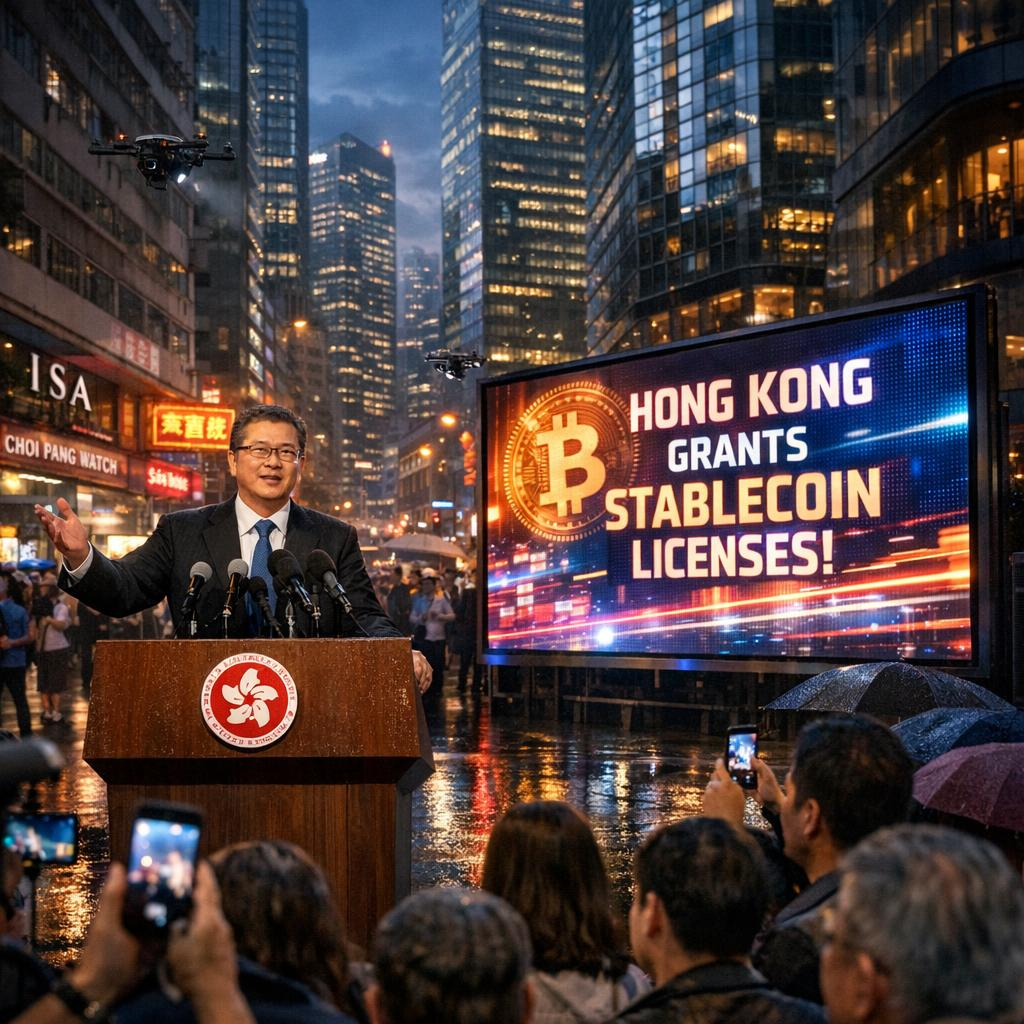
At the World Economic Forum in Davos, Switzerland, Hong Kong’s Financial Secretary, Paul Chan Mo-po, announced the region’s plan to issue licenses for stablecoin providers in the first quarter of this year as the city seeks to strengthen its position as a leading hub for financial technology.
Hong Kong’s Regulatory Framework
Chan highlighted Hong Kong’s regulatory framework for digital assets, describing it as “responsible and sustainable.” He emphasized the importance of a balanced approach to support the growth of both finance and technology, noting that these two sectors are “mutually reinforcing.”
Chan articulated the benefits of digital assets, pointing out that they can enhance transparency, improve risk management, and facilitate more efficient capital movement. “We view digital assets as a financial innovation that we should embrace proactively,” he stated.
The Finance chief elaborated on the necessity of ensuring that digital assets serve the real economy while simultaneously implementing strong guardrails to mitigate risks related to financial stability, market integrity, and investor protection.
He reiterated the principle of “same activity, same risk, same regulation,” which is designed to promote a healthy, responsible, and sustainable environment for digital asset development. The government and regulators, he asserted, will act as “market enablers,” setting a precedent for innovation.
First Stablecoin Licenses Soon
Over the past couple of yeaers, Hong Kong has prioritized strengthening its position as a fintech hub, particularly in light of the US’s efforts to fulfill President Donald Trump’s vision of establishing the country as the global centre for crypto.
Chan pointed out that since 2023, the city has issued three batches of tokenized green bonds totaling $2.1 billion. Additionally, Hong Kong has already established a licensing framework for virtual asset trading platforms.

Notably, last November, the Hong Kong Monetary Authority (HKMA) launched a controlled pilot program to facilitate real-value transactions using tokenized deposits and digital assets.
During his remarks, Chan specifically mentioned the upcoming licensing regime for stablecoins, indicating that the first batch of licenses is expected to be issued soon.
According to reports from the HKMA, the authority received formal stablecoin license applications from 36 institutions by September 30, nearly half of the 77 expressions of interest recorded in August.
Applicants for these licenses include a diverse range of entities, such as banks, technology firms, securities and asset management companies, e-commerce platforms, payment service providers, and Web3 startups.
A spokesperson for the HKMA stated that the authority will review all submission materials meticulously and conduct approvals in line with the new Stablecoin Ordinance and relevant regulatory requirements.
While the HKMA aims to announce the first batch of licensed stablecoin issuers between the first and second quarter, it has advised that the licensing process will be stringent, with only a limited number of licenses granted during this initial phase.

Featured image from OpenArt, chart from TradingView.com

Editorial Process for bitcoinist is centered on delivering thoroughly researched, accurate, and unbiased content. We uphold strict sourcing standards, and each page undergoes diligent review by our team of top technology experts and seasoned editors. This process ensures the integrity, relevance, and value of our content for our readers.