
According to Bloomberg’s latest reporting, Ripple’s November share sale landed exactly where the company has been trying to position itself for years: at the center of institutional capital that wants crypto exposure but insists on structured protection. The round brought in $500 million, setting Ripple’s valuation at $40 billion, the highest private valuation recorded for a digital asset firm in this cycle.
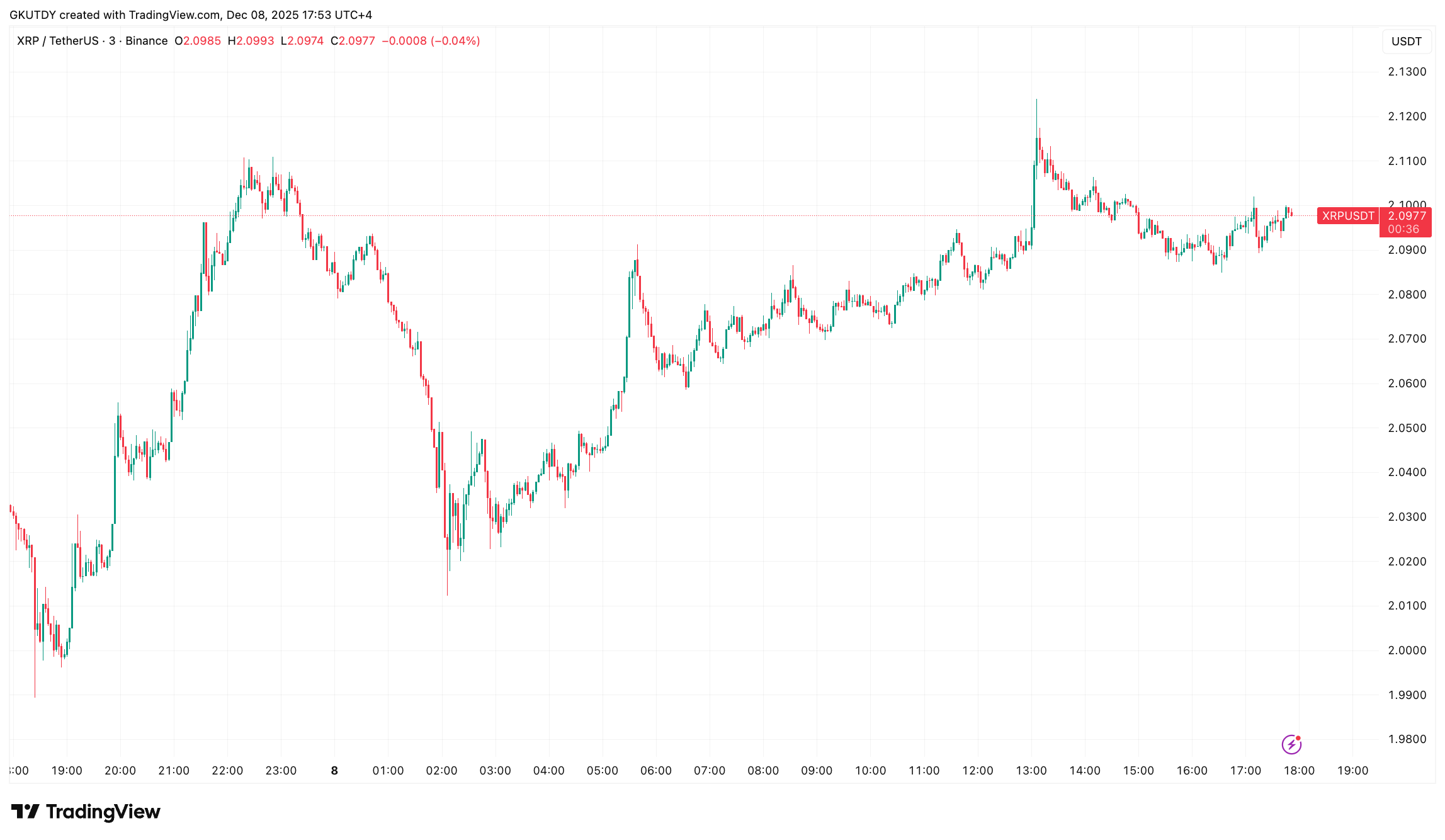
As the news circulated, XRP traded higher inside the day, approaching $2.09. This increase aligned with the market strength rather than being a standalone reaction, but it showed that traders are tracking the news.
The deal’s notable aspect was not the investors — Citadel Securities, Fortress, Marshall Wace, Brevan Howard, Galaxy and Pantera — but the terms. According to Bloomberg, investors secured the right to sell their shares back to Ripple after three or four years, earning a 10% annual return.
If Ripple initiates a repurchase, the return increases to 25% annually. A liquidation-preference clause was also added, ensuring that the new money sits at the front of the line in the event of a sale or restructuring.
Ripple’s XRP plays crucial role in $500 million deal
According to Bloomberg’s sources, the fundamental driver is that several funds assessed that up to 90% of Ripple’s net asset value comes from XRP. This is backed by July disclosures showing $124 billion in token holdings before a market decline.
Despite recent weakness — a 16% pullback since late October and over 40% since mid-summer — Bloomberg’s calculations estimate Ripple’s current XRP position at over $83 billion, well above the equity valuation.
Ripple securing institutional money on structured terms reinforces one point for XRP holders: large funds still view Ripple’s valuation as anchored to its token reserves. Bloomberg’s numbers show that Ripple’s XRP position remains well above the company’s equity valuation even after recent price pressure, which turns XRP into the asset underpinning the entire deal.
It does not guarantee an upside, but it does confirm that institutions are pricing XRP’s scale, liquidity and long-term relevance into their exposure, even as they hedge against volatility with contractual protections.
You Might Also Like

In the meantime, Ripple continues to expand beyond pure token exposure through acquisitions such as Hidden Road and GTreasury yet maintains no stated IPO timeline. For now, Wall Street is positioned with downside protection and optionality on whatever comes next.