

The Federal Reserve (Fed) injected $16 billion into the US banking system on December 30, marking the second-largest liquidity operation since the COVID-19 crisis. These funds were supplied through overnight repurchase agreements (repos), pushing the total amount of Treasury securities purchased via repos in December to $40.32 billion.
The scale of the intervention has reignited debate over hidden stress in short-term funding markets, and what rising global liquidity ultimately means for risk assets, including Bitcoin.
Sponsored
Sponsored
Fed’s December Liquidity Surge Signals Rising Strain Beneath Record Global Liquidity
According to Barchart, the December 30 operation ranked just behind pandemic-era emergency measures in size.
Financial commentator Andrew Lokenauth echoed the concern, noting that such a large injection suggests “everything is fine” only on the surface. In a separate post, Lokenauth compared the situation to banks promising assets they do not fully control.
He argues that institutions now require cash to cover obligations tied to commodities and collateral mismatches.
The Federal Reserve’s overnight repo facility enables eligible counterparties to exchange Treasuries for cash at a fixed rate. This allows the central bank to maintain control over short-term interest rates.
While the Fed routinely uses repos around quarter- and year-end, December’s total of $40.32 billion stands out. Bluekurtic Market Insights described the activity as ongoing “liquidity support,” highlighting that demand has remained elevated throughout the month.
General sentiment is that the surge reflects year-end balance sheet constraints rather than an outright crisis. Banks face tighter regulatory requirements at reporting periods, which often reduces their willingness to lend in private repo markets.
Sponsored
Sponsored
When that happens, institutions turn to the Fed as a backstop. Still, sustained reliance on central bank facilities is often interpreted as a sign of underlying strain or risk aversion among counterparties.
Beyond repos, attention has shifted to the Federal Open Market Committee’s latest meeting minutes. Analysts at Markets & Mayhem highlighted what they called the most important takeaway: the Fed’s so-called “not QE” reserve management program could involve purchasing up to $220 billion in Treasury securities over the next 12 months to ensure ample reserves in the banking system.
Policymakers emphasized that these purchases are intended strictly for rate control and liquidity management, not as a signal of monetary easing.
Sponsored
Sponsored
Higher-for-Longer Rates Clash with Record Global Liquidity as Bitcoin Stalls
The FOMC minutes also revealed a cautious policy outlook. Most participants judged that further rate cuts would only be appropriate if inflation continued to decline as expected. Several warned that cutting too soon could entrench higher inflation or undermine the Fed’s credibility.
As a result, markets have pushed expectations for the next rate cut to at least March 2026, reinforcing a “higher for longer” narrative even as liquidity expands.
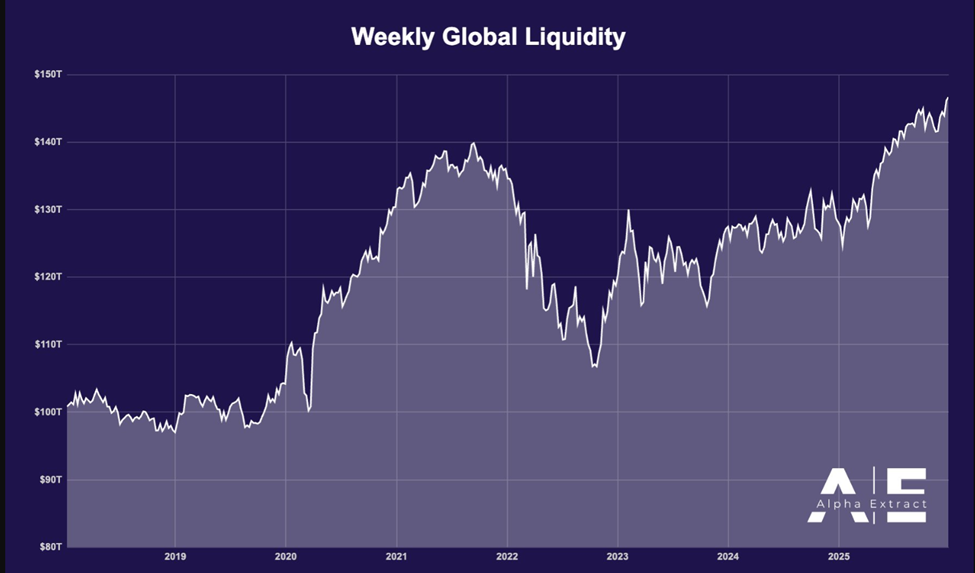
At the same time, global liquidity has reached a new all-time high. Data shared by Alpha Extract indicates that global liquidity has risen by approximately $490 billion. Support draws from:
- Improving collateral conditions,
- Fiscal flows resembling stealth quantitative easing, and
- Coordinated accommodation across major economies.
Sponsored
Sponsored
China typically begins the year with a liquidity uptick, while regulatory changes around bank Treasury holdings in the West are also expected to ease constraints.
Drawing conclusions, crypto-focused commentators argue that “global liquidity is going vertical” and that Bitcoin will eventually follow. Historically, expansions in global liquidity have coincided with strong performance in risk assets, including cryptocurrencies.
Yet the market response has been muted so far. Bitcoin continues to trade in a tight range between roughly $85,000 and $90,000, with thin volumes and subdued volatility.
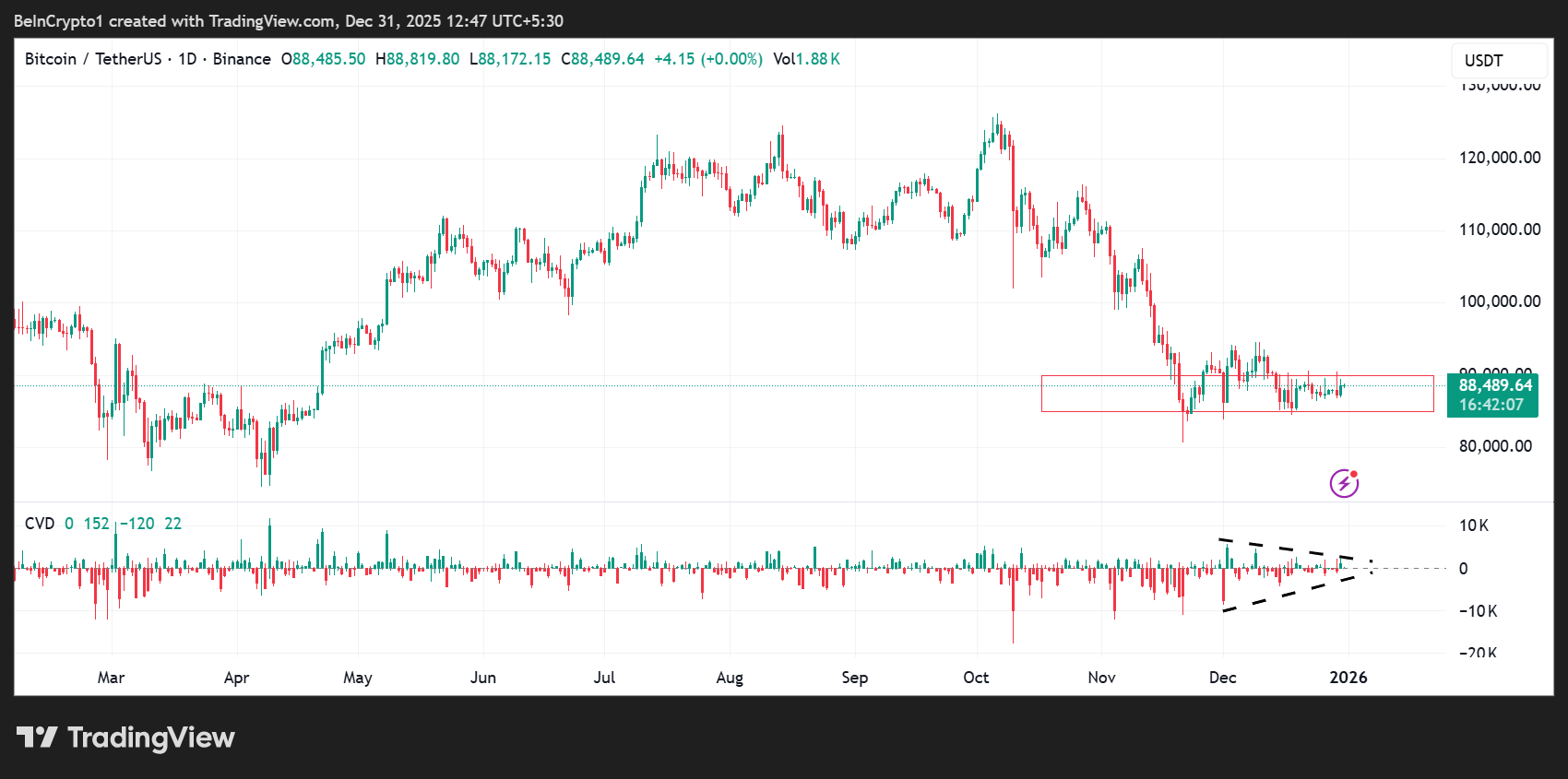
The disconnect may reflect the complexity of the current cycle, where abundant liquidity collides with restrictive policy rates, regulatory uncertainty, and lingering caution after a volatile year.
Will December’s liquidity surge prove to be a turning point? The Fed is quietly adding support beneath the financial system, even as it insists that this is not easing. Nonetheless, the direction of liquidity momentum may matter more than the labels attached to it.