

Bitcoin continues to trade near $92,000 after this week’s rebound, yet a growing cluster of on-chain indicators now suggests the market has already slipped into a bearish cycle.
This stands in sharp contrast to recent predictions from market leaders like Tom Lee and Arthur Hayes, who argue Bitcoin could still close the year significantly higher.
Sponsored
Sponsored
Bullish Predictions Clash With Data
Lee recently softened his earlier $250,000 target and now expects Bitcoin to remain above $100,000 into year-end.
Meanwhile, Arthur Hayes maintains a much more aggressive view, calling the recent dip to the low $80,000s a cycle bottom and forecasting a potential move toward $200,000–$250,000.
However, the current market structure does not align with either scenario.
CryptoQuant’s Bull Score Signals composite shows why. During previous bull phases, including late 2023 and early 2025, the model displayed broad green conditions across valuation, demand growth, network activity, and stablecoin liquidity.
Since mid-2025, these components have turned consistently red. MVRV Z-score has flipped into overheated territory, network activity has weakened, and stablecoin buying power has declined.
The pattern resembles the early stages of the 2022 downturn rather than a continuation of the 2025 rally.
Sponsored
Sponsored
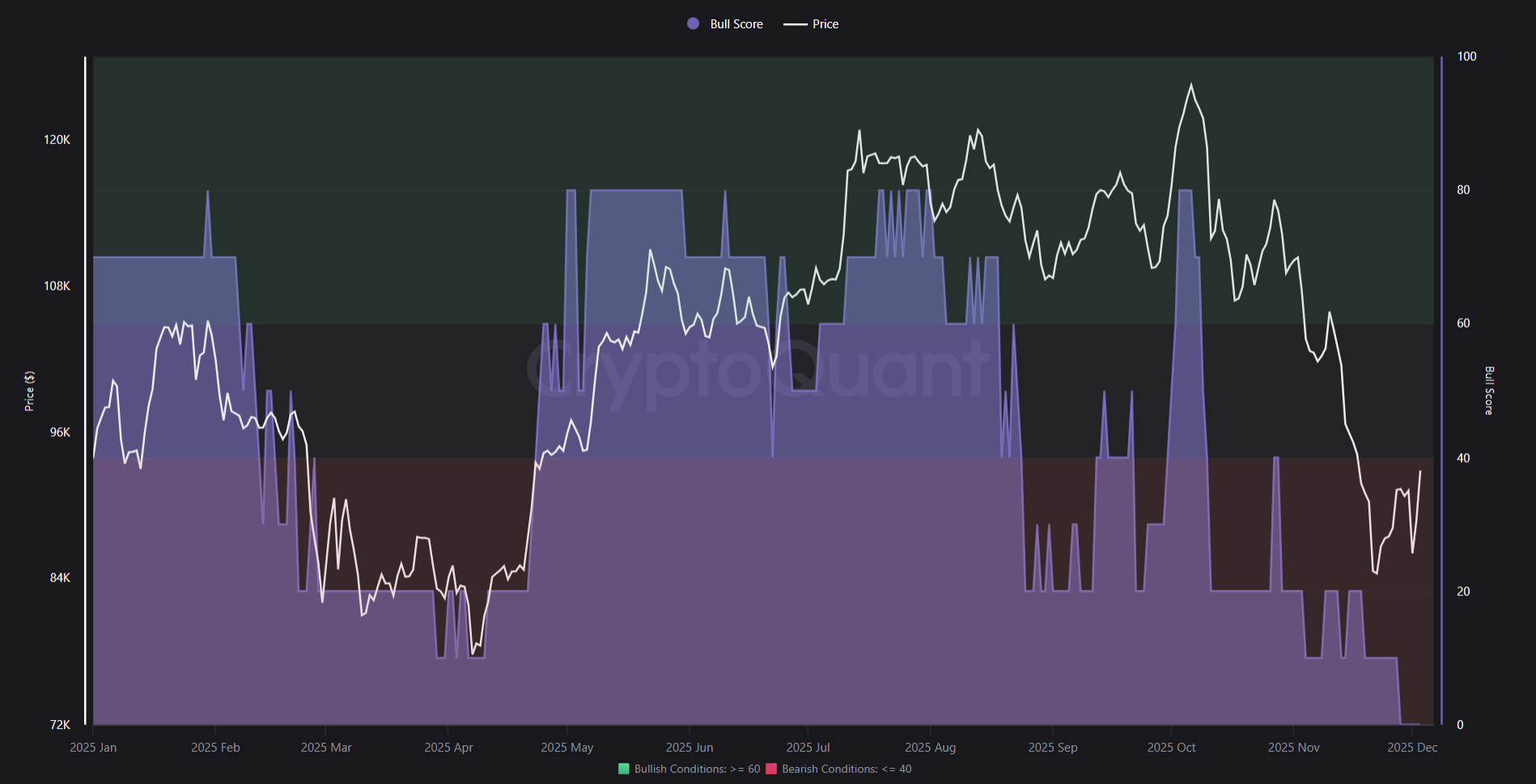
Also, the Bull Score Index, offers a more granular view. Bitcoin spent the first half of 2025 in bullish territory with readings above 60.
By late August, the score began falling sharply, dropping below 40 in October and remaining flat through November despite short-term price volatility.
The latest reading sits in the 20–30 range, deep within bearish conditions. The bounce from last week’s lows has done little to shift the underlying cycle signals.
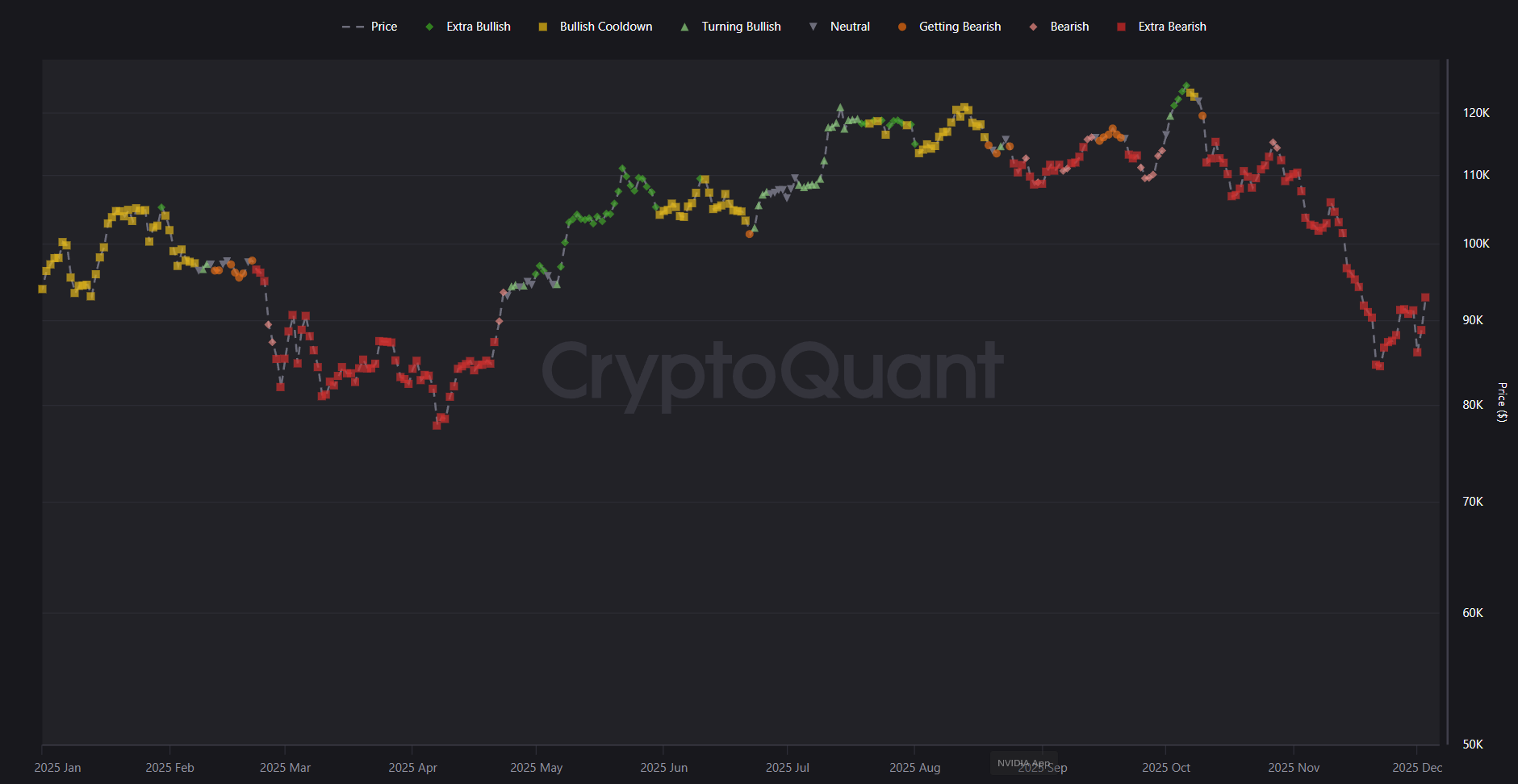
Another, the Bull Score mapped to price, reinforces this view. The model has transitioned from green “extra bullish” signals earlier this year to persistent red “bearish” and “extra bearish” readings across September, October, and November.
Even the recent recovery toward $92,000 is categorized as a bearish-zone rally, mirroring distribution phases seen in previous cycle tops.
Sponsored
Sponsored
Momentum Metrics Strengthen the Bitcoin Bearish Case
Market momentum indicators now echo the same cycle shift. RSI remains neutral around 50, signalling a lack of conviction behind this week’s advance.
Chaikin Money Flow has stayed negative for most of the month, reflecting continued capital outflows even as price recovers.
While MACD recently flipped positive, the histogram already shows weakening amplitude. This indicates the move lacks sustained momentum.
Sponsored
Sponsored
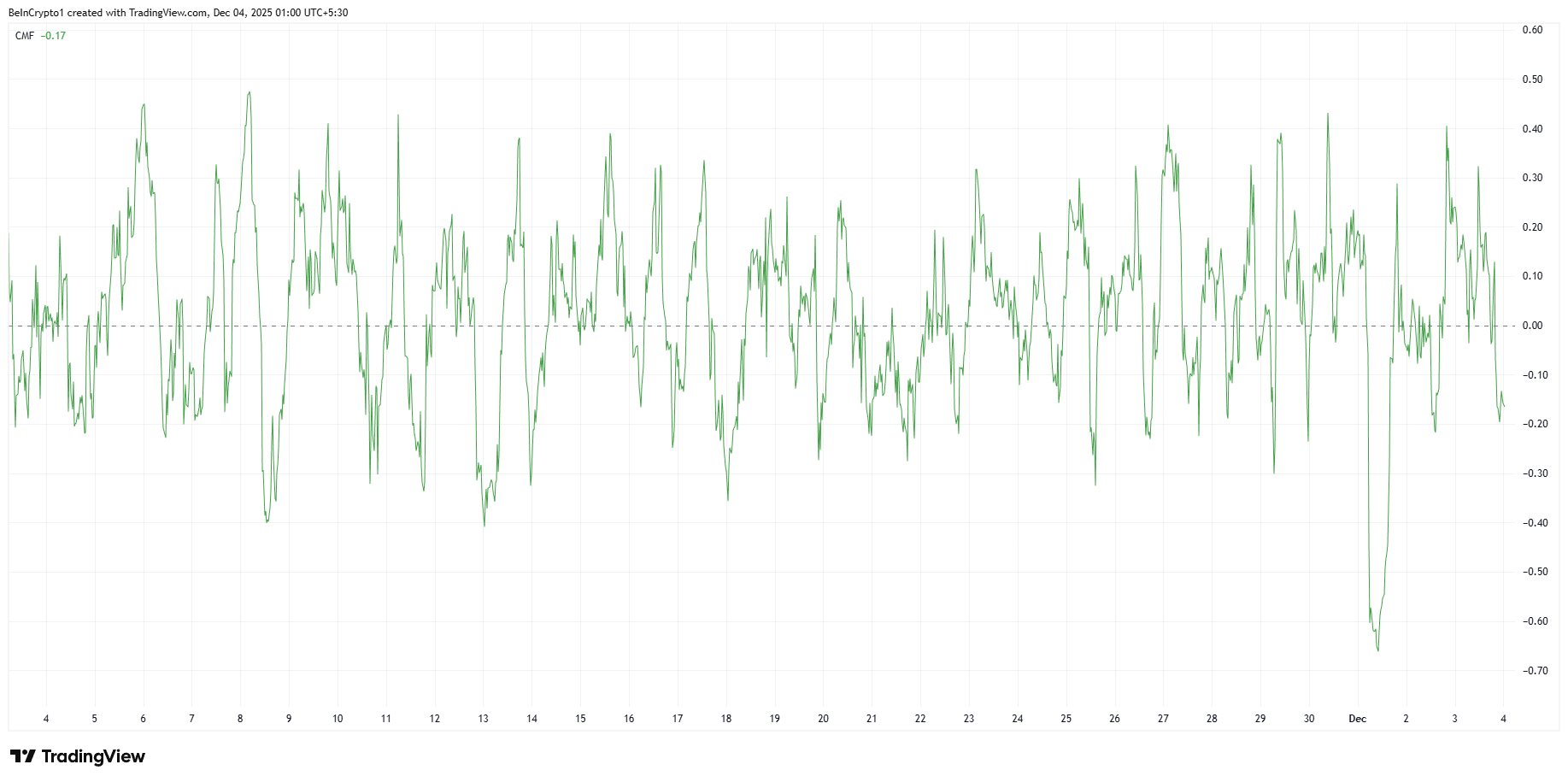
Additional signals deepen the caution. Short-term RSI spikes above 70 in recent days failed to hold, showing sellers remain active during every attempt at a breakout. CMF’s inability to return to positive territory highlights ongoing distribution rather than accumulation.
Meanwhile, MACD’s fragile crossover mirrors conditions seen during past bear market rallies, where momentum improves briefly before rolling over.
Taken together, on-chain, liquidity, and momentum indicators point to a structural shift into a bearish cycle.
While Tom Lee and Arthur Hayes argue that Bitcoin could regain its earlier strength, current market data suggests the opposite.
Unless stablecoin liquidity, network activity, and demand growth rebound decisively, Bitcoin’s recent recovery is more likely a temporary bounce than the beginning of a new upside phase.