

Tether’s USDT processed $156 billion in payments of $1,000 or less in 2025, according to figures shared today by CEO Paolo Ardoino, based on Chainalysis and Artemis data.
The number highlights a side of crypto adoption often missed by price charts and ETF flows – everyday transactional use.
Sponsored
Sponsored
USDT is Being Used as a Substitute for Banks and Cash
Small-value transfers now represent a meaningful share of USDT activity. The data shows steady growth since 2020, with acceleration through 2024 and into 2025, as average daily volumes for sub-$1,000 transfers climbed above $500 million.
This points to USDT functioning less as a trading instrument and more as a digital payments rail.
The significance lies in who uses stablecoins and how. Transfers under $1,000 typically reflect remittances, payroll, retail payments, savings movement, and peer-to-peer transfers, especially in emerging markets.
Unlike large exchange flows, these transactions tend to be non-speculative and recurring.
In practical terms, USDT is increasingly acting as a substitute for cash and bank wires in regions where access to dollars is limited or expensive.
Sponsored
Sponsored
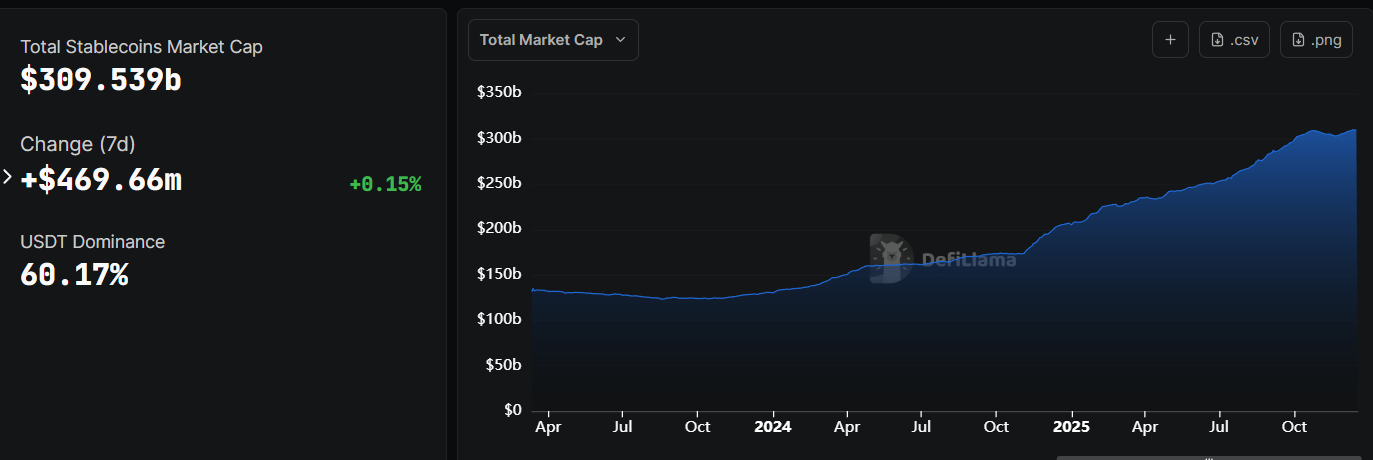
This trend aligns with USDT’s broader trajectory in 2025. Circulating supply reached new highs during the year, reflecting demand for dollar liquidity beyond crypto trading.
At the same time, regulatory developments reshaped where and how USDT circulates.
In the US, the GENIUS Act clarified the legal framework for payment stablecoins, reinforcing institutional confidence in compliant dollar-backed tokens.
In Europe, MiCA introduced stricter licensing rules, shifting some regulated platform activity away from USDT but not slowing global on-chain usage.
Tether has also expanded its infrastructure footprint. Recent investments in Lightning-based payment rails signal an effort to push USDT into faster, lower-cost settlement networks.
Regional partnerships in Africa and the Middle East further indicate a focus on payments and financial access, not just exchange liquidity.
Taken together, the $156 billion figure reframes the crypto adoption debate. While market cycles drive headlines, stablecoins continue to scale quietly as financial plumbing.
The growth in small USDT payments suggests that, in 2025, crypto adoption is less about speculation and more about utility, resilience, and global dollar access. This shift may prove more durable than any bull market.