

Add ZyCrypto News On Google
A recent post by Binance Research, based on a Chainalysis graph, shows that around three-quarters of $100 billion worth of illicit crypto funds still exist on the blockchain. While the sum represents only 1% of crypto transactions, the net amount of dirty funds stored in the ecosystem continues to climb sharply, currently up 28% from last year.
Binance Research tweeted:
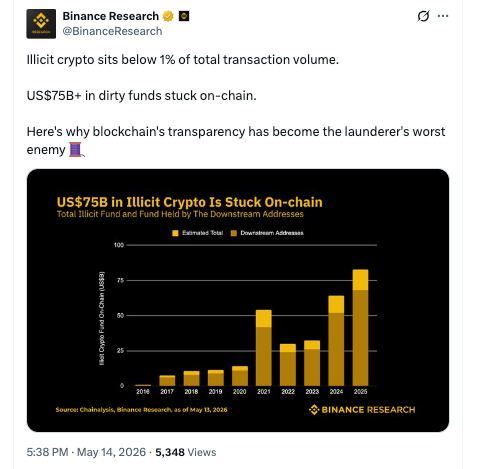
Based on the graph, the statistics for illegitimate crypto stuck at the on-chain level have increased sharply over the last decade. 2017, 2021, and 2025 remain major inflection points in the data, coincidentally, the peaks of historic bull markets. It shows that illegal crypto activity has a history of accelerating during ongoing price surges and generally cooling off in the aftermath. 2025 alone witnessed anywhere between $75 billion and $83 billion in accumulated black crypto.
The 2026 calendar year is likely to end more subdued than the preceding year, but a higher low is expected. Major DeFi exploits like KelpDAO, Drift Protocol, and Resolv have already upped the ante in the first four months. It remains to be seen how much the value is likely to rise in the remaining quarters.
The Paradox of Illicit Crypto Funds
The growing stockpile of tainted funds is a paradox within the crypto economy. On the one hand, the digital currency ecosystem offers transparency and immutability, but it also has to confront tens of billions of dollars in criminal wealth stashed within it.

 
The overwhelming vast majority of crypto transactions remain legitimate and benefit day-to-day lives. Regarding the illicit funds, it is at least good to know that the system is still tracking them effectively despite widespread use of crypto mixers and other privacy tools. The latter have limited functionality, and hackers can only mix small amounts of crypto daily, forcing them to leave their crypto on-chain for the time being.
This is why laundering huge sums of money out of crypto is a major headache, and hackers often try to skip steps and get caught in the process. The transparency of the blockchain economy also means that the funds are automatically tracked, and eventually, a connection is found that law enforcement can follow.
The importance of robust KYC/AML practices and wallet hygiene cannot be understated in an increasingly risky crypto climate.