

Bitcoin encounters mounting selling pressure as January 2026 ends, including a $2.24 billion drop in stablecoin market capitalization, a year-low Coinbase premium, and a sharp decline in mining hashrate due to a severe US ice storm.
The combined impact of these factors has prompted veteran trader Peter Brandt to warn that Bitcoin could fall below $70,000 if these market pressures persist.
Sponsored
Sponsored
Stablecoin Exodus Signals Capital Flight From Crypto
The crypto market is facing a major liquidity drop, as the market cap of the top 12 stablecoins has fallen by $2.24 billion in just 10 days, in line with Bitcoin’s 8% decline. According to market intelligence platform Santiment, this decrease goes beyond typical profit-taking.
The data indicate a critical challenge for Bitcoin bulls. Rather than rotating capital into stablecoins to wait for better entry points, investors are cashing out to fiat.
Stablecoins provide essential liquidity for crypto purchases. When their supply drops, the market’s ability to absorb selling pressure or support rebounds is reduced.
Historically, crypto recoveries have depended on the growth of the stablecoin market cap, signaling new capital entering the space. The recent decline suggests that short-term buying power is shrinking.
Furthermore, Santiment explained that this withdrawal could be due to money shifting into gold and silver as investors find them more attractive in the current environment. The consequence of this move is that altcoins will suffer heavy losses.
Sponsored
Sponsored
Coinbase Premium Plunges Into Negative Territory
Bitcoin’s decline is compounded by the Coinbase Premium Index, which has fallen to its lowest level in a year, showing heightened selling pressure from US investors.
The Coinbase Premium tracks the price gap between Bitcoin on Coinbase Pro and the global average, offering insight into US institutional and retail sentiment.
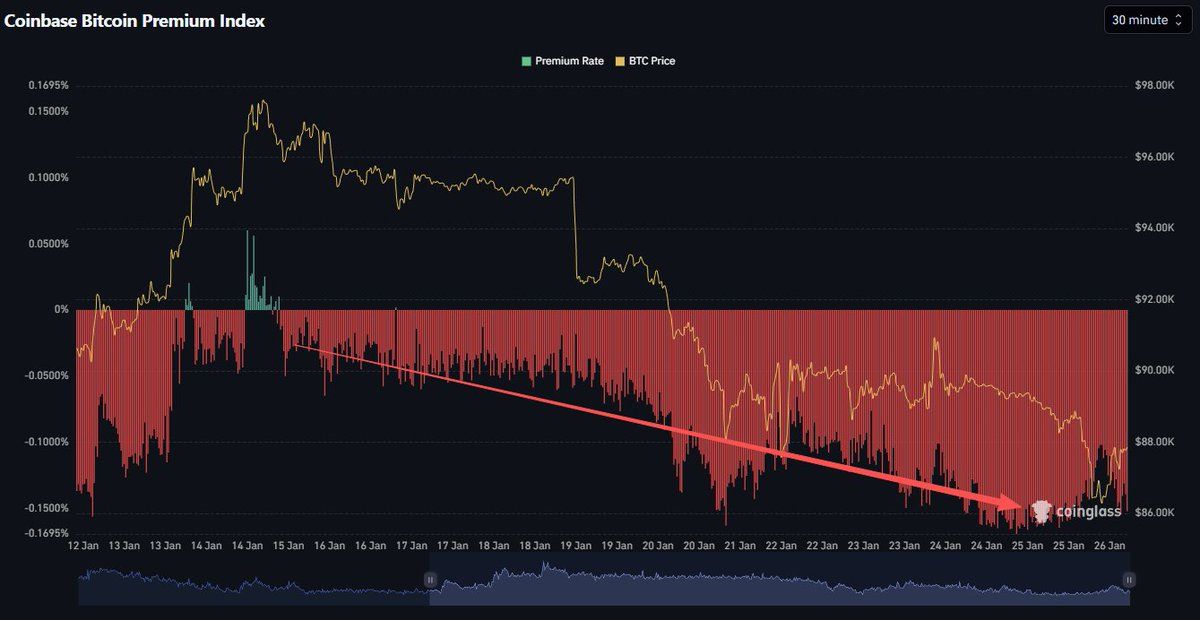
Data from Coinglass reveals the premium went deep into negative territory from January 12 to 26, 2026, with readings below -0.05% and dropping to nearly -0.15% after January 21. CryptoQuant data shows that the 7-day average Coinbase Premium Index has fallen to its lowest level since the beginning of the year.
The negative premium means Bitcoin is trading at a discount on Coinbase, reflecting stronger selling by US participants.
Sponsored
Sponsored
Ice Storm Triggers Mining Crisis and Hashrate Collapse
A severe US ice storm has delivered another blow to Bitcoin, causing hashrate to drop from 1.133 ZH/s to 690 EH/s over two days. The US makes up about a third of Bitcoin’s global mining capacity, with key operations in Texas run by companies such as MARA and Foundry Digital.
Analyst Darkfost from CryptoQuant reports that MARA’s hashrate fell by 4 times in 3 days compared to its monthly average. The extreme cold disrupted power grids, leading to load cuts and higher electricity costs. These conditions forced miners to shut down operations and avoid unsustainable costs.
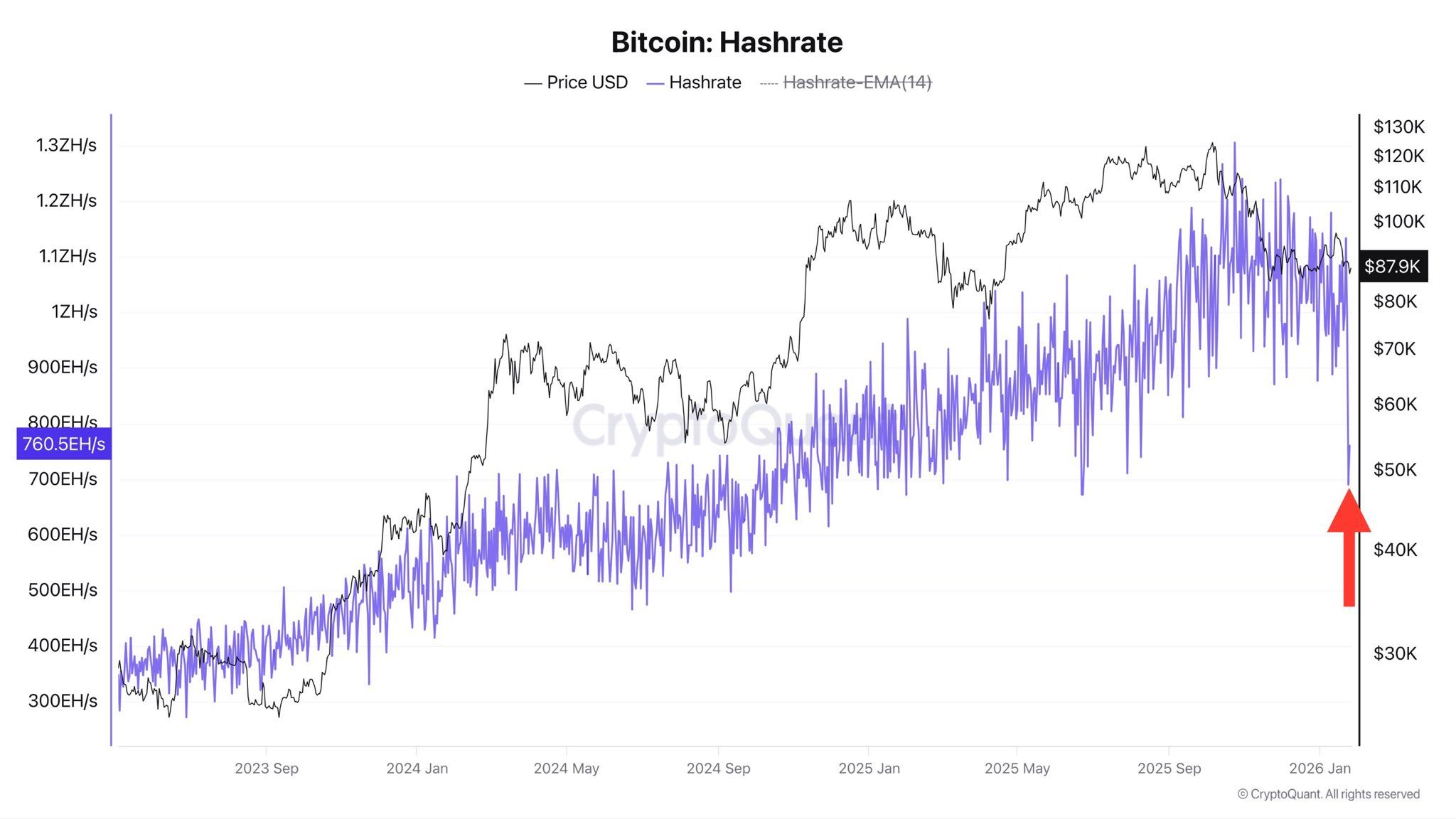
If mining companies endure revenue shortfalls, miners might be forced to sell their holdings to cover ongoing expenses, adding to the pressure of sale while liquidity remains tight.
Sponsored
Sponsored
“This period of stress could even trigger some BTC selling if the storm were to persist, as miners may still need to cover fixed operating costs while waiting for conditions to normalize.” – Analyst Darkfost predicted.
Technical Breakdown Points to Further Downside
Veteran trader Peter Brandt has flagged a bearish technical signal that matches the overall downward trend. Brandt notes that Bitcoin has broken down from a bear channel on the daily chart, moving below a rising channel established since late December 2025.
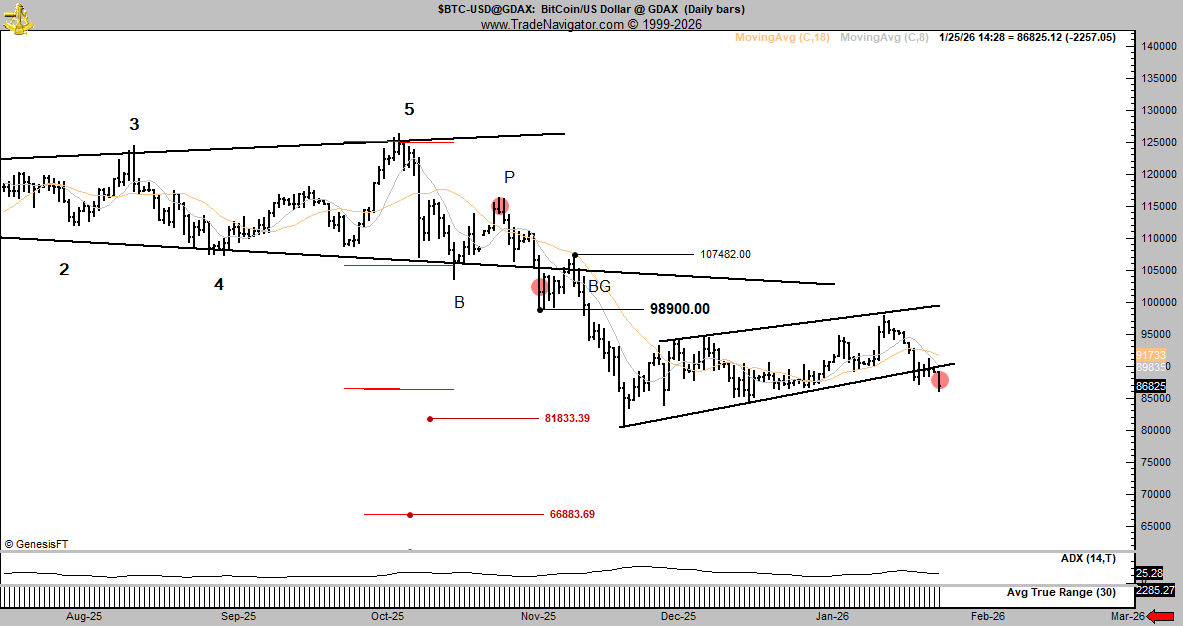
Brandt’s analysis suggests Bitcoin must recover above $93,000 to negate the bearish outlook. If it fails, the price could decline toward $81,833 or even $66,883.
This technical forecast adds weight to the bearish narrative seen in on-chain metrics and broader market structure. With liquidity draining, strong U.S. selling, and stressed miners, Bitcoin lacks the support to reclaim key resistance levels. The combination of technical and fundamental factors makes a near-term recovery difficult.