
Brad Garlinghouse is casting the Ripple XRP SEC case as more than a legal win. In his telling, it marks the collapse of what he called Washington’s “Anti-Crypto Army,” defeated “by the courts… by the voters. And by Trump.”
That message landed at a moment when one of crypto’s longest-running U.S. fights suddenly looked close to ending. After more than four years of litigation, the U.S. Securities and Exchange Commission agreed to drop its appeal in the XRP case, a major turn for Ripple and for a broader industry that has treated the lawsuit as a test of how far U.S. regulators could go.
Garlinghouse’s argument is blunt and political at the same time. He said attacking digital assets “never made policy, legal or political sense,” and framed the push against crypto as protection for “an old, often broken, system.” The timing matters because the legal shift is now colliding with a new power map in Washington.
Garlinghouse says the anti-crypto coalition was defeated
Garlinghouse’s remarks were not subtle. He said the “Anti-Crypto Army” was defeated by courts, voters, and Trump, tying Ripple’s courtroom progress to a wider change in political momentum.
That framing reflects how much of the crypto industry now sees the last several years: not just as a fight over one token, but as a fight over whether digital assets would be pushed out of the U.S. system or folded into it under clearer rules.
Why this matters is simple. Crypto companies have long argued that regulation by enforcement created uncertainty for businesses, investors, and developers. Garlinghouse’s comments turn that complaint into a political narrative, suggesting the backlash to hardline enforcement has now shown up in both court outcomes and election results.
He also argued that efforts to combat financial innovation never made sense on policy, legal, or political grounds. For Ripple supporters, that line reads as vindication. For Washington, it is a warning that crypto is no longer just a niche regulatory issue.
The Ripple XRP SEC case moves toward closure
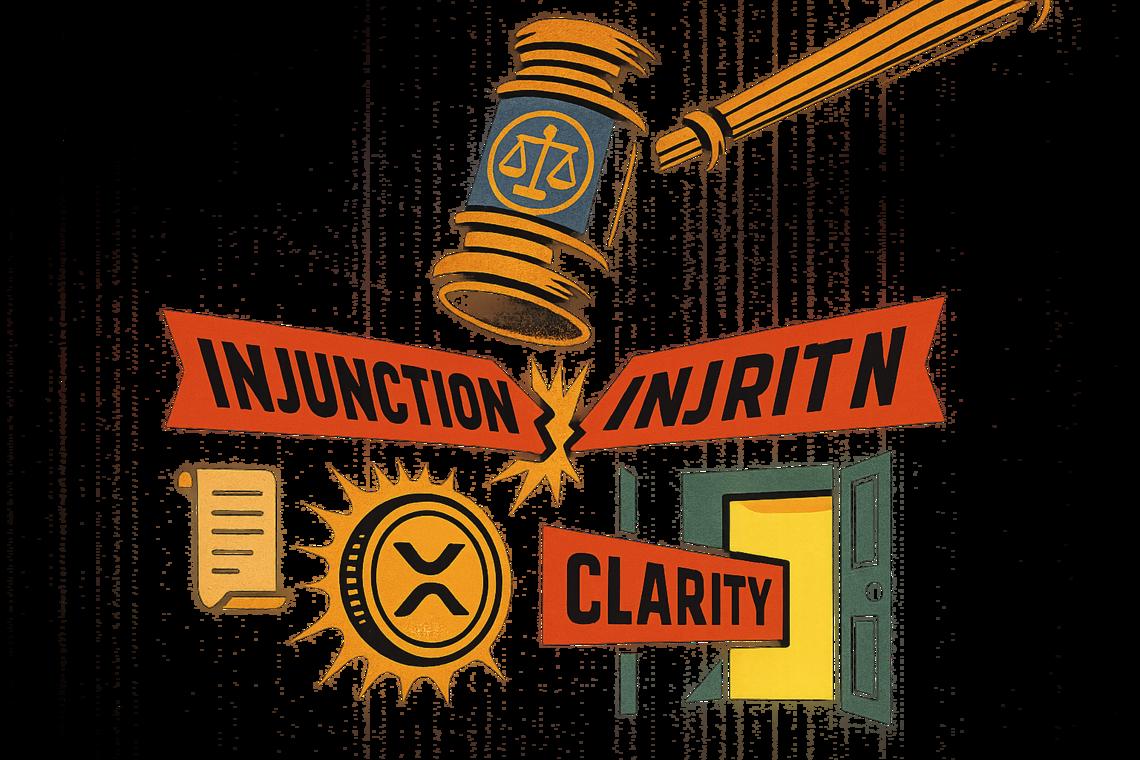
The biggest shift in the Ripple XRP SEC case is practical, not rhetorical. The SEC agreed to drop its appeal in the XRP case, removing a major overhang from a dispute that has shaped the U.S. crypto conversation for years.
Ripple, under the new terms described in the reporting, will pay a $50 million civil penalty instead of the original $125 million amount. The agency is also moving to lift an “obey the law” injunction against Ripple.
Those are not small changes. Together, they suggest the case is moving toward closure on terms far different from the ones once hanging over the company.
Judge Analisa Torres’s 2023 ruling remains central to that outcome. Garlinghouse called it a major victory for Ripple and for crypto, and the ruling is described as a key turning point in the legal battle.
Why the legal turn matters beyond Ripple
This is where the Ripple XRP SEC case becomes bigger than one company. The lawsuit has been treated across the industry as a proxy fight over how U.S. law applies to digital assets.
If the SEC is backing away from its appeal while Ripple pays a reduced penalty and the injunction is being lifted, the signal to the market is hard to miss: courtroom limits on aggressive enforcement may now be shaping policy just as much as agency strategy.
That does not settle every crypto regulatory question. But it does strengthen the view that court decisions, not only enforcement actions, are now defining the boundaries of U.S. crypto oversight.
Trump’s return and the CLARITY Act widen the political stakes
The article ties the legal outcome directly to Donald Trump’s 2024 election win and to crypto-aligned political activity that followed it. That link matters because it suggests the center of gravity has shifted from the courtroom to Capitol Hill.
Industry advocates have pointed to a growing crypto voter bloc and claimed that crypto-aligned super PACs and donors helped flip key swing states. In that context, Garlinghouse’s praise for Trump looks less like a one-off political flourish and more like a sign of where the industry believes its leverage now sits.
The next big fight, according to the reporting, is the CLARITY Act crypto debate. The Digital Asset Market Clarity Act is presented as the major legislative battle ahead for U.S. crypto rules.
Scott Bessent is quoted as saying clear federal rules are “exactly what we need” to stabilize markets. That line captures the new phase of the debate: after years of lawsuits and enforcement, the industry is pressing for rules that can attract institutional capital and reduce legal ambiguity.
Ripple and Coinbase are also said to have participated in closed-door sessions on crypto legislation, another sign that major firms are no longer just defending themselves in court. They are trying to shape the rulebook.
What changes now for crypto policy
The political meaning of this moment may be even bigger than the settlement itself.
A reduced XRP lawsuit settlement, a dropped SEC appeal, and a push for the CLARITY Act together suggest a transition from enforcement-era crypto policy to legislation-era crypto policy. That is a major shift in how power works in Washington. Regulators still matter, but Congress and the White House may now have more room to define the market’s future.
For companies like Ripple, that creates an opening to move from defense to influence. For investors and the wider digital asset sector, it raises the stakes around federal legislation that could determine how assets like XRP are treated under U.S. law.
A case that became a referendum
The Ripple XRP SEC case started as a legal dispute, but it now reads like a referendum on the direction of U.S. crypto policy.
Garlinghouse has made that explicit by tying Ripple’s courtroom progress to Trump’s return and to a broader rejection of anti-crypto politics. Whether that message convinces everyone in Washington is another question. But the legal facts are already reshaping the conversation: the SEC is dropping its appeal, Ripple’s penalty is set at $50 million instead of $125 million, and the agency is moving to lift the injunction.
That leaves the industry facing a different contest now. The courtroom battle that defined the past few years may be winding down, while the fight over the CLARITY Act could decide what comes next for XRP, Ripple, and the U.S. crypto market itself.