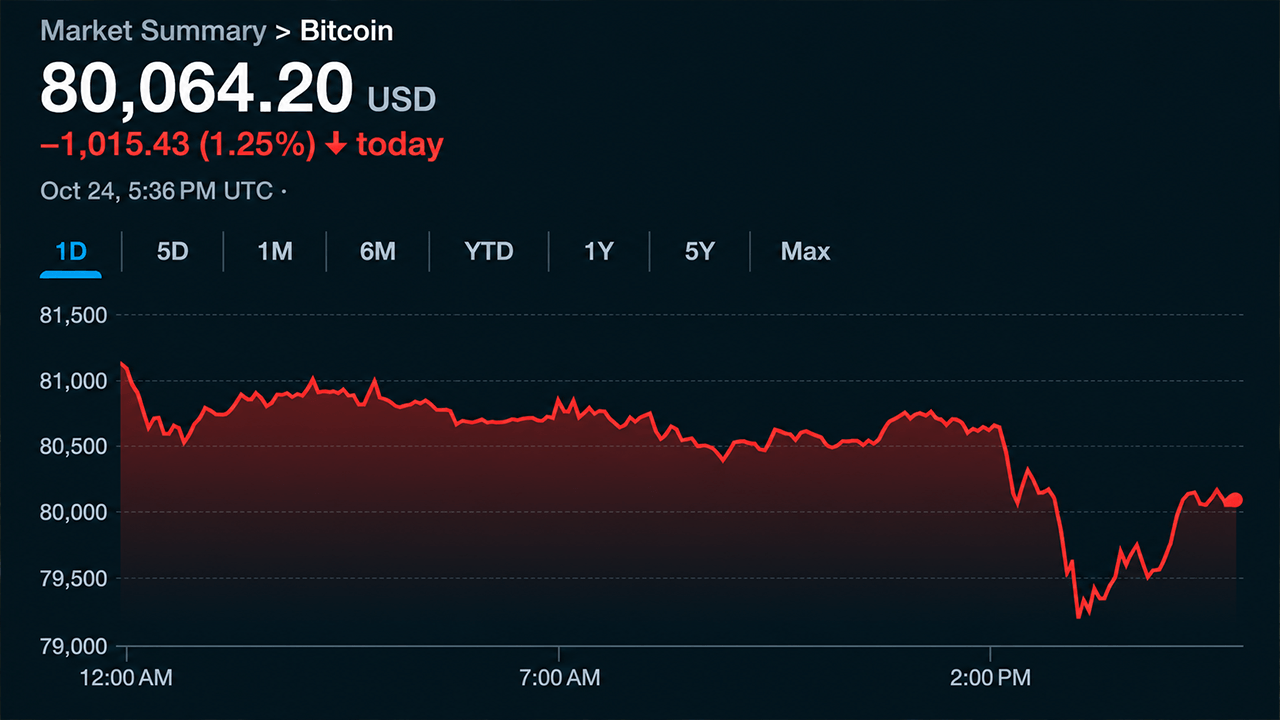
Bitcoin is trading in line with broader market weakness as two macro pressures converge: credit stress in the AI infrastructure sector and a surge in oil prices to multi-month highs.
According to a report by QCP, bitcoin continues to behave as a risk asset rather than a hedge against market turbulence. The analysis points to rising concerns about AI financing costs as a key driver, with CoreWeave's five-year credit default swap spread at approximately 1,128 basis points—more than three times Oracle's 30 basis points—signaling market anxiety about debt serviceability across the neocloud sector.
Credit Stress Spreads Across Markets
CoreWeave fell 10% on October 10 as investors reassessed capital costs, and the repricing has extended beyond a single company into broader equities and cryptocurrencies. South Korea's KOSPI dropped more than 14% in a single week in mid-October, marking its worst five-day performance since 2008, while chip stocks faced additional pressure from AI-financing concerns and foreign selling.
Bitcoin has failed to decouple from this equity weakness. Rather than emerging as a safe haven during the selloff, the largest cryptocurrency has remained unusually sensitive to tech stocks and macroeconomic conditions, continuing the pattern established during the recent inflation-driven correction.
Oil Prices Hit Five-Month High
Brent crude reached $114 per barrel on Friday, the highest level since May 5, following renewed Houthi attacks on Saudi infrastructure. Despite reports that Middle East crude exports are now above pre-war levels, shipping costs and insurance premiums remain elevated. Freight costs for a two-million-barrel tanker from the Middle East to China stand at approximately $1.4 million per day, more than 12 times pre-war levels.
The combination of sticky inflation from elevated energy costs and AI credit stress may complicate the Federal Reserve's policy path. While market expectations for an October rate hike have dropped close to zero, experts do not anticipate rate cuts in the near term. These dynamics create a challenging backdrop for risk assets, including bitcoin, as investors weigh the competing pressures in the days ahead of the next FOMC meeting.