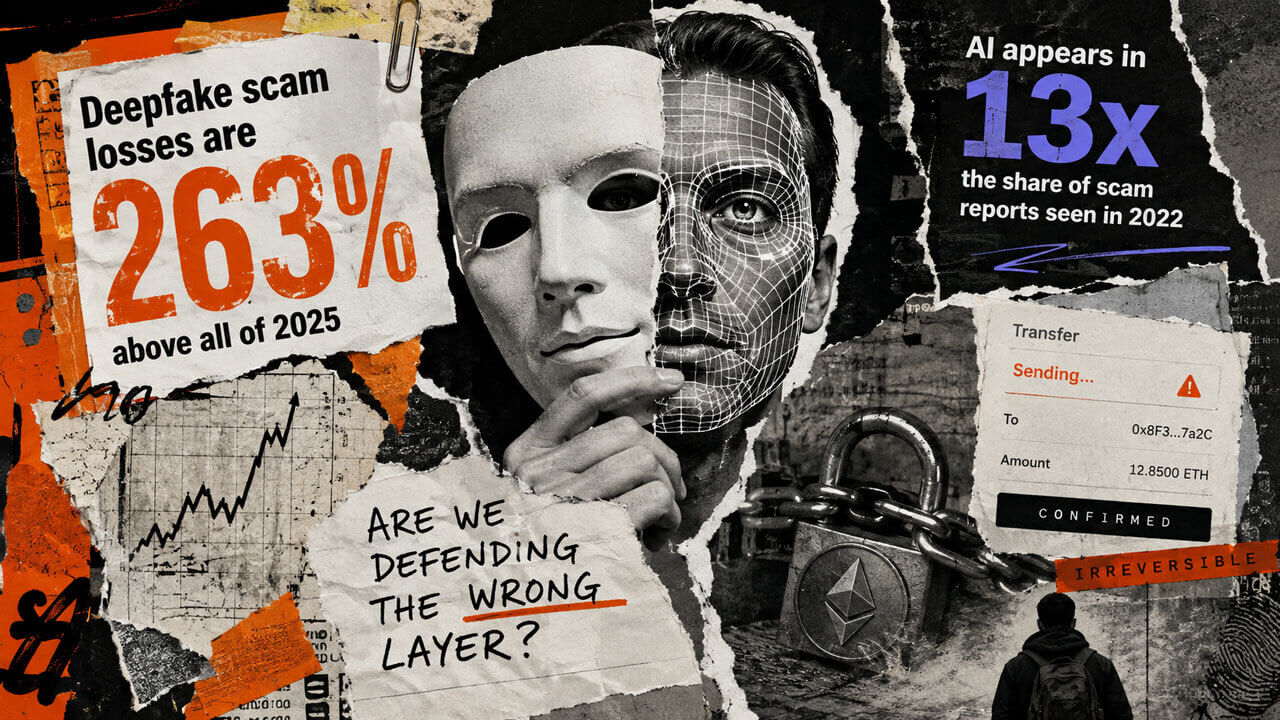
Reported losses from deepfake scams in 2026 have already surpassed last year's total by 263%, according to data from TRM Labs. The findings highlight a growing cryptocurrency security challenge in which attackers increasingly manipulate authorized users rather than break blockchain code.
TRM Labs' AI-in-Crime Adoption Index classifies scams as the only crypto-crime category where artificial intelligence has reached a "Mature" level of adoption. According to the firm, reports involving scammer-side uses of AI—such as deepfakes, chatbots, and AI-powered lures—have risen roughly 13-fold since 2022.
This shift exposes a vulnerability that traditional smart-contract security does not address. An exchange account can be authenticated, a hardware wallet can sign correctly, and a smart contract can execute as programmed, yet funds can still reach an attacker if a deepfake convinces the person controlling those systems to approve the transaction.
The Scale of AI-Enabled Impersonation
Data from multiple organizations point to a significant increase in AI-related fraud:
- TRM Labs: Reports noting scammer-side AI are roughly 13 times higher than in 2022, while broader reports mentioning AI have increased about 25-fold. TRM also noted that 2026 deepfake scam losses through Aug. 17 were 263% higher than the total for all of 2025.
- Chainalysis: Inflows to impersonation scams rose more than 1,400% year over year. The firm reported that scam operations with visible on-chain links to AI service providers generated 4.5 times more revenue on average than those without such links.
- FBI Internet Crime Report (2025): The FBI recorded 22,364 complaints carrying an AI-related descriptor with $893.35 million in associated reported losses, alongside $11.37 billion in losses across complaints involving cryptocurrency descriptors.
AI tools allow single attackers to maintain multi-language conversations, strengthen false identities during remote verification via synthetic video, clone executive or family voices, and generate consistent fraudulent documents and communications across multiple channels.
Shifting the Security Burden
Because blockchain transactions are difficult to reverse once authorized, the security burden increasingly falls on the moment before authorization. TRM's review of first-half crypto hacks indicated that while smart-contract vulnerabilities remain common, the largest losses are concentrated in infrastructure and operational compromises involving stolen credentials, private keys, or manipulated access.
Exchanges, corporate treasuries, and individual holders face distinct risks from these tactics:
- Exchanges: Attackers may impersonate customers during account recovery, modify authentication factors, and add new withdrawal destinations. FinCEN has advised institutions to watch for mismatched identity details, suspicious device or location changes, third-party webcam tools, resistance to multifactor authentication, and rapid transactions following account changes.
- Corporate Treasuries: Synthetic voices or videos can pressure employees to approve transfers or add payment addresses. While hardware wallets confirm private key signatures, they cannot determine if the human controller was deceived. Multiperson approvals and delays on newly added withdrawal addresses help mitigate these risks.
- Individuals: Convincing video calls, voice messages, or profiles can persuade individuals to make payments personally, bypassing traditional blockchain security controls entirely.
While on-chain tools remain useful for tracing assets and supporting freezes via centralized intermediaries, they cannot stop transactions that victims or authorized signers willingly approve. TRM's data indicates that as AI impersonation becomes more effective, verifying the identity of the person giving the instruction before an irreversible transaction is signed remains a critical control point.