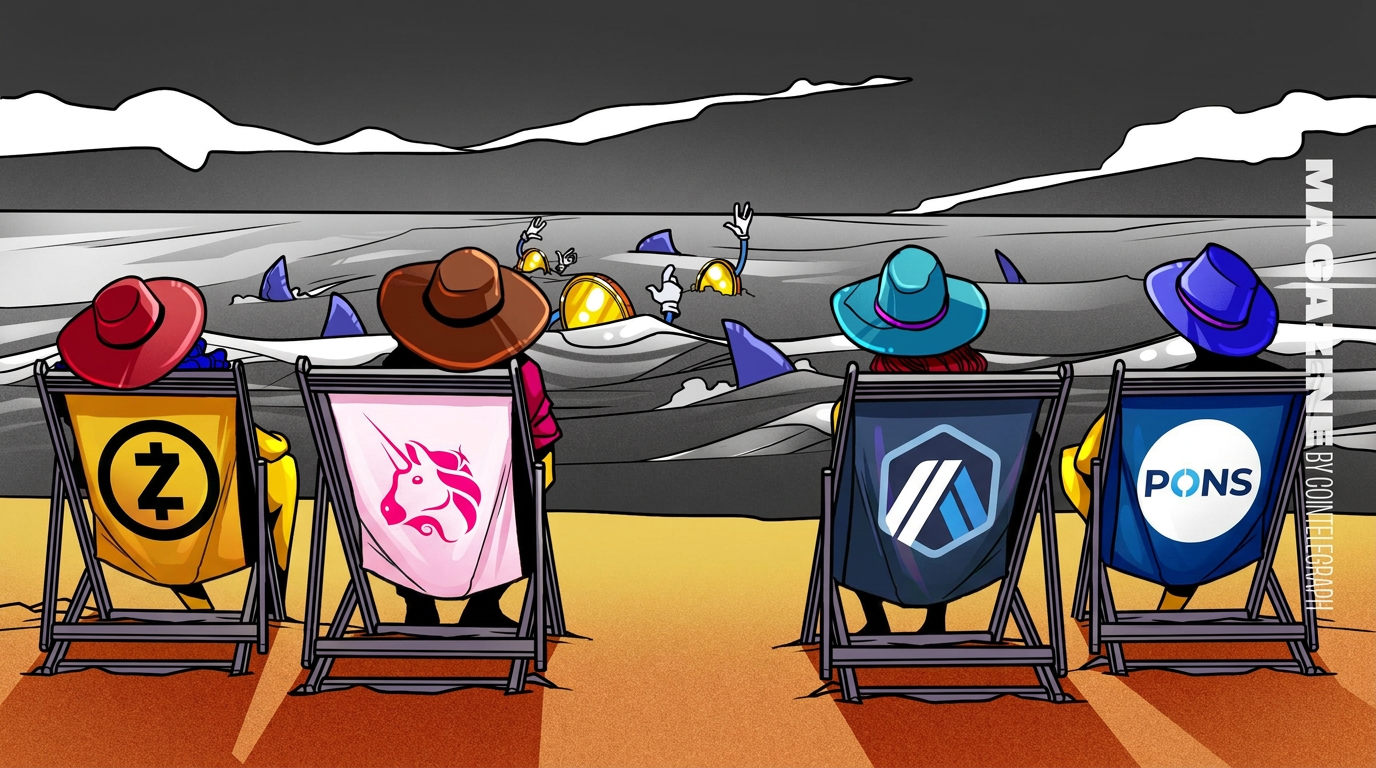
An emerging rotation into altcoins is reshaping market participation patterns, with traders displaying greater selectivity than in previous cycles. Over the past 30 days, several categories have posted significant gains: Uniswap's UNI rose over 110%, Arbitrum's ARB climbed more than 150%, NEAR gained approximately 180%, and privacy token Zcash reached a record high above $1,600.
The breadth of these gains—spanning DeFi protocols, privacy tokens, and AI-focused projects—suggests market participants are increasingly considering utility and revenue generation. Industry analysts note that tokens with active business models appear to be driving current performance. Among the top 20 biggest gainers in a recent week, only two were memecoins, indicating a shift from previous altseason patterns.
Market concentration remains pronounced, however. Data shows the top 10 altcoins currently account for approximately 80% of total altcoin market capitalization, up from around 70% at the end of 2024. This suggests capital is clustering around fewer assets rather than rotating broadly across the sector.
Selective Participation Replaces All-In Trading
Rather than experiencing widespread adoption across altcoins as a single asset class, the market is organizing around specific narratives and use cases. Revenue-generating protocols, onchain perpetuals, and DeFi projects are attracting concentrated attention alongside privacy-related assets and AI-adjacent tokens. Memecoin launchpads have also seen activity, with tokens like PONS and PUMP among the largest gainers.
Data indicates that while more wallets are participating in altcoin trading, individual purchase sizes remain modest. This pattern reflects what market observers describe as selective rather than comprehensive market participation.
Institutional and Retail Dynamics
Market maker participation in altcoin trading has declined significantly, falling from approximately 65% at the end of 2024 to about 32% in September. This represents a substantial shift from previous altcoin rallies and suggests liquidity providers are playing a smaller role in the current move.
Simultaneously, access to altcoin exposure has broadened. Infrastructure once requiring interaction with decentralized venues is now available through mainstream platforms, lowering barriers to entry for retail participants. Professional traders also have access to more sophisticated tools for tracking capital flows and identifying emerging trading activity.
Validation of Use Cases
Curve Finance founder Michael Egorov observes increased attention toward protocols with practical applications and institutional demand, particularly those connecting cryptocurrency infrastructure with real financial activity. Stablecoins represent one category attracting focus, especially for onchain foreign exchange and fintech applications.
The official Altcoin Season Index currently stands at 64 out of 100, up from 48 the previous week but still below the 75 threshold that marks an official new season. Whether this cycle will be defined by fundamental utility or return to speculative patterns remains an open question.