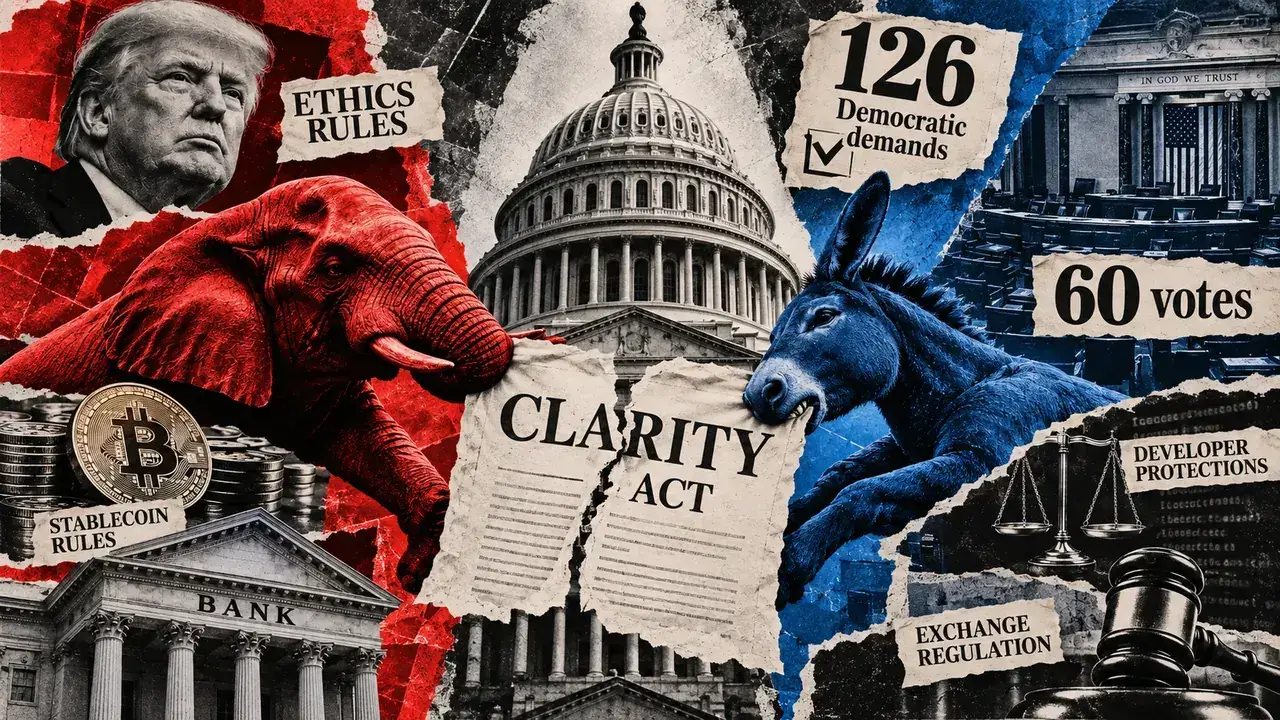
Crypto markets may be underestimating legislative progress on the Clarity Act following Republican concessions on ethics enforcement and banking concerns, according to Bernstein analysts ahead of a Senate procedural vote.
"We reckon any positive surprise is definitely not priced in," Bernstein analysts led by Gautam Chhugani wrote in a client note.
What Changed
A revised draft released Sunday incorporates 126 changes requested by Democrats, including a role for state attorneys general in enforcing ethics restrictions. The earlier version left ethics enforcement solely to the Justice Department.
The updated proposal also gives the Treasury authority to restrict stablecoin rewards if they cause substantial withdrawals from community banks. Banking groups have argued such payments could draw deposits away from lending.
President Donald Trump has agreed to the revised restrictions, according to Republican sponsors.
Legislative Status
The Clarity Act would establish federal rules for digital assets and clarify regulatory responsibilities between the Securities and Exchange Commission and Commodity Futures Trading Commission. Advancing it requires Democratic support.
Sen. Cynthia Lummis (R., Wyo.), chair of the Senate Banking Subcommittee on Digital Assets, urged Democrats to support the revised bill. "After a year of intense daily bipartisan negotiations, this bill is ready," Lummis said in a statement.
Analyst Disagreement
Views on passage prospects remain divided. Bernstein suggested the ethics enforcement changes and divestment requirements could persuade some Democrats to support advancing the legislation. However, TD Cowen analyst Jaret Seiberg maintained a 25% probability of enactment this year, noting "This is not a negotiated deal. Democrats are being presented with the final product."
Beacon Policy Advisors raised its estimate to 30%-40% from below 10%.
Alternative Path
If Congress fails to pass the Clarity Act, the CFTC plans to pursue crypto rules using powers it already has. CFTC Chair Michael S. Selig has directed staff to explore those rules, but says legislation would provide protections that future administrations would find harder to undo.