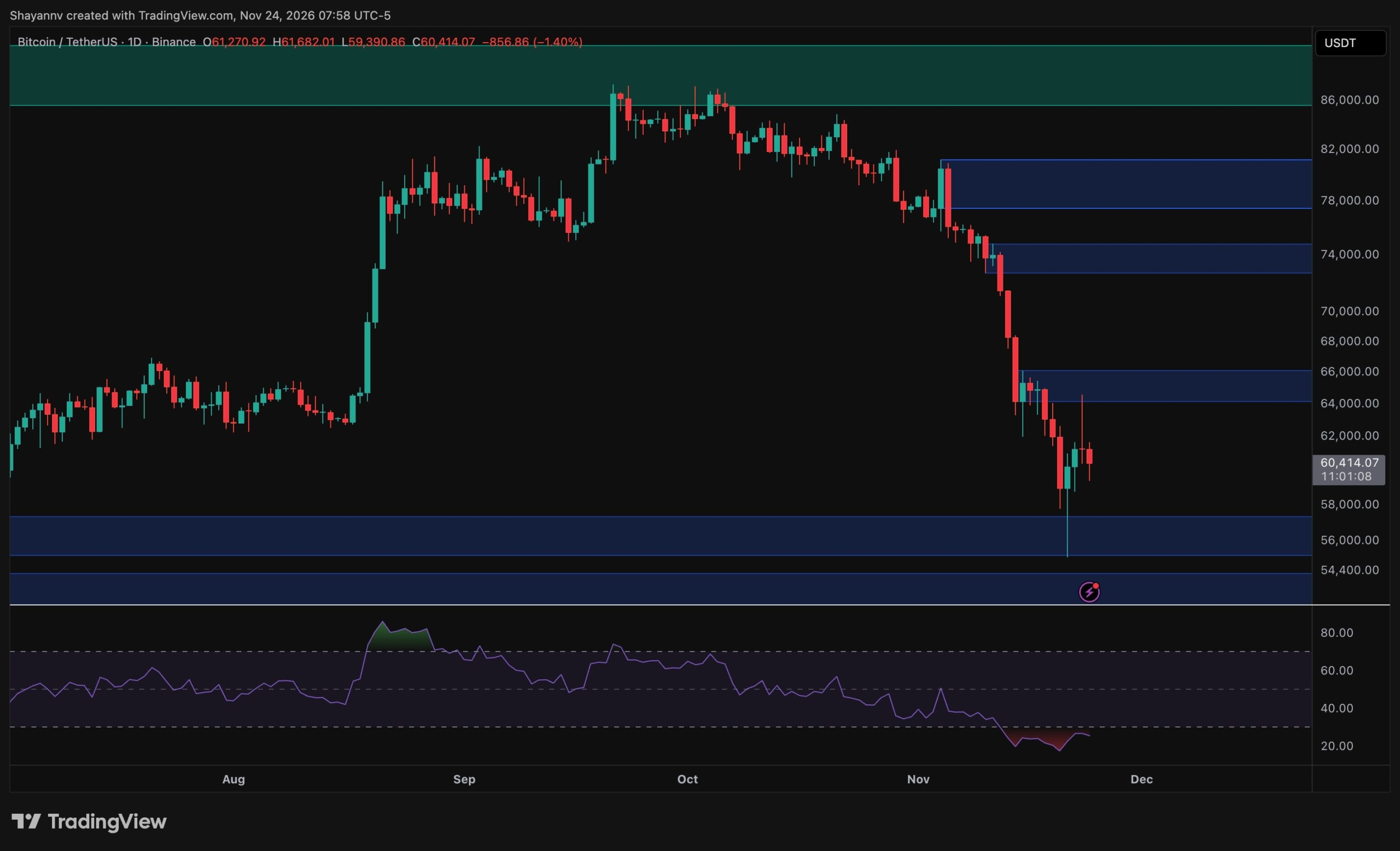
Bitcoin is approaching a historically significant period that has coincided with major market opportunities across its previous three halving cycles.
The pattern involves purchasing Bitcoin approximately 500 days before a halving and selling roughly 500 days afterward, a strategy that has aligned closely with previous market bottoms and peaks. With Bitcoin trading around $59,800—approximately 52.6% below its October 2025 all-time high of $126,198—the market is now approaching the same pre-halving window that preceded major rallies in 2017, 2021, and 2025.
Historical Pattern Across Three Cycles
Bitcoin's price movements reveal a recurring relationship between halving events, market bottoms, and subsequent bull-market peaks.
In the first cycle, Bitcoin bottomed near $170 in January 2015, approximately 542 days before the July 9, 2016 halving. After the halving, Bitcoin eventually reached nearly $20,000 in December 2017, approximately 525 days afterward.
During the second cycle, Bitcoin reached a major bottom near $3,200 in December 2018, around 513 days before the May 11, 2020 halving. The subsequent bull market pushed Bitcoin toward $69,000 in November 2021, approximately 546 days after the halving.
The pattern repeated in the third cycle when Bitcoin bottomed near $15,500 in November 2022, about 516 days before the April 20, 2024 halving. Bitcoin then rallied to above $126,000 on October 6, 2025, approximately 534 days after that halving.
Timing for the Next Halving
The next Bitcoin halving is expected around April 2028, when mining rewards will decline from 3.125 BTC to 1.5625 BTC per block. Using an estimated April 17, 2028 halving date, the 500-day pre-halving window falls around December 4, 2026—approximately 10 days away from the historical timing reference as of November 24.
Bitcoin has already experienced a substantial correction from its October 2025 peak. After reaching a daily closing low near $58,500 in June 2026, Bitcoin recovered above $80,000 during subsequent months. However, renewed selling pushed Bitcoin to an intraday low near $55,130 on November 21.
Potential Post-Halving Outlook
If Bitcoin repeats the timing of the previous three post-halving peaks, the next major top could emerge approximately 525–546 days after the 2028 halving, placing a potential peak around September–October 2029.
However, the pattern provides a historical timing framework rather than confirmation that the current decline has ended. Bitcoin's previous bull markets developed under different monetary conditions, adoption levels, and market structures. Historical Bitcoin bull markets have also been followed by corrections exceeding 75%, according to market observers.
The 500-day pattern's significance lies in the unusually consistent intervals observed across three completed cycles, with Bitcoin now approaching another comparable window ahead of the 2028 halving.