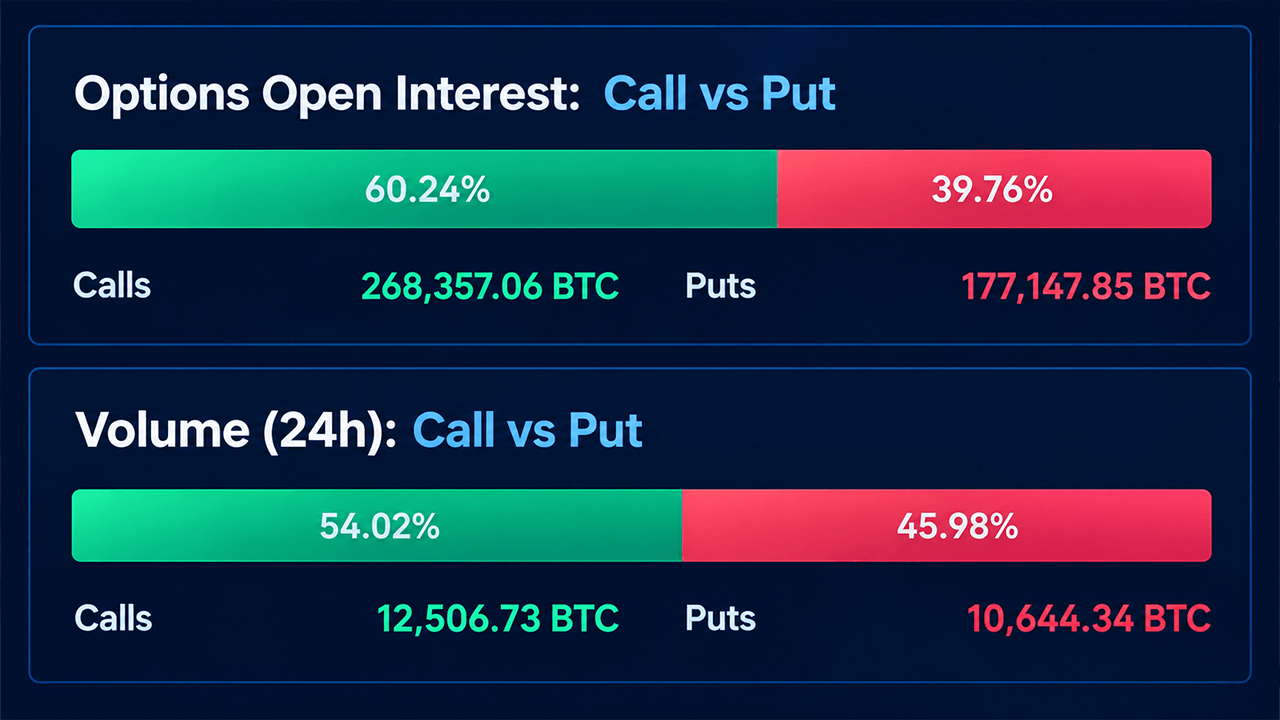
Bitcoin exchange-traded funds returned to positive territory on Friday with a $21.13 million inflow, offering relief after two consecutive days of heavy redemptions. The modest flows signaled potential easing of institutional selling pressure, though broader market dynamics remained mixed across crypto ETF categories.
Bitcoin ETFs Show Signs of Stabilization
Blackrock's IBIT led the day with a $22.38 million inflow, while Vaneck's HODL added $2.33 million. Fidelity's FBTC, however, recorded a $3.58 million outflow. Trading volume fell to $1.44 billion, while net assets recovered to $105.84 billion.
The significance of Friday's inflows lay primarily in breaking the recent pattern of sustained outflows. Nearly $1 billion left bitcoin and ether ETFs combined on Wednesday and Thursday, making Friday's positive flow a potential turning point.
Ether Extends Outflow Streak
Ether ETF outflows continued unabated, with the category shedding $56.10 million and extending its outflow streak to nine consecutive sessions. Blackrock's ETHA accounted for the full withdrawal. Trading activity dropped to $595.23 million, while net assets closed at $15.71 billion.
The sustained nature of Ether's outflows contrasted sharply with Bitcoin's ability to attract intermittent buying, highlighting a widening divergence in institutional interest between the two largest cryptocurrencies.
NEAR Stands Out Among Newer Products
NEAR ETFs continued attracting capital despite the uneven market. Bitwise's NRR recorded a $5.13 million inflow, lifting net assets to $66.07 million. Solana, by comparison, moved in the opposite direction, with Bitwise's BSOL experiencing a $3.76 million outflow and leaving category net assets at $1.73 billion.
XRP, HYPE, and Zcash ETFs all finished the day without net flows, underscoring the selective nature of market activity.
New Capital Remains the Missing Piece
Analysis indicated that existing Bitcoin holders have driven much of the recent price movement, while fresh capital from ETFs, stablecoins, and corporate treasuries has slowed. This pattern resembled earlier phases of advances in 2024 and 2025, though those periods benefited from considerably stronger inflows.
Friday's stabilization offered a first hint of relief but did not yet signal the kind of demand surge that would confirm a sustained institutional rally.