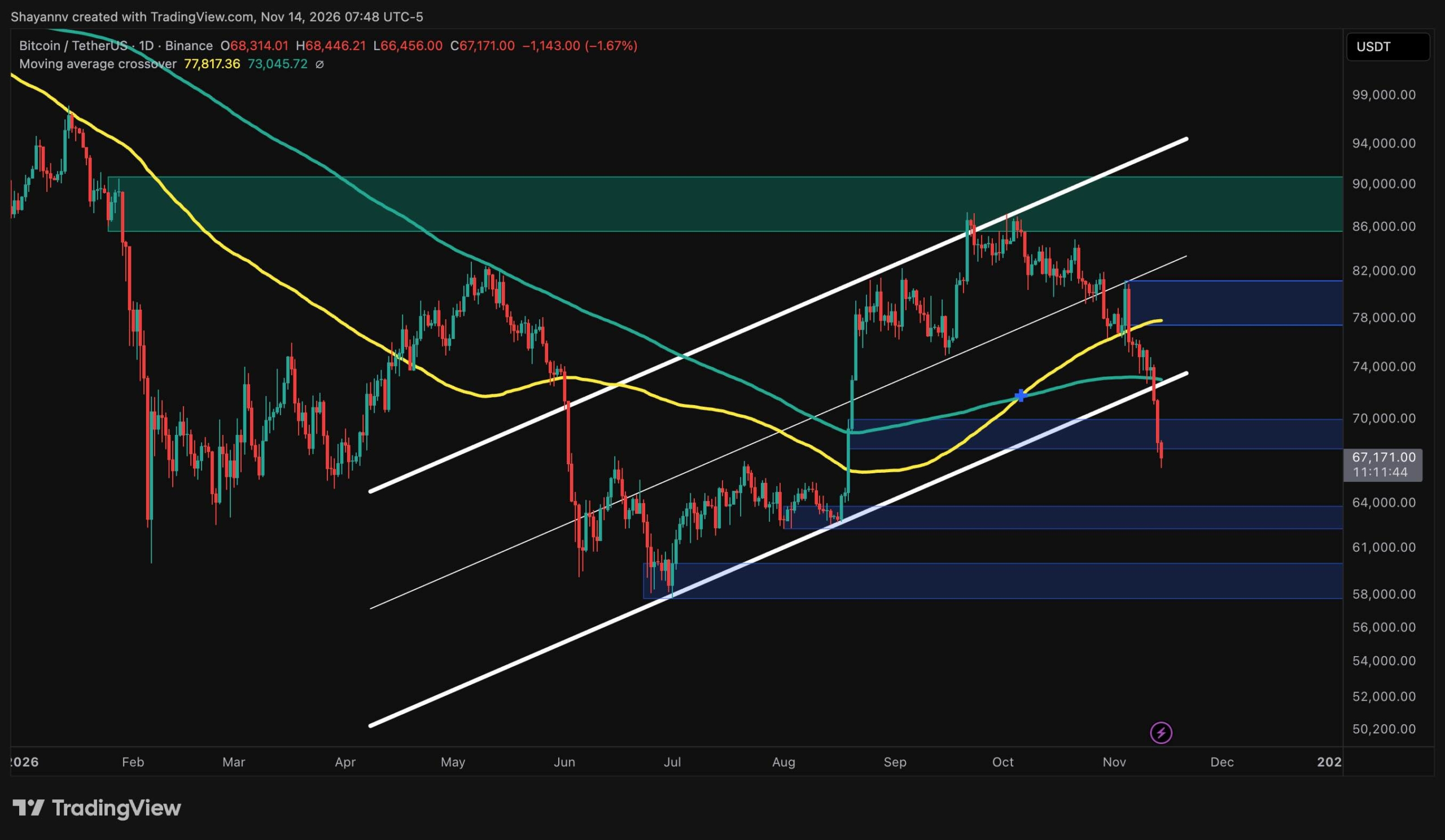
Bitcoin price fell approximately 14% over the past week, trading near $65,200 on Saturday morning after declining to around $65,000. The move broke below Friday's low of $67,555, marking the weakest level since mid-August as weekend trading extended a broader selloff.
The decline began from $75,750 on November 7. Bitcoin slipped toward $71,000 by Thursday evening, then crashed to approximately $67,555 around midnight Eastern on Friday before recovering toward $69,800 in the morning. Selling resumed Friday evening and carried into the mid-$66,000s, with the price reaching $65,500 on Saturday morning.
Market Pressures
A stronger U.S. dollar and elevated Treasury yields have weighed on bitcoin throughout the week. The 10-year Treasury yield climbed to 5.17% on Friday, a four-week high, and closed at 5.15%. The U.S. dollar index held at a 19-month high, its strongest level since April 2025.
Federal Reserve officials signaled potential policy tightening. Boston Fed President Susan Collins stated Friday that additional monetary tightening may be appropriate, while San Francisco Fed President Mary Daly said policymakers will likely raise interest rates. Traders have fully priced in a quarter-point rate hike at the Fed's December 8-9 meeting, according to CME FedWatch data.
Economic Data and Stock Markets
The Producer Price Index for final demand rose 0.3% in October, falling short of economist expectations of 0.4%. On an unadjusted basis, the index was up 6.5% from a year earlier, the largest 12-month rise since November 2022. The slightly cooler monthly figure lifted bitcoin above $70,000 briefly.
Semiconductor stocks declined sharply. The iShares Semiconductor ETF fell more than 3% on Friday, with Advanced Micro Devices dropping more than 8%. The Nasdaq 100 closed down 1.22%. Nvidia CEO Jensen Huang's resignation on Thursday contributed to weakness in AI stocks.
ETF Outflows and Mining Adjustments
Spot bitcoin ETF demand has not supported the price. BlackRock's iShares Bitcoin Trust experienced $2 billion in outflows over nine straight days through Wednesday, with a sixth consecutive day of net outflows on Thursday.
Bitcoin's mining difficulty dropped 9.13% at 12:02 a.m. ET Saturday, falling from approximately 148.36 trillion to 134.82 trillion, the largest cut since June. Difficulty adjusts automatically every 2,016 blocks to maintain average block times near 10 minutes.