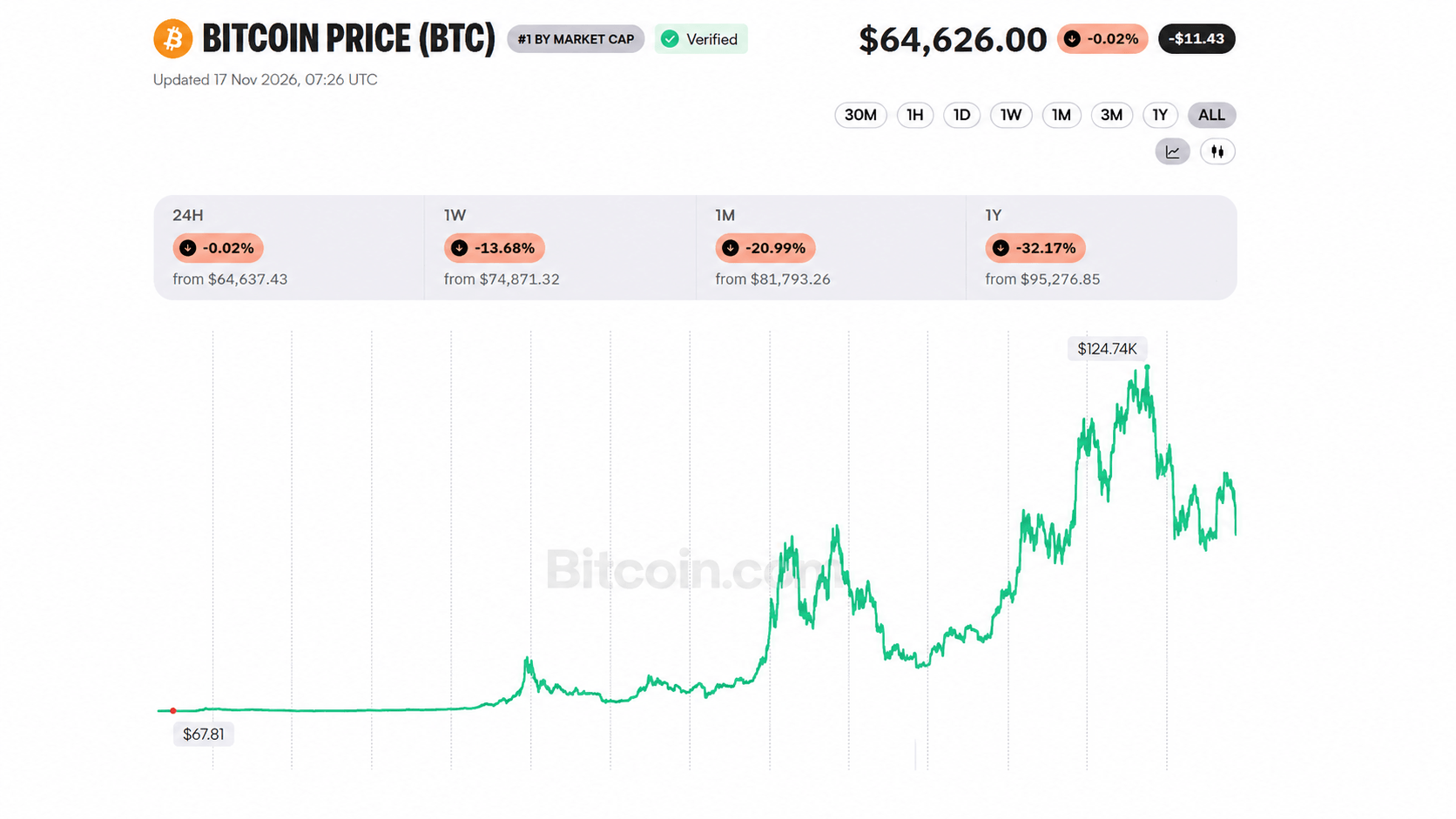
Bitcoin has fallen approximately 17% during November, with Grayscale's cryptocurrency sector index declining about 18% over the same period. A contraction in stablecoin supply has emerged as a primary driver of the downturn, according to research from the asset manager published on November 16.
Stablecoins, digital tokens designed to maintain a $1 value, serve as a key mechanism for moving money in and out of crypto markets. A shrinking supply indicates less capital available for purchasing Bitcoin and other digital assets. The supply of Circle's USDC began declining in early October, while Tether's USDT briefly traded below its $1 peg.
The outflows accelerated following a late-October hack of Binance, a major crypto exchange. Security concerns prompted some investors to move funds back into the traditional banking system, further reducing available market liquidity.
Weakness in artificial intelligence stocks such as Nvidia may have contributed additional selling pressure. Some institutional portfolios hold both technology equities and cryptocurrencies, and portfolio rebalancing across both asset classes could have intensified the decline. Bitcoin miners also provide computing infrastructure for AI applications, creating a direct market link between the sectors.
Zach Pandl, head of research at Grayscale, noted that while technical indicators remain weak in the short term, the correction may present an attractive buying opportunity for medium- to long-term investors. Bitcoin's relative strength index stands at 22.65, a level traders typically consider oversold.
Pandl highlighted structural support for crypto markets over a longer horizon, citing increased institutional adoption of stablecoins and tokenized assets, as well as rising demand for stores of value amid government fiscal deficits. However, other technical measures including the MACD indicator remain negative, and Bitcoin has fallen below key moving averages.