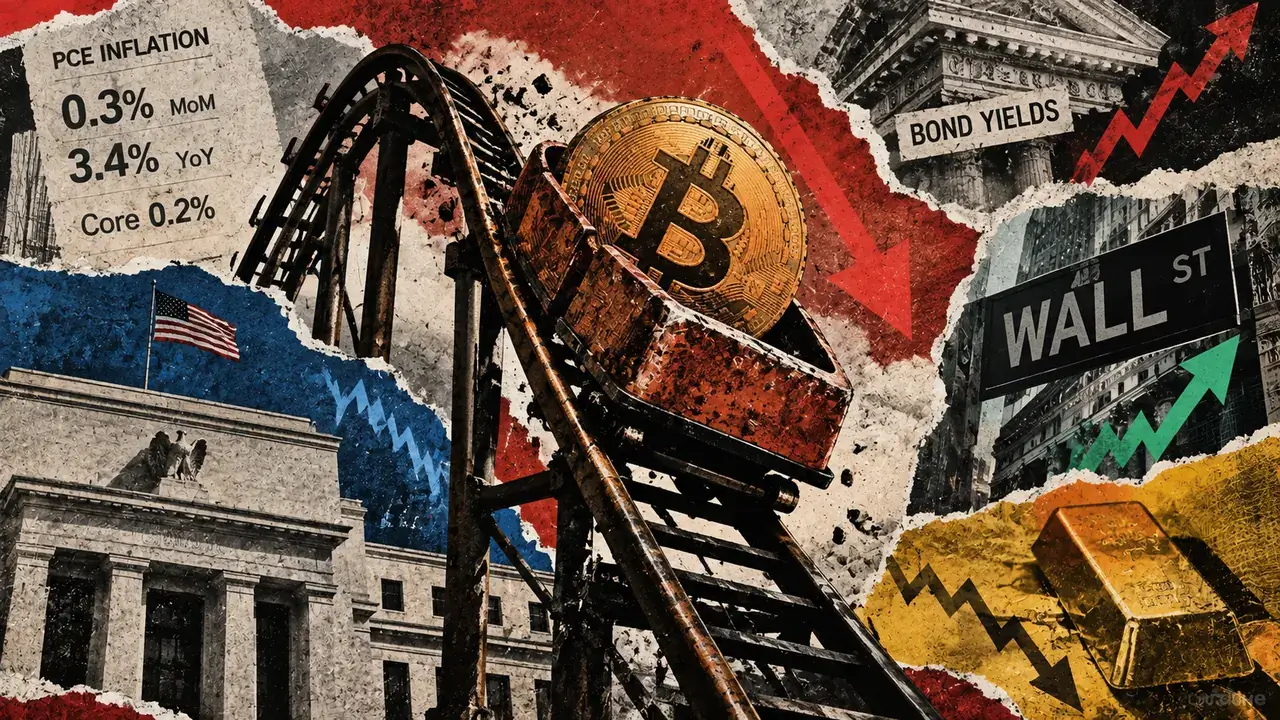
Bitcoin erased a brief rally above $85,000 on September 30, slipping back below $84,000 after the release of August personal consumption expenditures inflation data. The move occurred as government bond yields rebounded and stocks recovered.
August PCE inflation rose 0.3% month over month and 3.4% year over year, while core PCE—which excludes food and energy—increased 0.2% month over month and 3.0% year over year. The Bureau of Economic Analysis also released annual revisions to the national economic accounts, with revisions to monthly personal income and outlays estimates beginning with January 2021.
Bitcoin initially jumped following the inflation release at 12:30 p.m. UTC. However, at 3:28 p.m. UTC, Bitcoin traded near $84,000, leaving the brief spike without sustained upward momentum. Despite the intraday reversal, Bitcoin remained up 0.56% over the 24-hour period at that time.
Headline inflation remained above the Federal Reserve's longer-run 2% target as measured by annual PCE inflation. Monthly changes capture the latest increase in consumer prices, while annual rates compare them with the same month a year earlier.
Broader market movements accompanied Bitcoin's pullback. The SPDR S&P 500 ETF Trust traded around $766.82, while Brent spot crude rebounded toward $102.20 a barrel. Gold eased from earlier intraday highs, trading around $4,163.92 an ounce through a contract for difference. The US Dollar Index retreated from higher levels to near 101.39. The US ten-year yield stood around 5.276%, while the UK 30-year government bond yield reached near 5.939%.
Traders were watching for signs of whether a renewed recovery in Bitcoin could sustain beyond the initial buying pressure following the inflation data release.