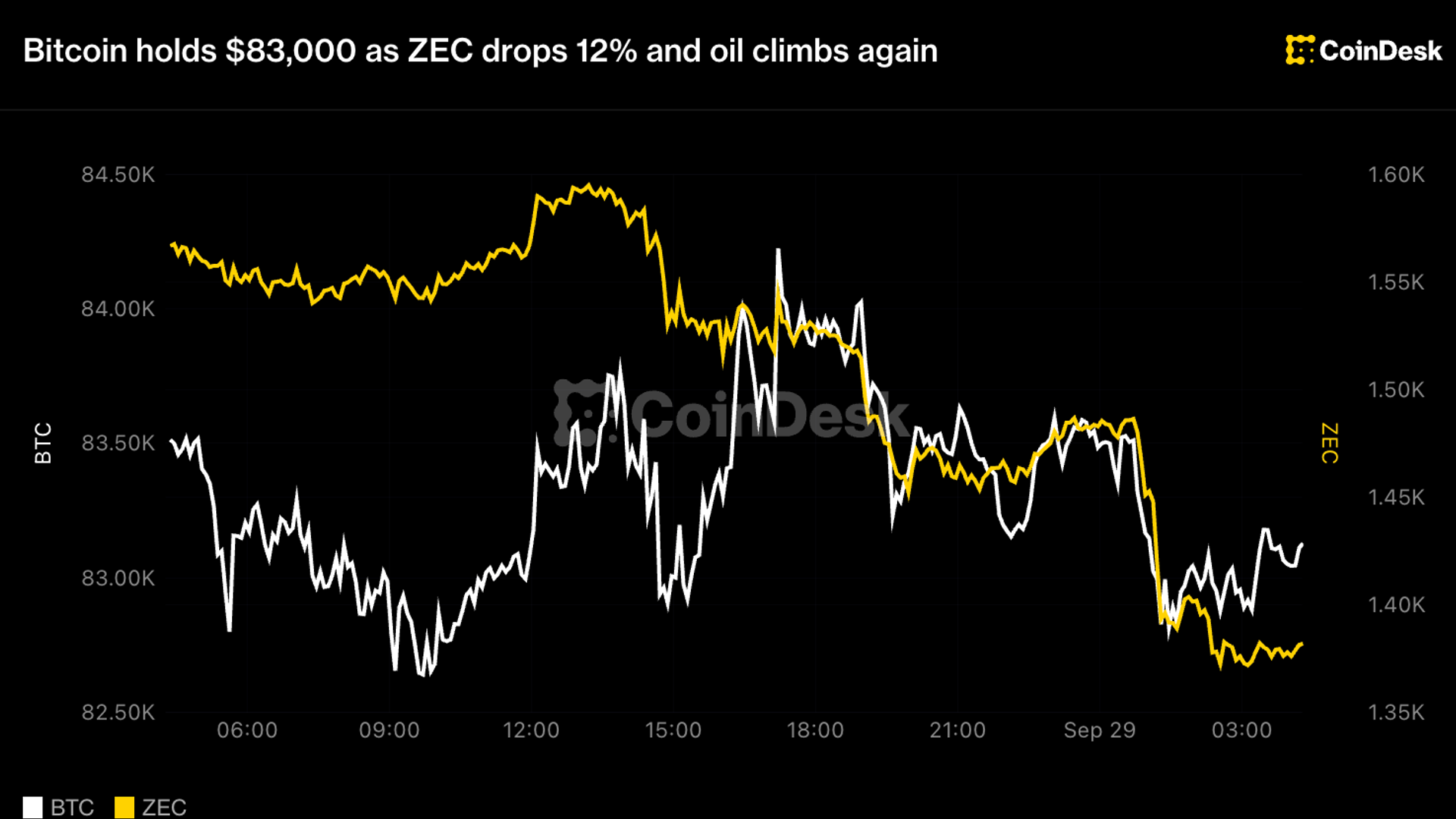
Bitcoin held steady above the $83,000 level on September 28, declining roughly 1.7% as the largest cryptocurrency by market cap navigated a period of broader market uncertainty. The asset maintained a significant buffer above its mid-August lows near $75,000 to $77,000.
Zcash, by contrast, shed approximately 12% in a single session. The privacy-focused coin had surged more than 2,000% from earlier lows near $50 to an all-time high above $1,485 earlier in September, with some intraday trading reportedly reaching near $1,680 before the correction. The slide brought Zcash down from levels near $1,592 to as low as $1,551, triggering futures liquidations exceeding $1 million.
Market Context: Macro Pressures Build
Rising energy costs and persistent inflation weighed on risk assets. Brent crude climbed above $100 per barrel, gaining more than 3% as geopolitical tensions involving Iran supported higher energy prices. The Federal Reserve had raised its target rate by 25 basis points to a range of 3.75% to 4% on September 16, citing resilient economic activity alongside elevated inflation.
Zcash's Rally and Institutional Backdrop
Zcash's historic run earlier in September coincided with significant institutional developments. Paradigm positioned ZEC as a private complement to Bitcoin, while Grayscale launched a spot Zcash ETF, providing institutional investors with regulated access to the privacy coin for the first time.
Bitcoin's Resilience
Bitcoin's ability to maintain the $83,000 level through multiple macro headwinds reflected the institutional infrastructure built around the asset over recent years. Spot ETFs, corporate treasury allocations, and sovereign-level interest have created a buyer base that sustains positions despite short-term commodity and interest rate movements.