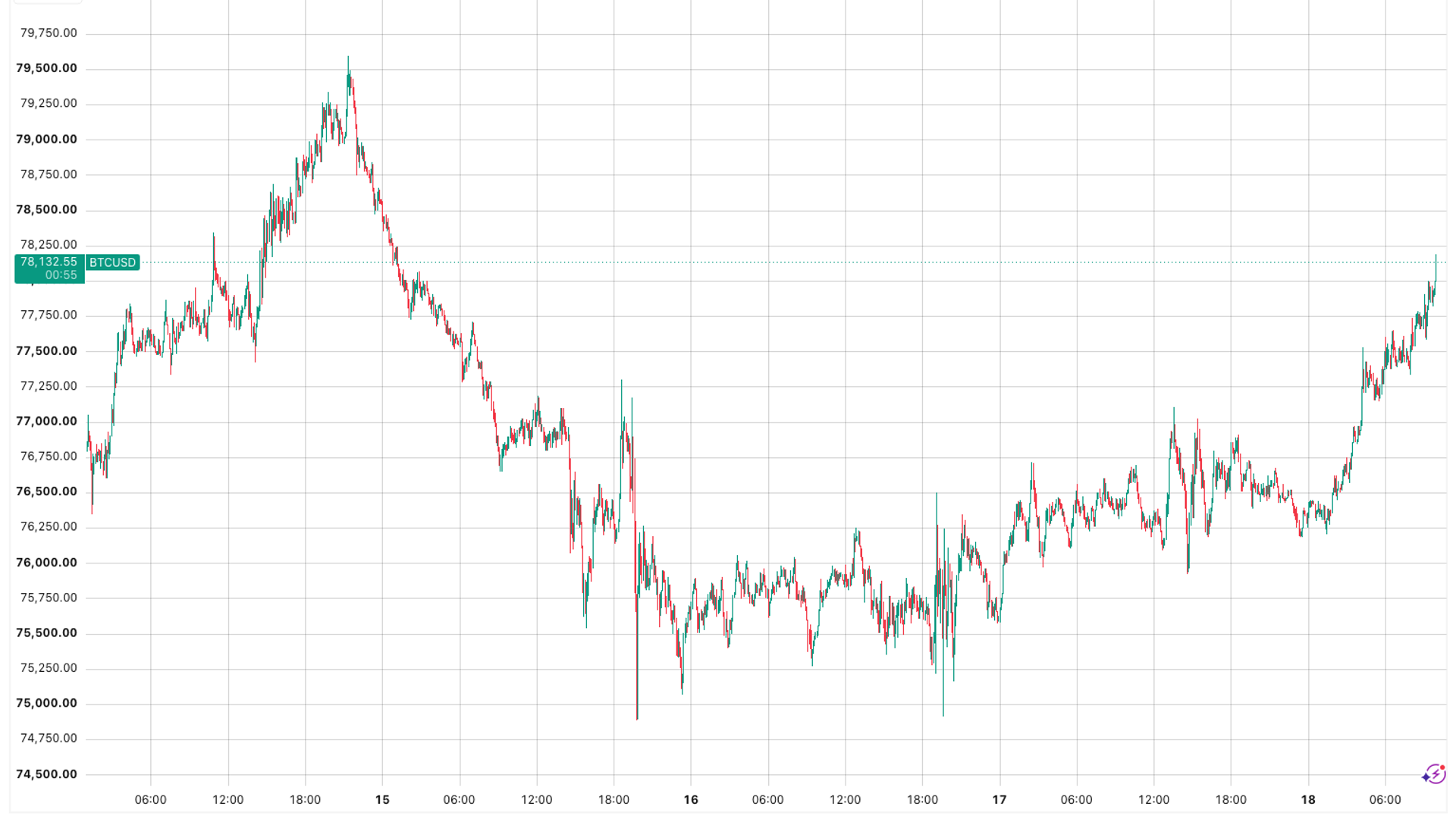
Bitcoin is holding near $78,000 after weathering multiple policy and macroeconomic challenges this week, including a Federal Reserve rate hike and the failure of the Clarity Act in the Senate.
The cryptocurrency is down just 1.5% for September, historically the market's weakest month, and remains up approximately 32% for the third quarter, positioning it for its first positive quarterly close since the third quarter of 2025.
Policy Setbacks and Market Response
On Tuesday, the Clarity Act failed to secure the 60 votes needed to advance in the Senate, attracting only 49 supporters. Bitcoin briefly fell below $74,887 following the announcement but stabilized quickly, suggesting the market had largely priced in the risk of failure.
The same day, the Federal Reserve delivered its first rate hike in more than three years. Analysts noted that historically, both developments would typically trigger meaningful selling pressure.
Signs of Seller Exhaustion
Market observers attribute Bitcoin's resilience to seller exhaustion. When bad news stops moving prices substantially, it indicates that investors positioned to sell have largely already exited their positions, potentially signaling a bottoming process in later stages.
Global Monetary Policy
The Bank of Japan raised its benchmark borrowing cost to a 31-year high, while the Bank of England held rates steady. The U.S. Dollar Index topped 100, reaching its highest level in over a month, as crude oil climbed above $106 per barrel amid Middle East geopolitical tensions.
Regulatory Developments
The Securities and Exchange Commission unveiled an innovation exemption for tokenized securities venues on Thursday, allowing qualifying platforms to facilitate onchain trading of stocks under specified conditions. This provided a more constructive regulatory development for the crypto industry following the Clarity Act's failure.
Market Outlook
Some analysts suggest that if Bitcoin has remained resilient during challenging headlines, modest improvements in macro, geopolitical, or regulatory conditions could trigger further upside. Markets are currently pricing in three additional quarter-point Fed rate increases by April 2027. However, not all observers view rising rates as necessarily bearish for digital assets, particularly if they reflect concerns about currency debasement and sovereign counterparty risk.