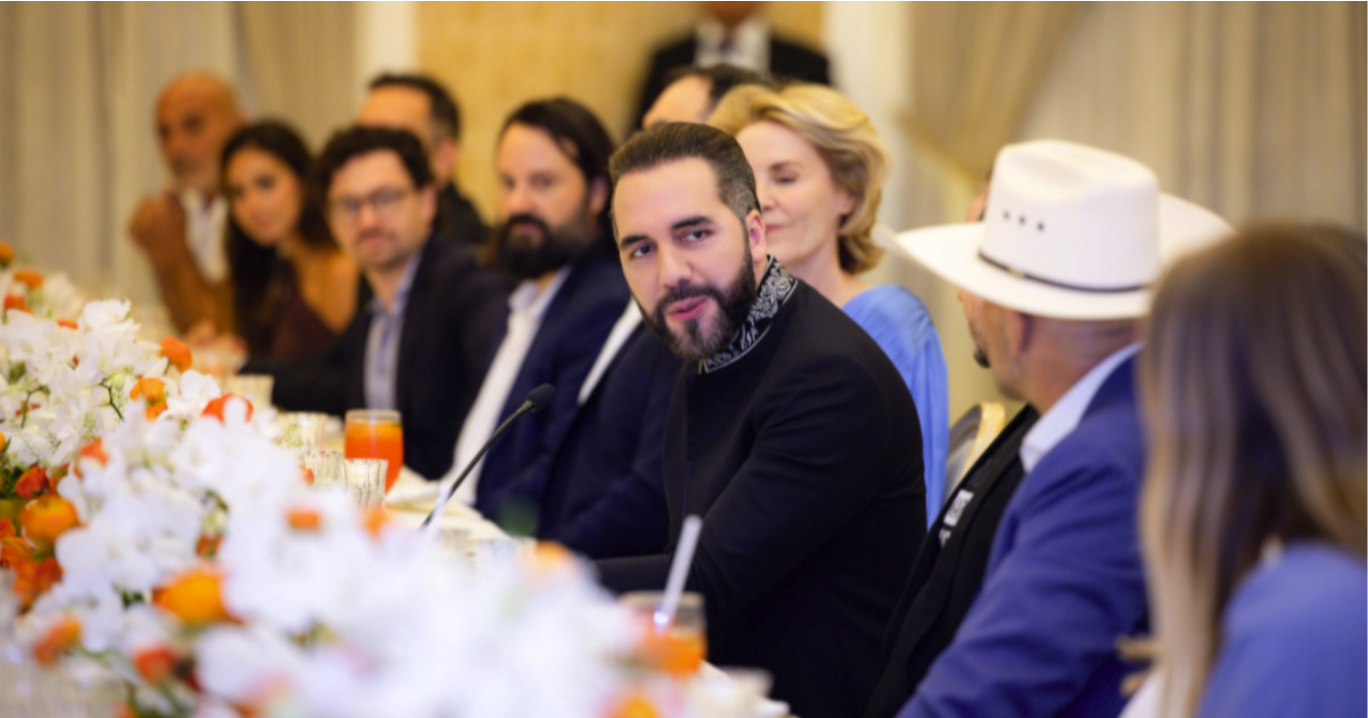
On November 10, during the Bitcoin Histórico conference in San Salvador's Historical Center, President Nayib Bukele hosted a dinner at Casa Presidencial for roughly thirty Bitcoin industry participants. The event, organized by The Bitcoin Office and led by Stacy Herbert and Max Keiser, ran from approximately 7:30 pm to 10:30 pm local time.
Attendees included billionaire Ricardo Salinas Pliego, founder of Grupo Salinas and owner of Banco Azteca, alongside investors and founders such as Parker Lewis of Unchained Capital and Mike Peterson of Bitcoin Beach. Bitcoin miners present included Beau Turner, CEO of Abundant Mines, and representatives from OCEAN Mining and Denver Bitcoin mining. The dinner also featured Bitcoin core contributor Jon Atack, economist Eric Yakes, and journalist Efrat Feningson.
Energy and Infrastructure
Energy generation emerged as a primary topic of discussion. According to Turner, Bukele described El Salvador's current electricity generation as roughly matching the country's demand, while outlining plans to add more than a gigawatt of additional capacity through geothermal and imported liquefied natural gas projects.
Turner noted that Bukele connected these development plans directly to demand for computing power, stating that the country could develop additional energy capacity knowing it would attract Bitcoin mining operations and other data centers seeking investment opportunities in El Salvador.
Salinas, whose Grupo Dragón operates geothermal, wind, solar, and natural-gas generation across Mexico, engaged actively in these discussions.
Immigration and Local Integration
Immigration and gentrification concerns were also addressed. Michael Ruiz, founder of Build in El Salvador and a U.S.-born resident who moved to the country three years ago, raised questions about potential resentment from local populations toward Western migrants, citing negative online comments describing some Bitcoiners as "colonizers."
Bukele responded by asking attendees about their direct interactions with Salvadorans. Ruiz reported that local populations have been welcoming and receptive to foreign residents. Bukele noted that immigration to El Salvador typically originates from regional countries including Honduras, Nicaragua, Guatemala, and Colombia, with smaller numbers from the United States.
The President illustrated his perspective on economic integration through an anecdote about a fisherman and house caretaker whose monthly wages increased from $300 to $800 following a property purchase by an American. The fisherman subsequently purchased a motor for his boat, expanding his fishing operation to the point where he acquired a second boat for his son.
Other Topics and Reflections
Journalist Efrat Feningson asked Bukele why he faced international criticism despite El Salvador's reported GDP growth, economic strengthening, and domestic popularity. Bukele attributed the criticism to being outside international political circles, stating that certain groups use mainstream media to campaign against his leadership.
Education reform was also discussed, with Bukele noting that private schools are adopting AI tutoring programs similar to those deployed by his administration in public schools. The pilot program reportedly improved PISA test results to levels comparable with Germany and Switzerland.
Keiser described the conference as delivering "Excellence Only," creating an environment where attendees felt transported to a unique setting combining Renaissance ideals with Bitcoin innovation. Herbert emphasized that no topics were restricted during the dinner and that President Bukele fielded questions from guests throughout the three-hour event.