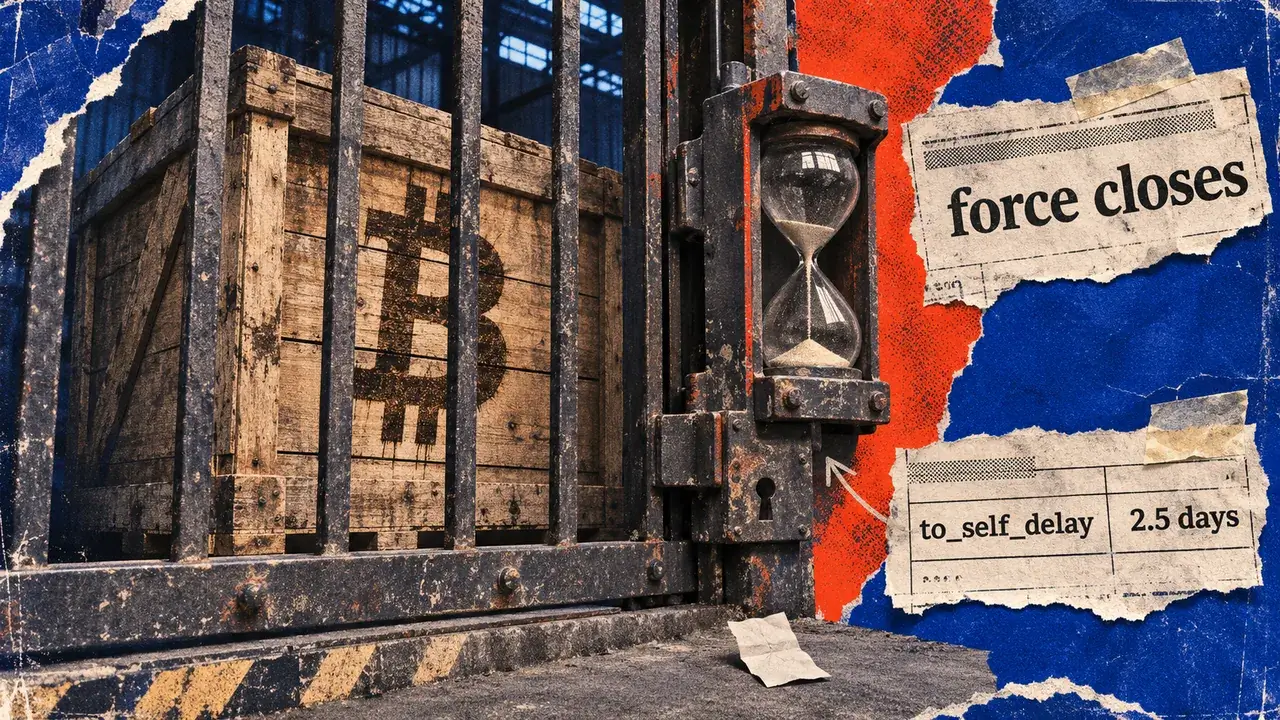
When a Bitcoin Lightning channel closes without mutual agreement, the settlement fees can be minimal but the wait to access funds stretches considerably longer. According to research by Saurabh Kumar of Bitcoin Data Labs, forced closures in 2026 incurred a median cost of 925 satoshis across both parties, yet the party initiating the closure faced a median 2.5-day wait before reclaiming its balance.
Kumar's analysis examined 973,581 channel closes spanning January 2018 through October 31, 2026, including 523,815 force closes. The detailed 2026 cohort covered 14,435 public force closes through October 4. By comparison, cooperative closes in 2026 had a median fee of 197 satoshis, making forced closures approximately 4.7 times more expensive.
Why Funds Remain Locked
The delay stems from Bitcoin's Lightning protocol specifications. When a unilateral channel closure occurs, a previously signed commitment transaction settles the channel on the blockchain. The output returning the broadcaster's balance includes a contractual delay called to_self_delay, which gives the counterparty time to penalize any broadcaster attempting to submit a revoked channel state.
The 2.5-day median measures the time until that balance becomes eligible for sweeping, not the moment funds arrive in a wallet. Across the entire study period, the median wait was 1.7 days.
Fees Do Not Reflect Accessible Liquidity
Lightning's design separates settlement fees from the waiting period. A child transaction funds the commitment package through a child-pays-for-parent mechanism, while the broadcaster's delayed balance remains subject to the protocol's time lock regardless of fee size. This distinction matters significantly for operators needing immediate access to capital during settlement.
Kumar's analysis calculated that the waiting cost would equal force-close fees at an annual return rate of 1.2% in 2026, compared to 16.7% over the full study period. The measurement illustrates how the delay can outweigh transaction costs in a low-fee environment, meaning a cheap exit does not guarantee immediate liquidity.
Study Scope and Limitations
The research excluded private cooperative closes and splices from the force-close counts. Simple-taproot delays, HTLC resolutions, and certain fee bumps remain unclassified in the cost analysis, and chain records cannot document failed or replaced fee bumps. The underlying data is available from the author upon request.