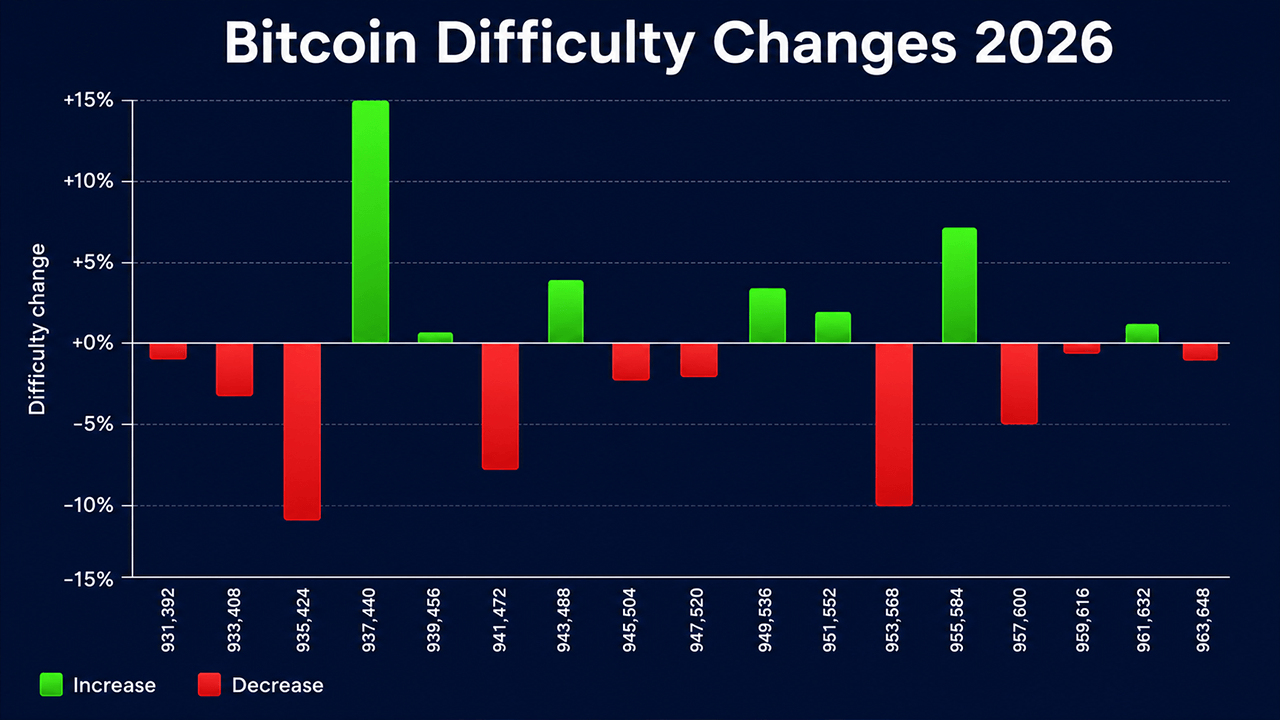
At block height 963648, Bitcoin logged its 17th difficulty adjustment of 2026, registering a 1.31% drop. The adjustment highlights a prolonged period of miner capitulation, sharp rebounds, and repeated failures to sustain recovery cycles throughout the year.
Scorecard Shows Frequent Downward Adjustments
From the start of 2026 through the latest adjustment, Bitcoin has recorded ten downward difficulty adjustments compared to just seven increases. Difficulty began the year near 148.25 trillion before the January 8 adjustment and has now fallen to 125.81 trillion, representing a decline of roughly 15.1% from the level seen immediately before the year's first adjustment.
After cratering to a 2026 low of 124.93 trillion on June 13, subsequent recovery attempts failed to hold. The current difficulty sits barely 0.7% above that yearly low, effectively erasing almost every meaningful comeback miners managed since June.
Hashrate and Economic Pressures
The latest downward adjustment followed a razor-thin 0.99% increase at block 961632, which was quickly erased by the subsequent 1.31% decline. The difficulty data points to approximately 150 exahash per second (EH/s) of effective mining power disappearing from the network.
Bitcoin spent much of 2026 moving through a bearish downtrend, falling more than 50% below its all-time high above $126,000 set in October 2025. That price gap has since narrowed to 38.8%, providing some breathing room for mining economics by lifting mining revenue, or hashprice, and improving margins.
The Next Test for Miners
The string of false starts suggests that the current recovery functions more as a reprieve than a full reversal. While sidelined hashpower could return if gains hold, margins remain vulnerable with prices sitting below all-time highs. The upcoming difficulty adjustment will serve as a key test for whether the recovery gains fuel or if the floor faces another crack.