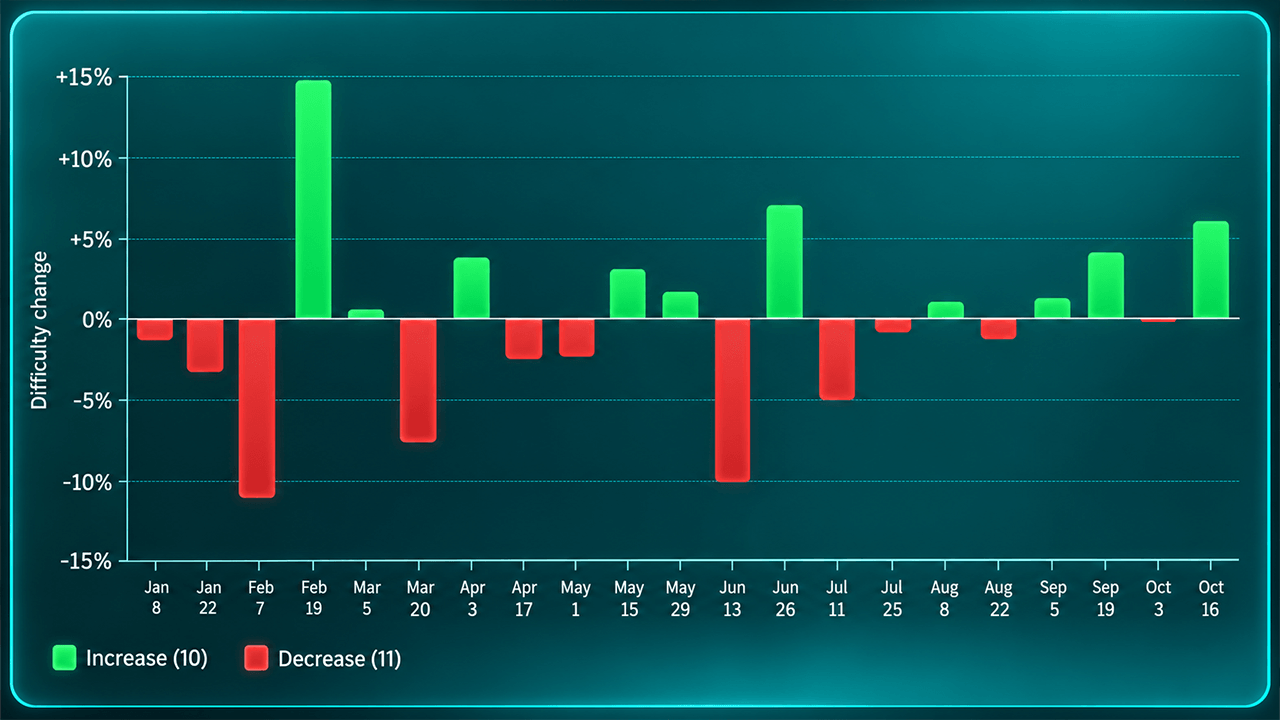
Bitcoin mining difficulty increased 5.92% to 140.58 trillion on Friday at block height 971712, reaching its highest level since March 5 and marking the third-largest difficulty hike of 2026.
The network's difficulty, which determines how hard miners must work to find the next block, rose from 132.72 trillion. This adjustment represents the 10th increase among 21 total difficulty adjustments recorded this year and continues a recovery trend that began over the summer.
Mining Revenue Rebounds
The difficulty increase coincided with improved mining economics. The hashprice, which measures estimated daily revenue per petahash per second of computing power, stood at $37.56 on September 16 before climbing above $41 on two occasions over the following 30 days, including October 2. By October 16, the hashprice had retreated to $36.75 per petahash per second.
Stronger revenue conditions encouraged greater miner participation, pushing Bitcoin's total network hashrate back above 1,000 exahash per second, equivalent to 1 zettahash per second. At the time of reporting, hashrate was measured at 1024.96 EH/s with block times around 8 minutes 45 seconds.
Next Adjustment Could Be Larger
An expanding hashrate generally accelerates block production, triggering upward difficulty adjustments when the 2,016-block epoch concludes ahead of schedule. The next difficulty adjustment, expected around October 28, 2026, carries early estimates of a 14.24% increase, though this projection remains subject to change with the epoch still in early stages.