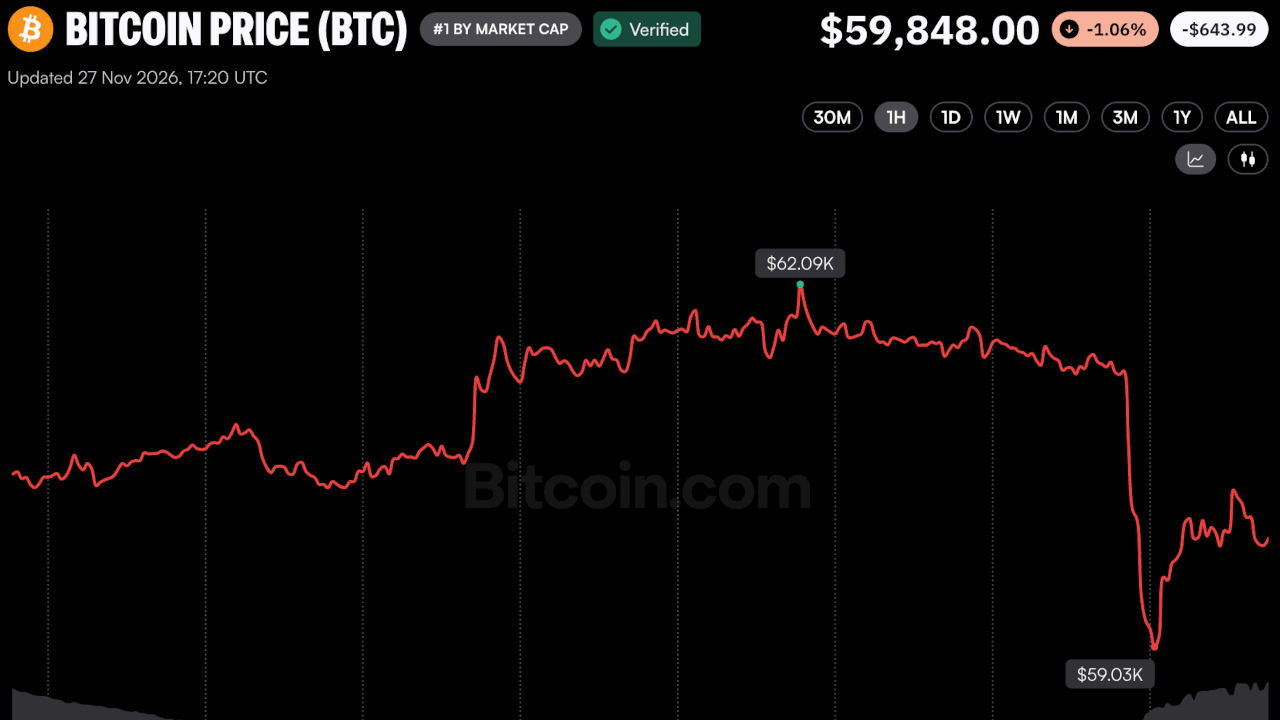
Bitcoin's Thanksgiving rally stalled Friday as the cryptocurrency plunged from an intraday high of $62,125 to $58,719, coinciding with the expiration of approximately $7 billion in Deribit options on the derivatives exchange.
The selloff sent bitcoin tumbling below $60,000 within 30 minutes of a sudden wave of selling pressure at 10:24 a.m. The sharp reversal occurred after bitcoin had climbed steadily to its intraday peak earlier in the morning, following Thursday gains that had pushed the asset briefly to $61,500.
November spot bitcoin exchange-traded fund outflows have surpassed $5 billion with three days remaining in the month, adding to downward pressure on prices. By midday Friday, bitcoin had recovered to test the $60,000 resistance level, closing with a daily loss of approximately 1 percent.
Liquidations and Market Volatility Intensify
The sharp price swings kept total bitcoin liquidations above $100 million for a third consecutive day, following liquidations of $213 million on Wednesday and $122 million on Thursday, according to Coinglass data. Long liquidations alone nearly topped $111 million over the past 24 hours, while short liquidations exceeded $73 million.
Across the broader cryptocurrency market, liquidations reached $478 million, with wiped-out long positions accounting for more than $277 million of the total.
Options Expiration and Market Mechanics
The expiration of 112,000 options contracts on Deribit typically triggers short-term volatility as billions of dollars in derivatives contracts settle or roll over. BIT Research noted that positioning ahead of Friday's expiration had turned defensive, with the put-call ratio rising to around 0.89 from 0.55 in October and heavy put open interest positioned between $63,000 and $75,000.
According to BIT Research, most of those puts finished in the money, with dealers hedging them selling into weakness. As those positions roll off, the firm expects the mechanical selling pressure to ease temporarily. However, BIT Research cautioned against mistaking post-expiration relief for a broader trend reversal, noting that the macro backdrop has not changed and new hedging demand is already building into the December expiration.
Institutional Flows and Market Structure
Experts pointed to several factors to monitor for deeper market stress. Arch Lending's Himanshu Sahay advised watching whether market depth recovers and institutional flows once normal trading resumes, with ETF flows in the coming week providing key signals about institutional demand.
The concentration of institutional adoption through spot ETFs has exposed vulnerabilities tied to traditional market schedules. While bitcoin trades around the clock, institutional trading rails often close on holidays, leaving order books thinner and allowing smaller trades to trigger sharper price swings. For borrowers pledging bitcoin as collateral, price exposure continues even when banking and funding channels are offline.
BIT Research characterized the current dynamic as a timing mismatch rather than a structural flaw, pointing out that U.S. holiday closures temporarily reduce marginal buyers and sellers while trading continues. The firm argued that expanding global access will gradually reduce bitcoin's reliance on any single jurisdiction's trading hours.