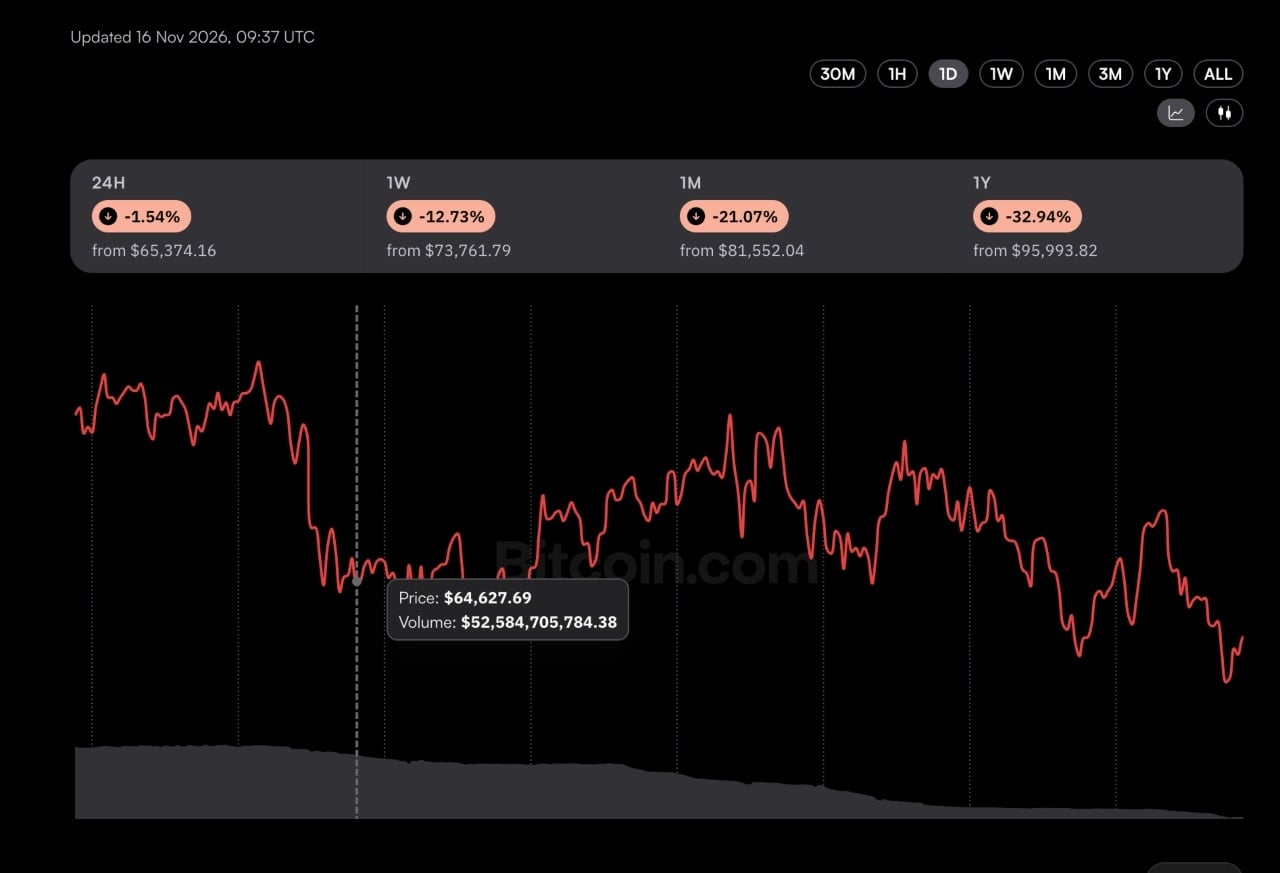
Bitcoin recovered above $64,000 on Wednesday, rebounding from a dip to approximately $62,000 the previous day. However, market analysts have identified three significant factors that could complicate the cryptocurrency's near-term trajectory.
Three Headwinds to Recovery
The first concern is a sharp contraction in stablecoin supply. Over the past 30 days, stablecoin supply fell by $17.1 billion, marking the fastest decline since June 2022. Since traders typically use stablecoins to deploy capital into crypto markets, the shrinking supply suggests less available buying power entering the market.
A second warning sign involves a shift in trading patterns. Spot market volume on decentralized exchanges declined 18%, while leverage futures trading increased 7%. This migration toward derivatives suggests traders are increasingly relying on leveraged positions rather than direct cryptocurrency purchases, potentially leaving prices vulnerable to sudden liquidations. Over the weekend, approximately $200 million in Bitcoin positions were liquidated within a single hour as prices dropped below $65,000.
Third, institutional demand shows signs of weakness. Public companies recorded net Bitcoin sales of 11,647 BTC worth approximately $896 million in a single week. Spot Bitcoin ETFs have faced consistent pressure, with seven consecutive days of outflows since November 5. Through early November, these investment vehicles recorded $2.35 billion in outflows, raising concerns about institutional appetite during the downturn.
Broader Price Pressures
Bitcoin has declined more than 12% over the past week and 20% across the past 30 days. Year-over-year, it remains 32% below levels from the same period last year and 48% below its all-time high.
Some market participants take a more constructive view. One observer characterized the decline toward $62,000 as a liquidity hunt and suggested that the August low near $57,000 represents the bottom until proven otherwise.
Upcoming economic events this week may further influence market sentiment, including corporate earnings reports and US retail sales data that could affect broader risk appetite.