Bitcoin is experiencing more unusually large price swings in 2026 than it did during the entire 2018 bear market, despite a significant decline in overall volatility, according to analysis by CoinDesk.
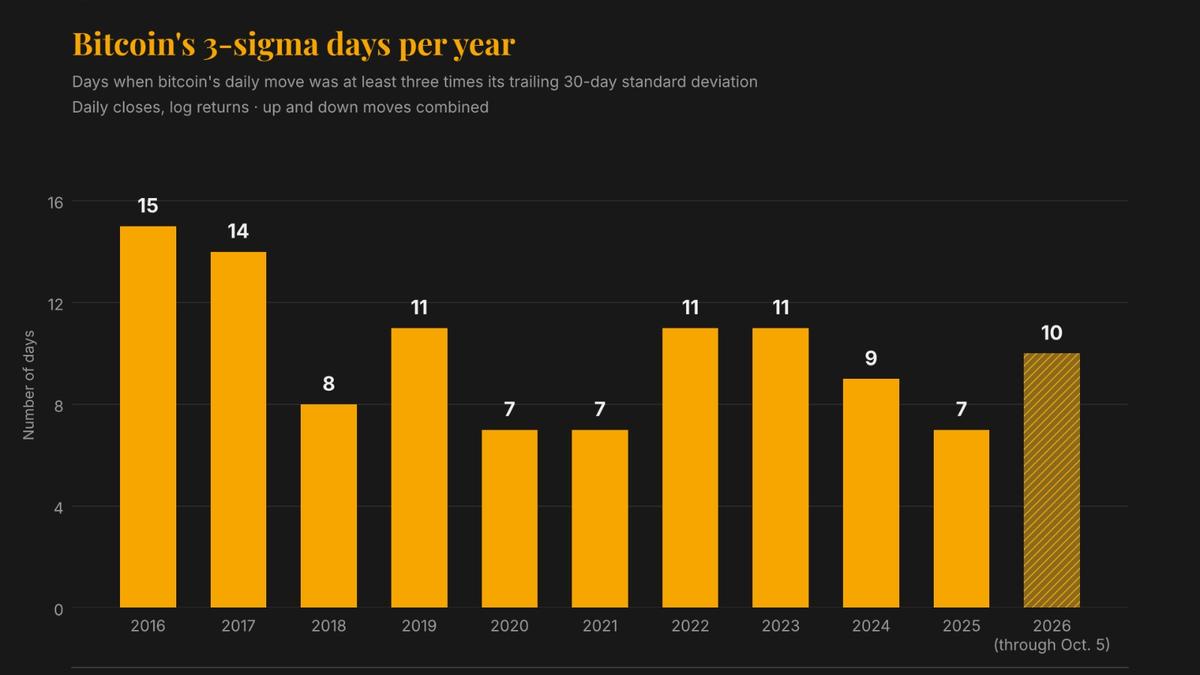
The largest cryptocurrency has recorded 10 days in 2026 when its price moved at least three standard deviations from its recent trading pattern—known as three-sigma days—compared with eight such days in 2018, when bitcoin lost 73% of its value. Bitcoin's annualized volatility has fallen to approximately 46% this year from 84% in 2018, while three-sigma moves have averaged roughly 7%, down from about 10% eight years ago.
A Challenge for Risk Models
The persistence of extreme moves presents challenges for investors using volatility-based risk models. Value-at-risk, or VaR, a widely used metric that estimates potential portfolio losses, often relies heavily on recent price fluctuations. A prolonged period of calmer trading can make an asset appear less risky, potentially encouraging investors to increase exposure without fully accounting for tail risk—the possibility of rare but unusually large losses.
Bitcoin has been roughly as volatile as Nvidia since 2024, at approximately 47%. However, bitcoin has logged 26 three-sigma days in that period, compared with Nvidia's eight. The S&P 500 recorded 16 such days, and gold had 12.
Why Extreme Moves Persist
Market participants attribute these high-volatility days to two main factors: unpredictable macroeconomic shocks and highly leveraged options positioning. When traders bet that prices will remain stable by selling options—essentially shorting volatility to collect premiums—these positions can amplify price swings when unexpected headlines trigger sudden market moves. A particularly crowded trade involves call overwriting, where investors sell call options on bitcoin they already own to generate steady income.
On September 21, the day of bitcoin's latest three-sigma jump, one institutional liquidity network facilitated a record $6.7 billion in options trades.
A More Resilient Market
Despite the frequency of extreme swings, the market is absorbing these jolts more effectively than in the past. Greater institutional participation, improved risk management, and deeper liquidity have helped the crypto market weather volatile periods without major disruptions. However, market participants expect these wild swings to continue, given that macroeconomic shocks remain unpredictable.