Bitcoin demonstrated notable resilience after the October 29 Binance hack that stole roughly $6.3 billion from the exchange’s hot wallets and a concurrent selloff in technology stocks.
CEO comments on Bitcoin’s behavior
Seamus Rocca, chief executive of Xapo Bank, said Bitcoin has historically moved in line with the Nasdaq but has managed to hold key support levels despite the hack and concerns over technology valuations. He suggested two possible reasons for the asset’s relative strength: a reduced pool of attractive alternatives for investors as confidence in tech stocks wanes, and reluctance among existing Bitcoin holders to sell into a dollar‑heavy market that may be approaching a cyclical bottom.
Derivatives market signals
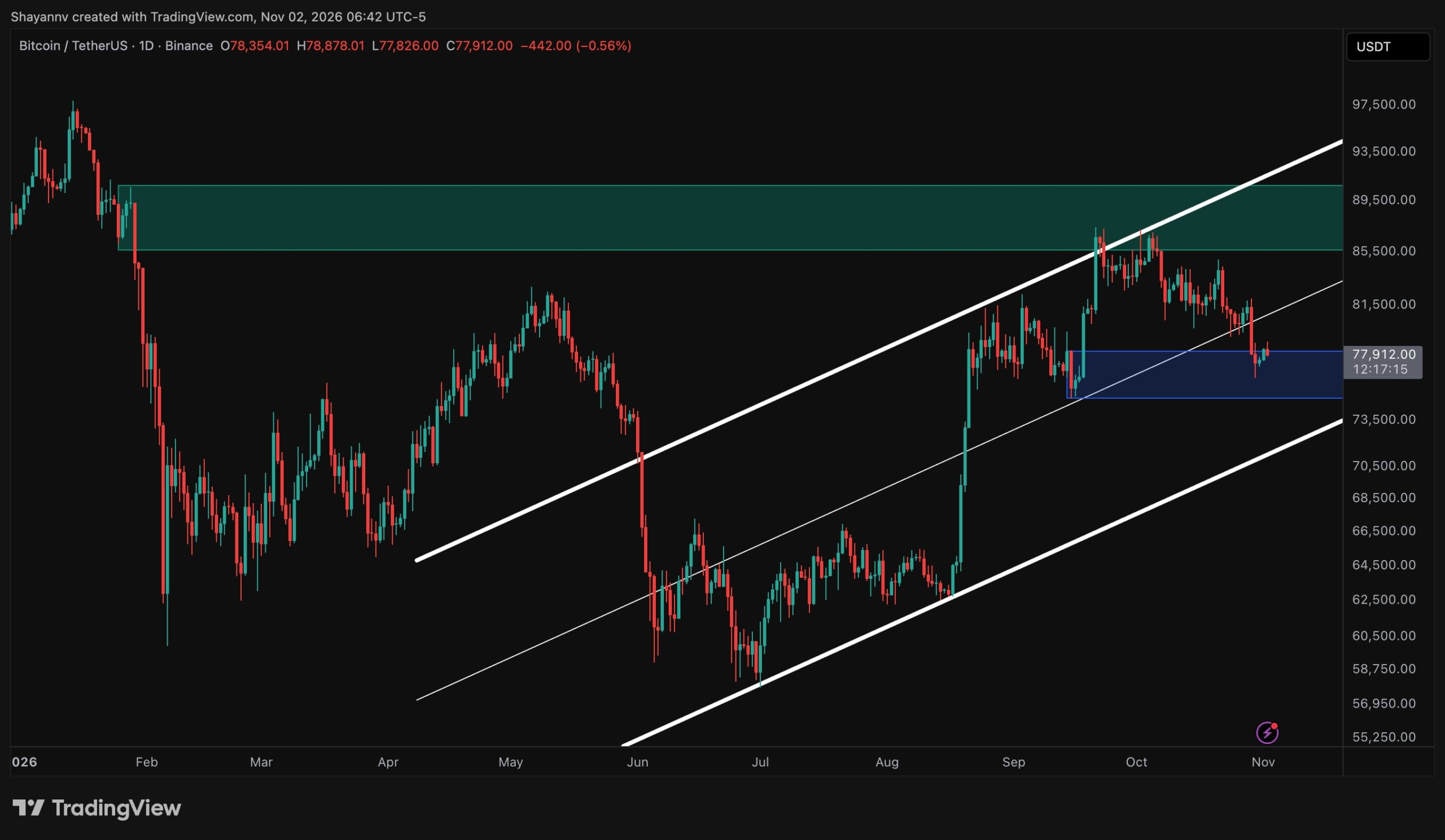
Analysts at Bitget Wallet noted that Bitcoin is testing support between $76,500 and $77,000, with resistance near $80,000‑$81,000. Futures open interest remains around $50‑$53 billion, and funding rates are mildly positive at roughly 0.005%‑0.01% per eight‑hour interval, indicating stabilization rather than aggressive deleveraging.
However, US spot Bitcoin ETFs recorded net outflows of about $643 million on October 30, leaving the week with roughly $202 million in net withdrawals.
Market context
The price action followed the Federal Reserve’s decision on October 28 to keep interest rates at 3.75%‑4%, with two policymakers dissenting in favor of a hike. Bitcoin was near $81,000 around the policy announcement before the Binance breach accelerated selling, contributing to more than $1.5 billion in cryptocurrency liquidations.
Security concerns and custody
The Binance hack affected ten blockchains, with most assets drained in about 20 minutes. U.S. authorities linked the attack to North Korea’s TraderTraitor operation. Binance reported that approximately $3 billion of the stolen assets were frozen and has since restored about 95% of the affected funds using its own capital.
Bitget Wallet’s research lead emphasized that while a systemic crisis appears unlikely, prolonged withdrawal restrictions, reduced market liquidity, and stablecoins losing peg stability remain risks. The firm’s chief operating officer added that moving assets to self‑custody reduces reliance on centralized exchanges but introduces new security responsibilities, such as key management and real‑time threat detection.