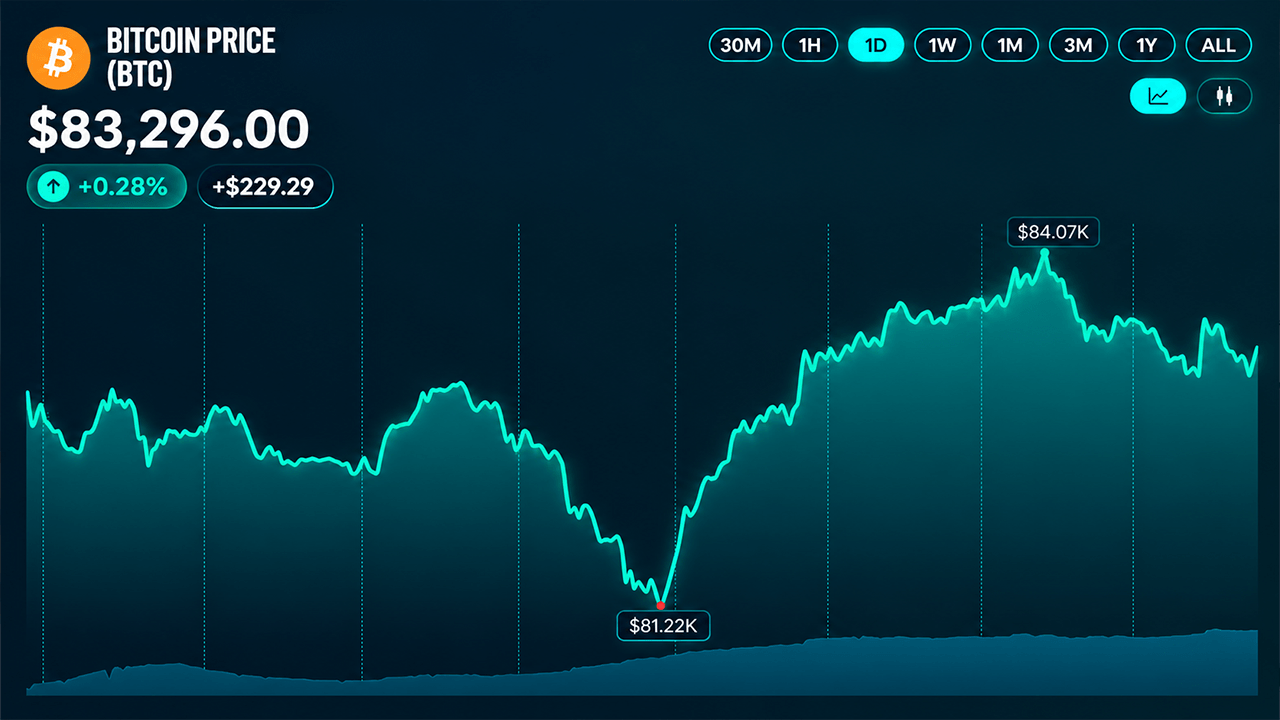
Bitcoin retreated to $83.4K this week, down 3.2% over seven days, as the promised October rally failed to materialize. The cryptocurrency peaked near $87K early in the week before sliding to $81K on Monday—a roughly 7% drawdown—before recovering modestly.
Altcoins absorbed steeper losses. Solana dropped 11%, while Dogecoin, Hype, and XRP each fell between 10% and 12%. Ethereum declined 8% over the same period.
Macro Headwinds Dominate
Analysts attribute the downturn primarily to macroeconomic factors rather than cryptocurrency-specific issues. Oil prices surged to $110 following attacks near the Strait of Hormuz, while the 30-year Treasury yield reached 5.70%, its highest level since 2002, before settling at 5.60%. The 10-year yield stands at 5.24%.
Sentiment indicators reflected the shift. The Crypto Fear & Greed Index fell to 56, a neutral reading, down from 67 a week prior and far below its August peak of 82.
ETF Outflows Persist
Spot Bitcoin ETFs experienced $65M in net outflows on Monday alone and posted $451M in negative flows for October. Ethereum ETFs performed worse, with $720M in net outflows for the month, continuing a sharp exodus of institutional capital.
Prediction markets also cooled. Odds of Bitcoin reaching $87.5K in October fell from 55% to 45%, while the probability of a dip to $80K climbed to 56%.
Divergent Outlooks
Analysts remain divided on the macroeconomic backdrop. Some view rising yields as evidence that investors treat Bitcoin as a risk asset, similar to equities. Others counter that if yields rise due to concerns about U.S. debt accumulation rather than economic strength, Bitcoin could function as an alternative to government currency, supporting prices.
U.S. inflation data arrives Wednesday, with the Consumer Price Index announcement potentially serving as the next significant catalyst. A cooler-than-expected reading could lower yields and provide relief to risk assets, while elevated inflation could reignite rate-hike discussions.
Notable Developments
Blur announced its front end will shut down on November 12, signaling the project's final closure. The Ledger wallet drain affecting $87 million traced to devices sold by Southeast Asian distributor CryptoBilis, which confirmed an unauthorized hardware implant in at least one device and halted sales.
Meanwhile, a bug in the XRP Ledger that could have allowed unlimited XRP creation went undetected for nine years before being patched. The vulnerability sat dormant in the payment engine since 2015.