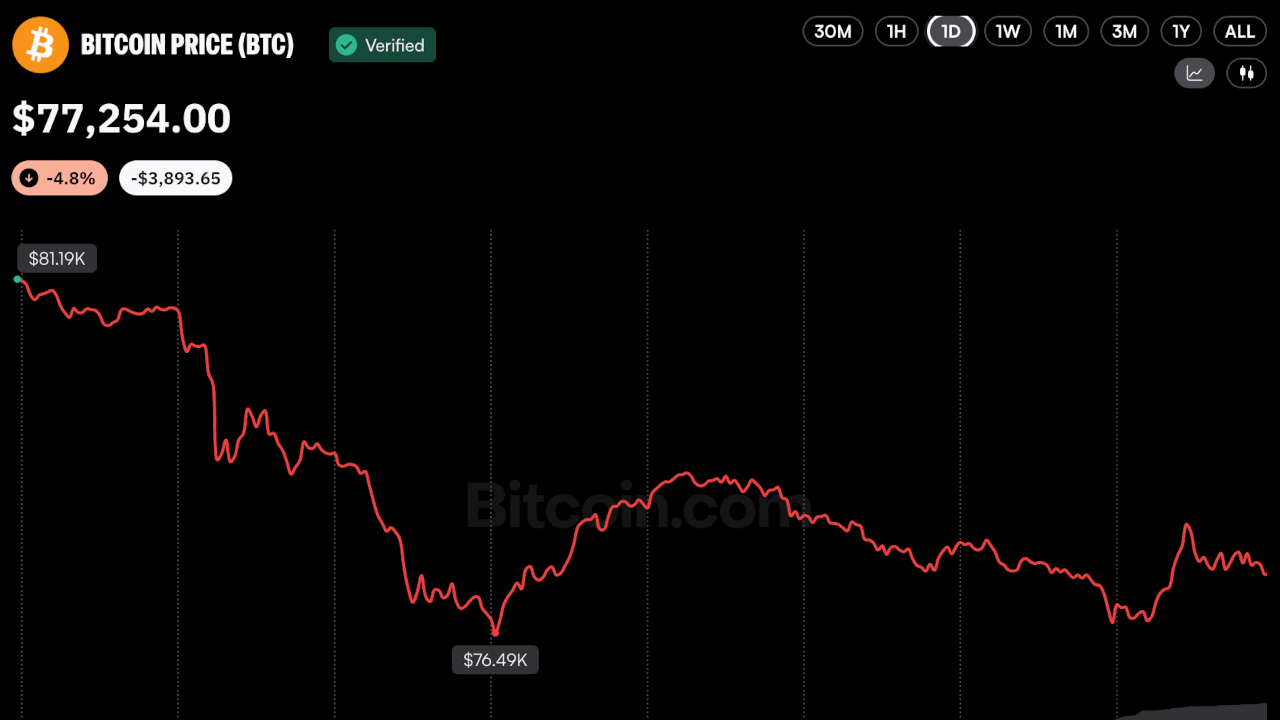
Bitcoin stabilized above $77,000 on Friday after a $6.3 billion Binance hack sparked a marketwide sell-off that briefly pushed the cryptocurrency down to $76,320, its lowest level since August 21. The decline reversed earlier gains, as bitcoin had approached $82,000 Thursday morning following strong U.S. gross domestic product data.
According to Bitstamp data, bitcoin shed more than $2,500 shortly after news of the hack became public Thursday afternoon. The cryptocurrency found temporary support above $78,200 but faced sustained selling pressure as investors reacted to the scale of the attack. By 1:00 p.m. EST, bitcoin was trading at $77,255, representing a daily decline of 4.7%.
The losses extended bitcoin's monthly performance, with the cryptocurrency on track to end October down more than 7% and year-to-date losses now exceeding 11%. Bitcoin's market capitalization declined to $1.55 trillion, dragging the broader crypto market cap to approximately $2.7 trillion.
Liquidations Surge Across Markets
The price volatility sparked significant liquidations in bitcoin futures and derivatives. Over the past 24 hours, bitcoin liquidations reached $556 million, with long positions accounting for approximately $464 million, or 83% of the total. Short position liquidations totaled nearly $92 million.
Across the broader crypto market, liquidations hit $1.66 billion, with long positions representing $1.45 billion of that total.
Security Concerns Intensify
The Binance breach has renewed attention to security vulnerabilities across major cryptocurrency exchanges. Ryan Kirkley, co-founder and CEO of Global Settlement Network, emphasized that the incident reveals systemic weaknesses in the industry's infrastructure.
Kirkley noted that Binance's dependence on emergency asset freezes and reimbursement commitments to address the multibillion-dollar incident raises questions about institutional confidence in crypto platforms. He argued that institutions require verifiable asset ownership, operational controls, and reliable access to funds, particularly during market stress.
Kirkley further cautioned that the industry's most pressing threats stem from advances in cybercrime and artificial intelligence rather than regulatory action alone, suggesting that security infrastructure improvements are essential for attracting institutional capital regardless of the political environment.