Bitcoin and U.S. equities ended the week relatively flat compared to the previous Friday, though the path between those points involved significant volatility in both directions.
Bitcoin's longer-term technical position remained constructive. The asset stayed comfortably above its 200-week moving average, a level where buyers have historically done well in previous cycles. The BTC/Gold trading pair also maintained favorable positioning.
Macroeconomic Pressures Mount
Macroeconomic and political risks continued to weigh on markets. On Thursday, JPMorgan released an oil report flagging uncertainty about Middle East escalation. The bank noted that for the first time since the start of the Iran conflict, it lacked a clear baseline model for the situation, citing concerns about potential tipping points including $100 oil, gasoline near $5 per gallon, a 4% headline inflation print, or a 5% yield on the 10-year Treasury.
U.S. involvement in the Middle East drove elevated volatility. Reports of Saudi oil shipments to Europe being canceled for potentially two months added to market concerns, though reactions varied in intensity.
The Federal Reserve voted unanimously Wednesday to raise rates by 25 basis points, citing elevated inflation. However, the rate hike did not produce material increases in long-duration bond yields, suggesting that policy rates may not be the primary driver of the long end of the curve. With the U.S. 10-year approaching 5% and yields at local highs across multiple countries, higher rates became a global phenomenon.
Crypto Policy Setback
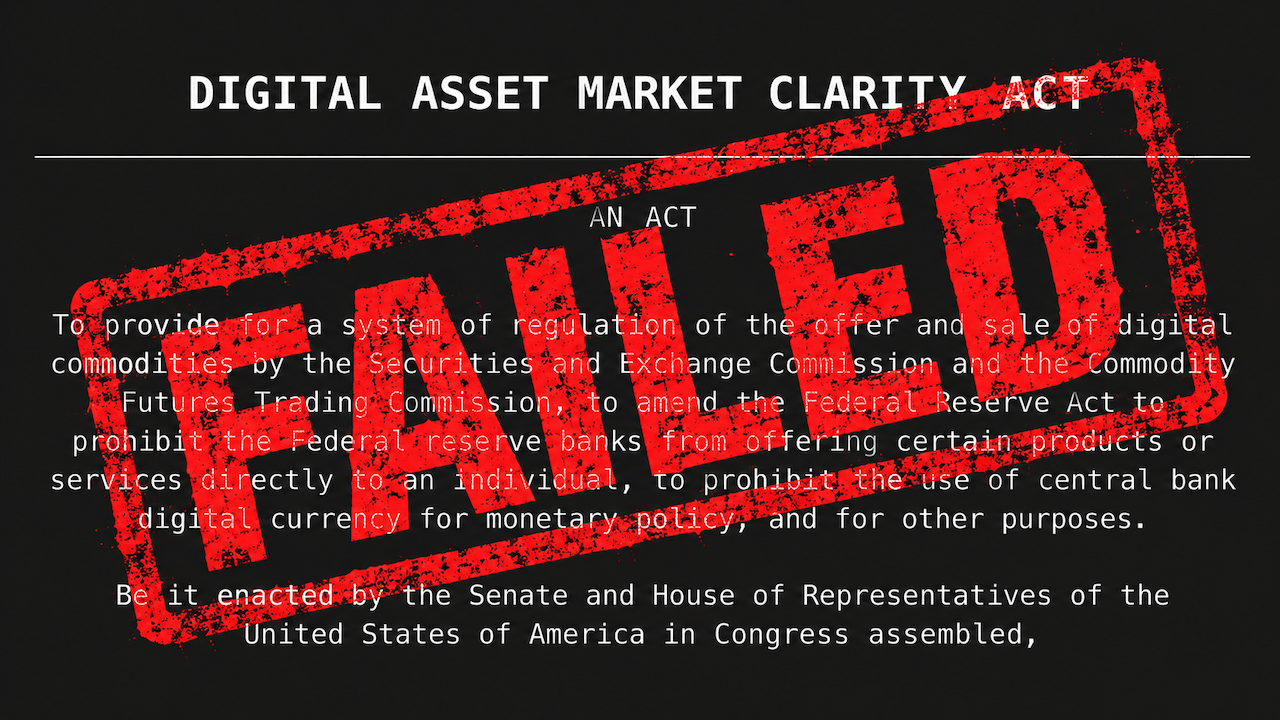
The CLARITY Act, anticipated cryptocurrency legislation, failed to advance in the Senate after the week began with reports that President Trump had accepted the bill's ethics revisions. The legislative failure left its prospects for 2026 appearing bleak.
Despite CLARITY's failure, observers noted that the bill had come close to passage, suggesting bipartisan support on nearly all issues. Some analysts suggested that financial regulators could still reference the bill's latest version when making rules, providing confidence that such guidance would be acceptable to both parties.
The Strategic Bitcoin Reserve bill cleared committee on Wednesday, potentially positioning itself for a full House floor vote.
Tokenized Stocks Gain Momentum
Tokenized stocks emerged as a major development area. Circle's Arc went live, while Long.xyz announced that its tokenized stocks would be transferable 1:1 between Robinhood and Arc. Robinhood raised its gas limit and lowered fees following earlier complaints.
Tempo gained market share in the space. Hyperliquid entered the U.S. market through Kraken's parent company, Payward, potentially giving it access to six million accounts and $100 billion in monthly volume.
Fragmentation across rival versions of tokenized equities presented a looming challenge, with stablecoin-style duplication likely to worsen the problem.
Stablecoin and Fintech Developments
Polymarket reported record U.S. activity and reached No. 3 app ranking in America, though the ranking likely reflected intraday performance.
Tether announced a $1.45 billion arrangement with Gold.com structured as a lease on bullion, allowing Gold.com to access metal without paying full upfront costs while settling later. The arrangement positioned Tether in a financing role traditionally associated with commercial banks and trade-finance operations.
Governance Debates and Business Challenges
Zcash governance discussions intensified, with debate over the adequacy of coinholder voting. Participants included developers, economists, and project leadership offering competing perspectives on governance structure.
In crypto business developments, Bitcoin DAT Satsuma shut down and returned $41 million to shareholders. CoinEx announced closure. Binance faced Department of Justice allegations seeking $61 million in forfeitures related to customer accounts allegedly used to launder oil proceeds; these allegations targeted customer activity rather than findings against Binance itself.
A Polish political scandal involving a $230 million advance, USDT, and USB sticks received detailed reconstruction of how the funds moved.
Security Issues
LayerZero faced allegations it lost a Wyoming private key and misrepresented the incident. Its CEO denied the loss claim, while the Wyoming Stable Token Commission's Chief Information Security Officer published an article that cast the company in an unfavorable light.
Revolut suffered a major data leak, with hackers allegedly gaining access through multiple Italian law-enforcement agencies and demanding a $3 million ransom in Monero.