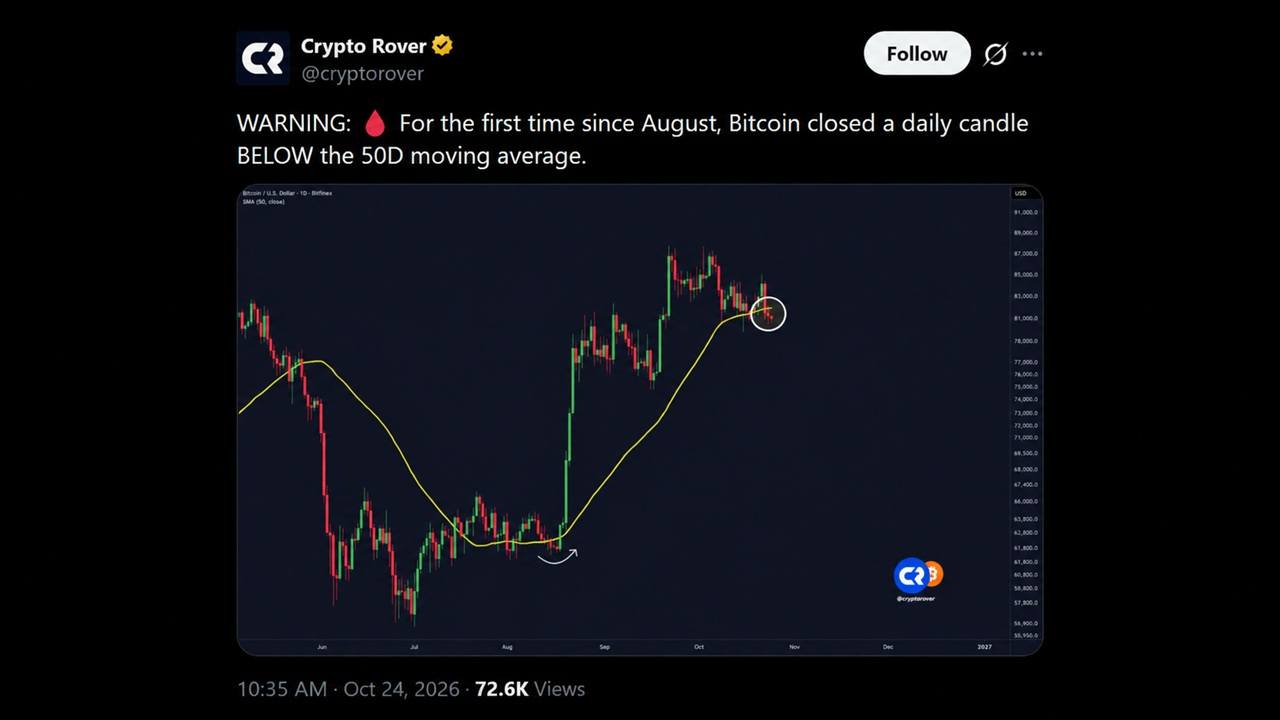
Bitcoin is testing critical support levels after failing to sustain gains above $83,000. The cryptocurrency now faces scrutiny at the $80,000 mark, a level with significant implications for both retail traders and institutional holders.
Analyst Benjamin Cowen has flagged that a weekly close below $83,000 would reinforce his bearish outlook. Recent volatility has already taken a toll: during one four-hour selloff, long positions accounted for $91.19 million of $95.22 million in total crypto liquidations.
Why $80,000 Matters
The $80,000 level carries particular weight because Glassnode estimates that companies holding Bitcoin on their balance sheets paid approximately that price per coin on average. A sustained decline below this threshold could move corporate treasury positions into loss territory, potentially undermining confidence even if it does not force immediate sales.
Additional downside targets identified by BeInCrypto analysis include $77,876, followed by a support zone between roughly $76,700 and $72,500.
Institutional demand has also weakened recently. US spot Bitcoin ETFs recorded outflows of approximately $322 million on October 22.
Multiple Risk Factors Ahead
Several macroeconomic events in the coming week could influence Bitcoin's trajectory. The Federal Reserve holds its October 27–28 meeting, with expectations that interest rates will remain unchanged. Inflation data is due on October 29.
Energy markets add another layer of complexity. Brent crude settled at $116.72 as Middle East supply concerns intensified, potentially keeping inflation elevated. Higher oil prices and elevated Treasury yields can weaken appetite for speculative investments.
Historical Context
Historical patterns offer mixed signals. Binance Research notes that Bitcoin's average decline during previous US midterm election years reached 56%, though this observation spans only three Bitcoin cycles.
A sustained recovery above $83,000 would weaken the immediate bearish case. However, a break below $80,000 could trigger additional selling pressure heading into November's US midterm elections.