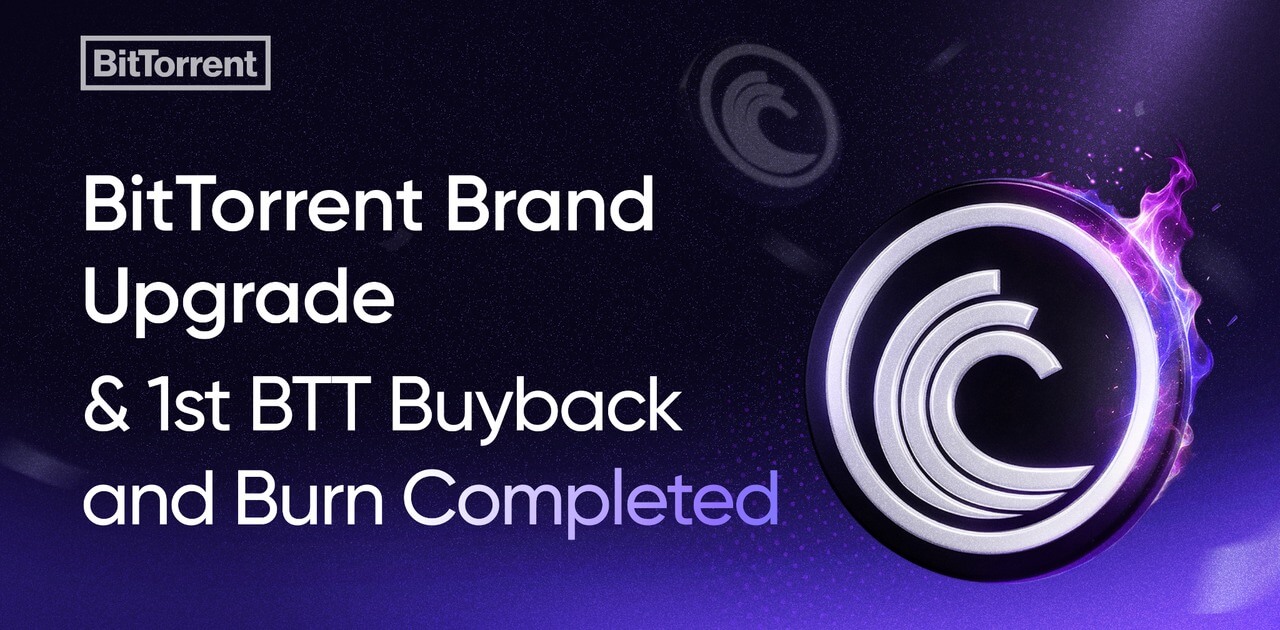
BitTorrent completed its first token burn on October 16, removing approximately 21.6 billion BTT tokens from circulation. The repurchased tokens, valued at roughly $7.6 million, were funded entirely by decentralized service revenue generated in the third quarter and sent to a burn address on the blockchain.
The burn represents the initial phase of a long-term buyback-and-burn program announced on July 6. Under this framework, BitTorrent commits 100% of decentralized business revenue to quarterly BTT repurchases and burns. The company has established a dedicated dashboard on its website to publish burn figures and on-chain records at the start of each quarter, providing transparent documentation of the deflationary mechanism.
Alongside the burn initiative, BitTorrent released an updated whitepaper outlining a restructured network architecture. The rebrand positions BitTorrent as infrastructure serving Web3 and artificial intelligence applications, organizing the network into three integrated layers: the BitTorrent Mainnet for peer-to-peer content distribution, BTTInferGrid as a decentralized compute layer, and BTTC for cross-chain interoperability and Layer 2 scaling.
The BTT token functions as the economic engine across the unified network, used for resource payments, gas fees, node incentives, staking, and governance decisions. BitTorrent emphasizes that the governance model grants decision-making power and economic rewards directly to token holders and ecosystem contributors.
The company frames these twin initiatives—the deflationary token model and architectural rebrand—as components of a self-reinforcing growth cycle. As network utility expands through decentralized compute and interoperability services, business revenue funds token buybacks, which reduces token supply while attracting additional network participants and developers.