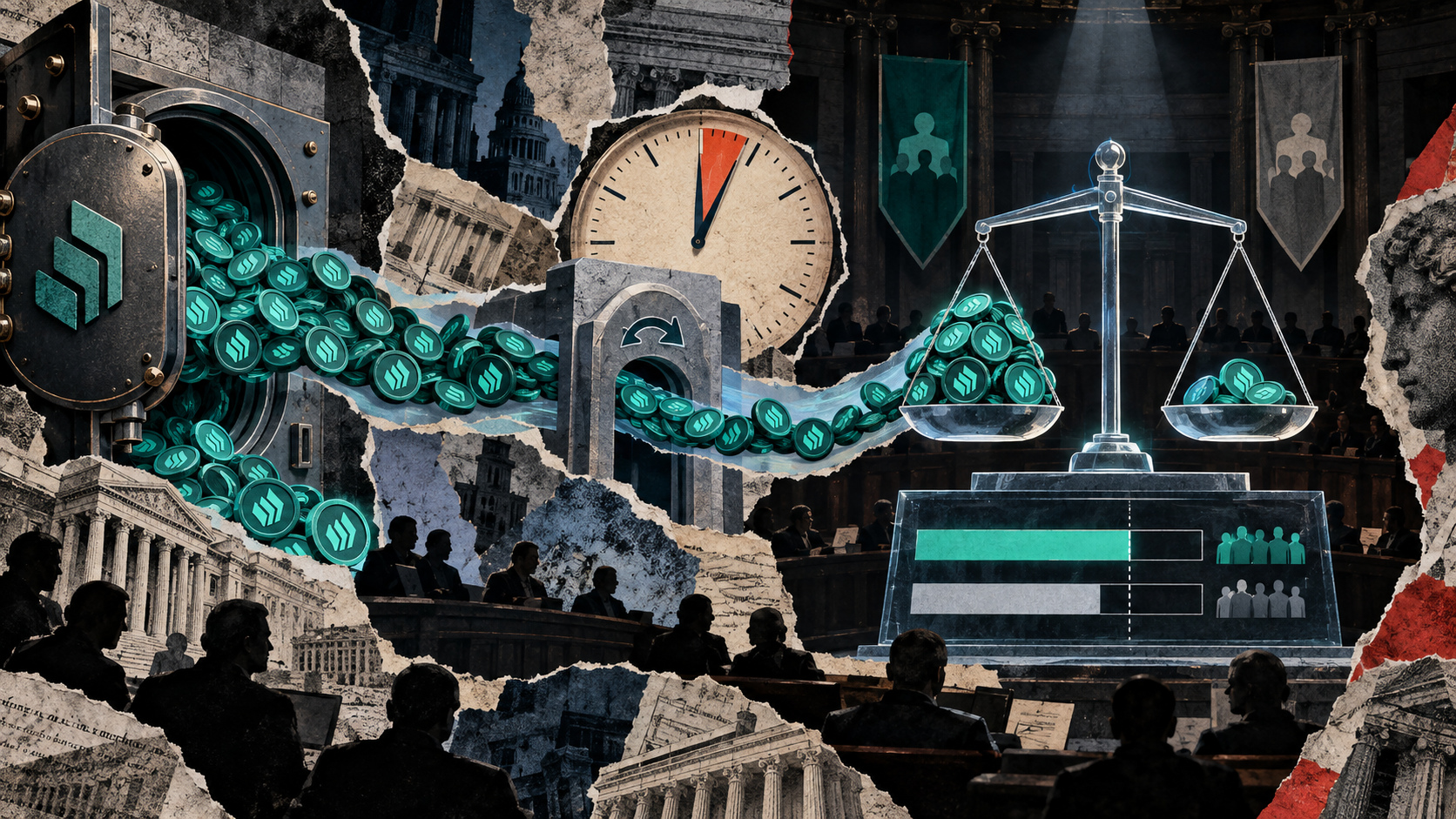
Recent regulatory and policy developments in Washington, D.C., represent positive momentum for the digital asset industry, but they do not instantly unlock complete institutional adoption on Wall Street, according to Bitwise Chief Investment Officer Matt Hougan.
Speaking in an interview, Hougan characterized the ongoing integration process as a series of numerous small, often unsexy steps rather than a single landmark legislative moment. He pointed to several recent developments as examples of a strong week for the sector: an SEC proposal for crypto investment contracts featuring exemptions up to $75 million over 12 months, comments regarding bringing Hyperliquid into the U.S. in a compliant manner, and a Financial Accounting Standards Board (FASB) proposal that could clarify whether certain stablecoins qualify as cash equivalents.
The Multi-Layered Approval Process
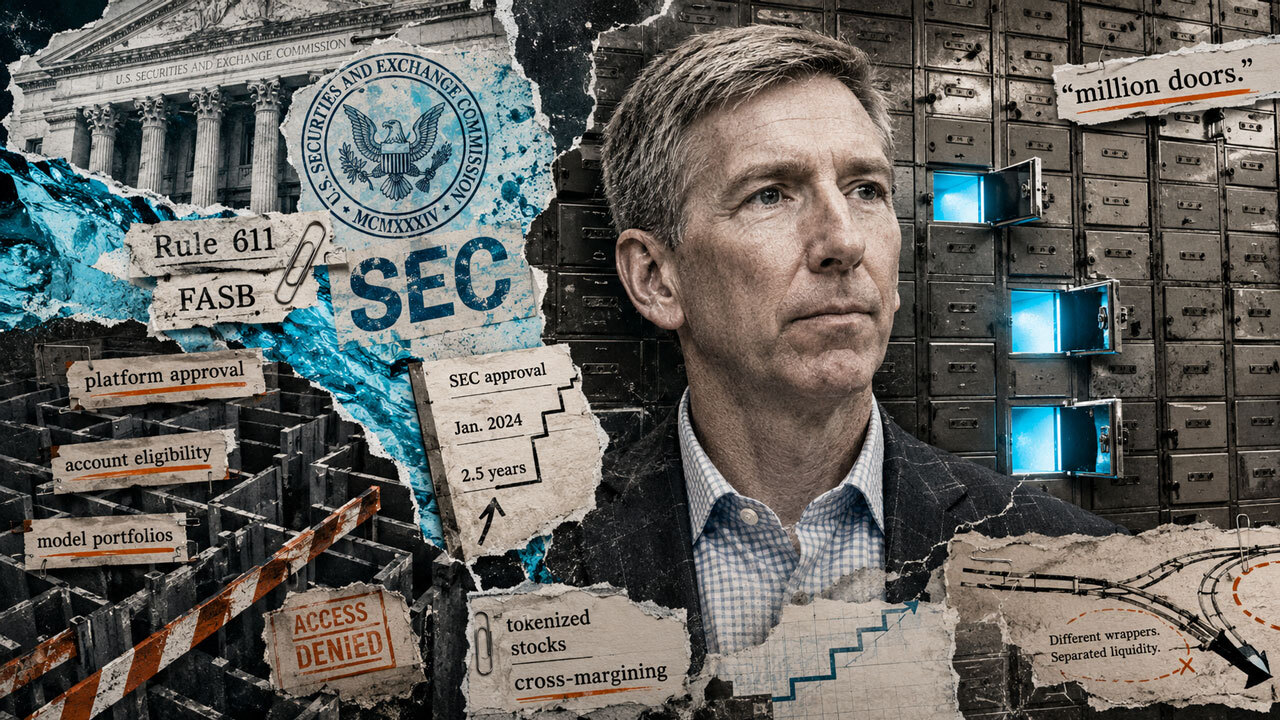
To illustrate the gradual nature of institutional adoption, Hougan compared the current regulatory environment to the rollout of spot Bitcoin exchange-traded products (ETPs). Following the SEC's approval of spot Bitcoin ETP listings in January 2024, initial assumptions suggested immediate, widespread access. However, large wealth-management platforms still required internal reviews, individual product approvals, and determinations regarding which client accounts could hold the assets before adding them to advisor model portfolios.
Data shows that major firms moved at varying speeds, with Morgan Stanley and Bank of America expanding crypto access for wealth advisors within the past year, and BlackRock adding its Bitcoin ETF to model portfolios more than a year after launch. Hougan estimates it took approximately two and a half years for Bitcoin ETF access to transition from technically permissible to genuinely operational across the industry, a trajectory he expects broader regulatory unlocks to follow.
Market Structure and Fragmentation Hurdles
Hougan highlighted Rule 611 under Regulation NMS, created in 2005, as a concrete obstacle for integrating decentralized finance (DeFi) venues like Uniswap with traditional brokerage services for tokenized-stock investors. While the SEC proposed rescinding Rule 611 in June, legal analysis notes that rescission could reduce market-structure challenges tied to applying traditional equity trade-through requirements to non-interconnected trading environments.
Even if integration barriers fall, fragmentation remains a core concern. As of August 17, the tokenized equity market capitalization reached approximately $2.8 billion—accounting for about 15% of the broader tokenized real-world-asset market—with monthly transfer volumes near $23 billion across more than 1.3 million holders. However, because different issuers build tokenized versions of identical underlying stocks using incompatible structures, rules, and blockchains, liquidity risks splitting across isolated pools that cannot be easily arbitraged.
Path Forward for Financial Infrastructure
Looking ahead, Hougan suggests that tokenization and unified infrastructure could eventually help collapse parallel rails for stocks, bonds, commodities, and derivatives into financial super apps. Cross-margining concepts, which allow capital to work more efficiently by sharing collateral across multiple asset classes, are already a shared priority in SEC-CFTC harmonization initiatives.
While industry participants continue to build ahead of fully finalized regulatory frameworks—evidenced by corporate acquisitions and validator participation involving firms like Stripe, Mastercard, and Circle—Hougan emphasizes that true institutional integration will depend on how successfully interoperability, margin, and market-access rules catch up with issuance clarity.