Blast announced on Friday that it will close down its Ethereum Layer 2 network and return users to the Ethereum mainnet. The project stated that the overhead costs of keeping the network operational have become larger than the income generated by the L2.
The decision highlights ongoing questions regarding smaller rollups in a crowded L2 space and whether they can generate sufficient real activity to justify their operations. Blast debuted in November 2023 after securing a $20 million funding round led by Paradigm and Standard Crypto. Prior to its mainnet launch in February 2024, the project drew over $2 billion in deposits from nearly 200,000 early users, supported by native yield on ETH and stablecoins.
Figures have since dropped significantly. DeFiLlama reports that Blast's DeFi Total Value Locked (TVL) sits at around $32 million, while L2BEAT lists about $38 million secured by the platform and notes that its fraud-proof system is still under development. According to The Block, the BLAST token fell 17% on Friday, reducing its market value to approximately $23 million.
Data from DeFiLlama showed roughly $755,500 in annualized fees compared to only about $22,700 in annualized chain revenue. Blast operated during a period when Ethereum reduced key rollup costs through EIP-4844 by introducing blobs, which allow L2s to transmit data more cheaply than traditional calldata. However, the shutdown demonstrates that reduced operating costs are insufficient if a network lacks the sustained activity and revenue needed to support itself.
Exchanges reacted quickly to the announcement. Upbit and Bithumb designated BLAST as a trading-caution asset, with Bithumb citing sustainability concerns and the cessation of mainnet operations.
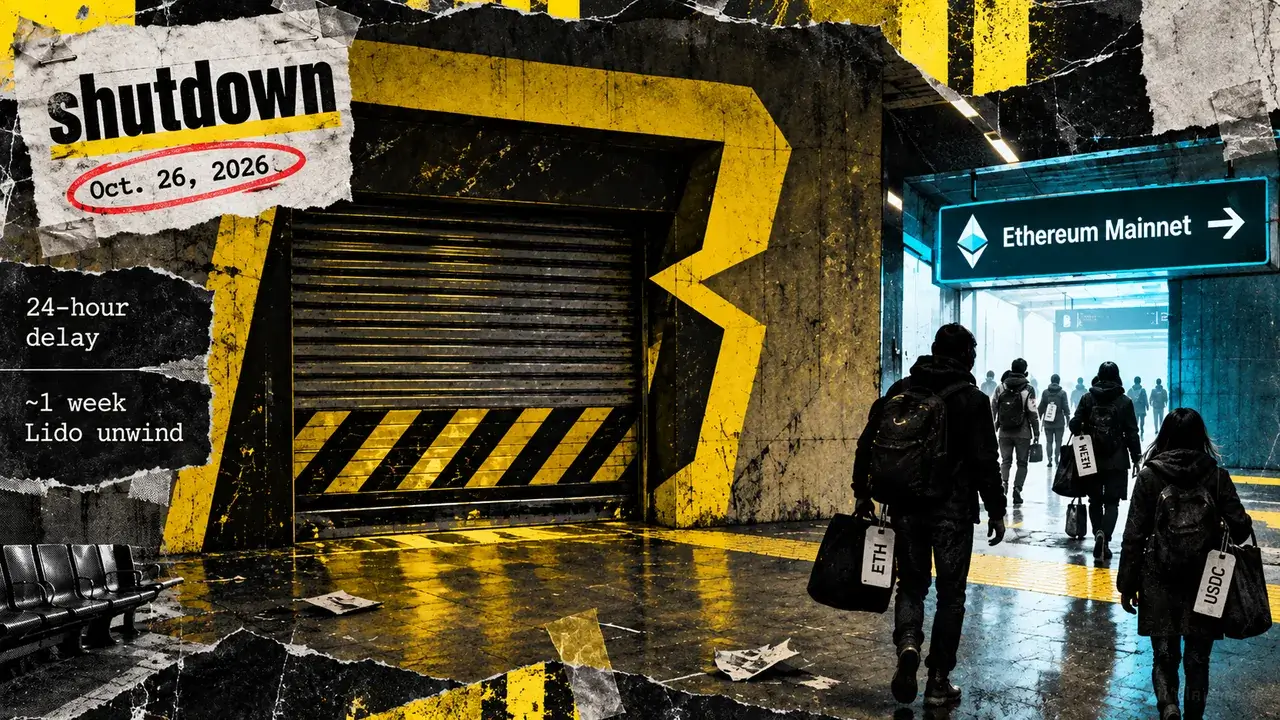
Blast plans to first withdraw its Lido holdings, a process expected to take about a week. Users can withdraw funds through the Blast interface until October 26, after which they must use Ethereum bridge contracts directly.