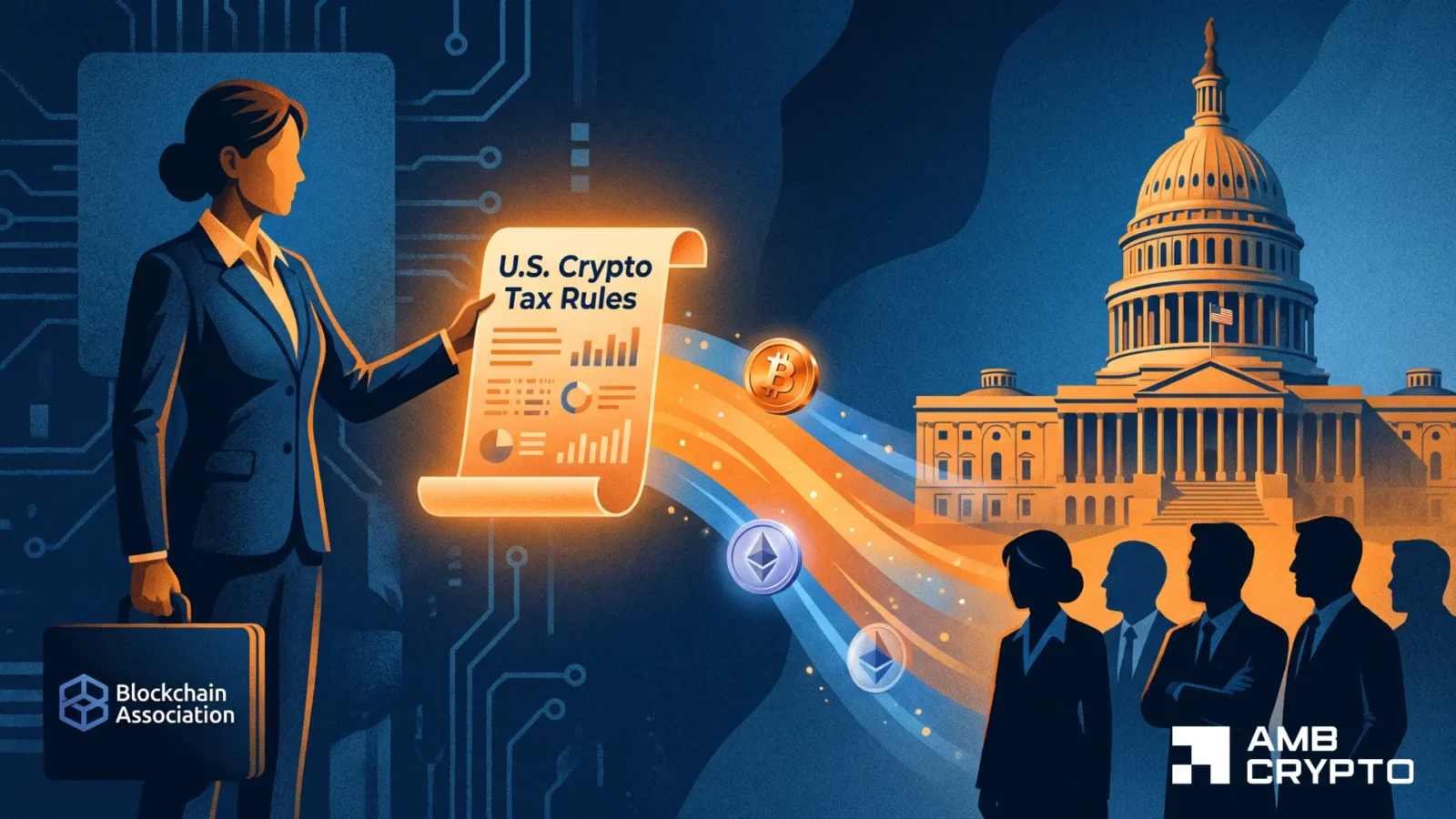
The Blockchain Association has urged Congress to advance bipartisan digital asset tax legislation, sending a letter on October 22 to House Speaker Mike Johnson, House Minority Leader Hakeem Jeffries, Senate Majority Leader John Thune, and Senate Minority Leader Chuck Schumer.
The association, which represents more than 100 firms in the crypto sector, laid out 10 principles it wants any final bill to follow. "Sixty-seven million Americans now hold and use digital assets, yet the rules that govern them were written for a different era," the group stated in its letter.
Key Principles Outlined
Among the association's core proposals are:
- De minimis exemption: Small transactions would be spared from triggering tax calculations, eliminating the need to track gains or losses on minor purchases.
- Wallet transfer carve-out: Moving digital assets between wallets under personal control would not trigger taxable events.
- Wash sale extensions: Loss-harvesting rules used in traditional securities would extend to digital assets.
- Retirement account access: Americans would be permitted to hold crypto in retirement accounts.
- Research and development credits: Tax incentives for crypto builders and developers.
Legislative History
The Blockchain Association first released its Digital Asset Tax Principles on February 24, 2026. On September 16, 2026, the House Ways and Means Committee approved the Digital Asset Tax Certainty Act, H.R. 10357, by a 38-5 vote. The bill includes a proposed $10 threshold tied to network fees but excludes relief for mining and staking activities.
Two weeks later, the Senate introduced the ADAPT Act. Both bills then stalled as Congress entered recess ahead of midterm elections.
What Remains Unclear
The association is not endorsing any specific bill, instead setting the terms it wants any legislation to meet. The group has launched a website, TaxClarityforAmerica.com, to help constituents contact their representatives.
Key questions include whether House leadership will schedule H.R. 10357 for a full vote, whether the Senate's ADAPT Act gains additional co-sponsors, and whether either bill will include mining and staking provisions the industry seeks.