Brazilian companies moved into stablecoins on election day to shield their treasuries from the outcome of a presidential vote, according to crypto exchange Mercado Bitcoin.
Corporate accounts generated 78% of trading on the exchange, with turnover in Tether's dollar-pegged USDT jumping nearly 800% from the week before and more than triple the average of the four preceding Sundays. Bitcoin trading surged 865% compared with the previous Sunday.
"The main driver of volume was companies seeking to protect their treasuries," Mercado Bitcoin said. "Retail customers were responsible for just 22% of trading volume, while MB's corporate clients generated 78% of the total for Sunday." Corporate clients are known to hold up to 15% of their assets on the platform.
Currency pressure builds
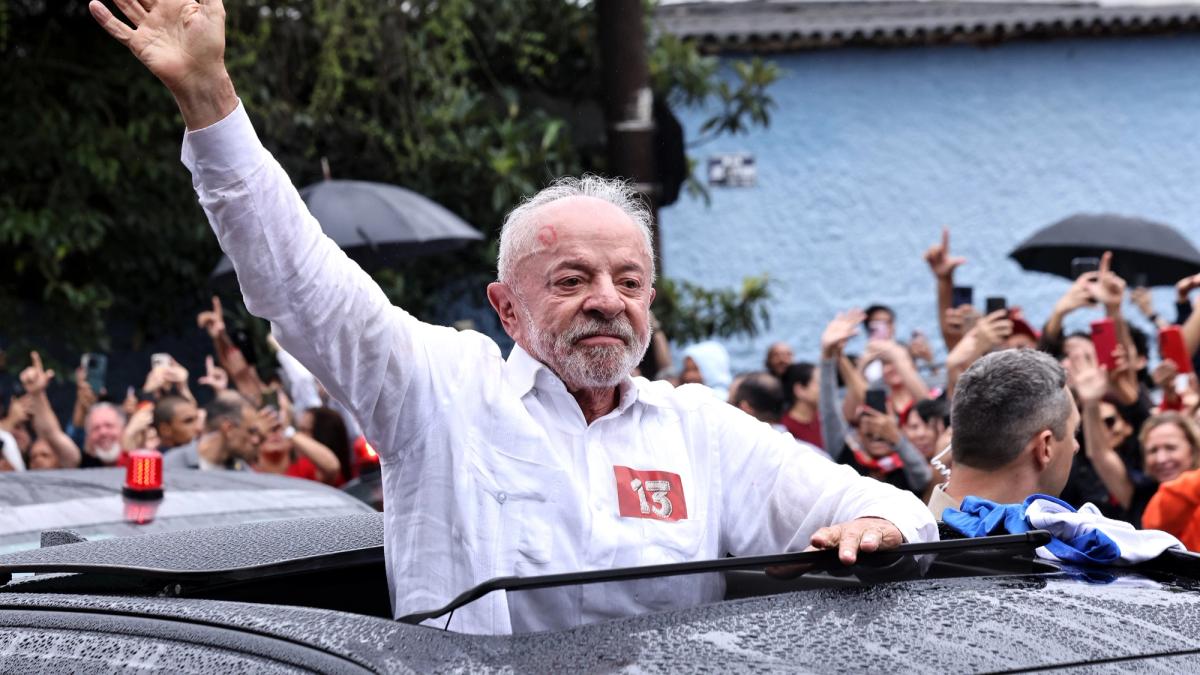
Incumbent President Luiz Inácio Lula da Silva unexpectedly beat Flávio Bolsonaro, whom prediction markets had priced as a roughly 80% favorite. Lula's platform of increased social spending and a ban on online betting that would reduce tax income sparked concerns the country's finances would suffer if he won, adding pressure on the real and keeping borrowing costs high.
"For investors, this reinforces the logic of not relying only on the real," Pedro Fontes, a research analyst at Mercado Bitcoin, wrote in an analysis shared with CoinDesk. "In this scenario of higher exchange rate pressure, stablecoins, such as USDT and USDC, are a simple way to dollarize part of your assets, at any time and starting from low amounts."
Stronger opposition in Congress could complicate efforts to address fiscal problems, reinforcing the appeal of assets whose prices are set in global markets, he said.
Corporate concerns materialized the next day, when the benchmark Ibovespa stock index fell 14% in its worst performance since March 2020 and the dollar jumped more than 8% against the real, its largest daily gain since 1999.
A different reaction three weeks earlier
The response had been different three weeks earlier, when Bolsonaro finished ahead of Lula in the first round of voting. The Ibovespa jumped 7.7% and the dollar weakened more than 4% against the real as investors anticipated a change of government and tighter control over public spending.
Lula's victory made him the first presidential candidate in Brazil's modern democracy to secure a win after finishing in second place. Even so, Brazil's companies took a cautious stance.
Volume surge extends beyond one venue
The burst of real-denominated trading extended beyond Mercado Bitcoin. Data from Biscoint, which tracks crypto prices and volume across 10 venues including Binance and MB, shows turnover in USDT against the real rose 150% from the previous Sunday. Volume in USDC, the second-largest stablecoin, jumped 318%.
The surge extended into Monday, with combined USDT and USDC turnover reaching 1.84 billion reais ($350 million), 65% higher than in the previous week, while bitcoin trading rose more than ninefold to 1,336 BTC.
The increases came as volumes fell elsewhere. On Binance, bitcoin turnover against the real rose 370% while the global BTC/USDT pair recorded a 25% decline. Bitcoin gained 9.4% against the real while slipping 0.2% against USDT, consistent with a repricing of Brazil's currency as investors reacted to the election.
Prediction markets miss
The expectation of a Bolsonaro victory was also reflected in prediction markets. In an Oct. 24 preview, Kalshi put his chances of winning at 84%, even as its own article described polling as showing an exceedingly close race. Kalshi and Polymarket have both been blocked in Brazil since April.
Lula won the runoff the next day, in an election that included a controversial last-minute two-hour extension to voting time granted by Lula's former defense attorney.
"[Prediction markets] were trading the first-round result, poll headlines and the story built around them," Einar Knobel, CEO and co-founder of sports data and technology company TxODDS, told CoinDesk in an emailed statement.
"I would not read this as a failure of prediction markets," Knobel said. "The mechanism did what it is designed to do with the information it was given."