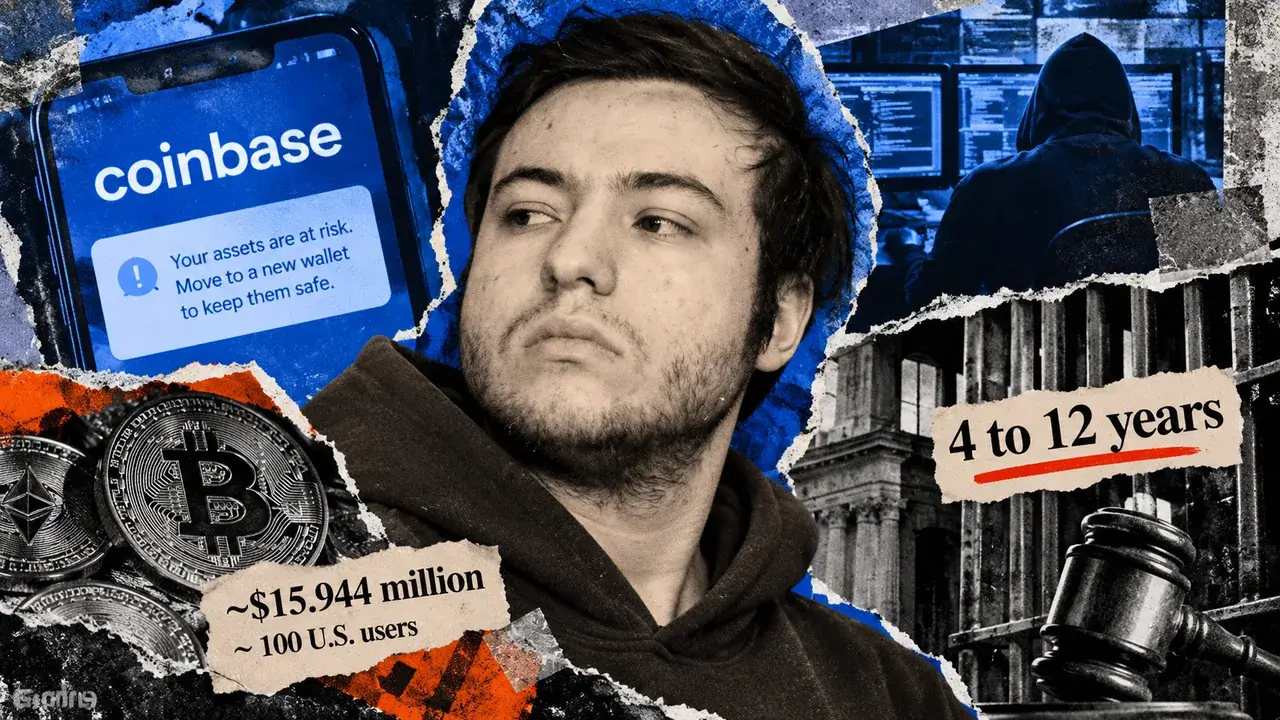
A Brooklyn man was sentenced to as much as 12 years in prison for stealing nearly $16 million from Coinbase users through an impersonation scheme. On September 23, Ronald Spektor, 23, received a four-to-12-year sentence after pleading guilty to a 31-count indictment involving a fake customer-support operation targeting about 100 people across the United States.
How the Scam Operated
Spektor posed as a Coinbase representative and warned users that hackers were threatening their accounts. Victims were then instructed to move their cryptocurrency to wallets presented as secure but secretly controlled by Spektor. The scheme generated approximately $15.944 million in losses, with some victims losing more than $1 million individually.
In one documented case, a Pennsylvania man received spoofed two-factor authentication messages before a caller identifying himself as "Fred Wilson" from Coinbase security warned of an attempted crypto transfer. The victim moved his assets and lost about $53,150.
Money Laundering and Investigation
Stolen cryptocurrency moved through repeated swaps, exchanges, and mixing services before reaching cash-out points. Funds were converted into other tokens, sent to gambling platforms, and used at online storefronts for gift cards and digital assets.
Blockchain analysis, transaction records, and search warrants linked Spektor to the operation. Investigators found his home IP address connected to several wallets associated with stolen funds. Evidence also showed he recruited other social engineers through online forums and operated a Telegram channel under the handle @lolimfeelingevil, where he boasted about thefts.
Sentencing and Restitution
Spektor pleaded guilty to the full indictment in exchange for a promised sentence of four to 12 years. The Brooklyn District Attorney's office objected and sought seven to 21 years, but the judge upheld the earlier commitment. The court ordered Spektor to forfeit more than $500,000 in cash, cryptocurrency, and personal property and to pay nearly $16 million in restitution. However, prosecutors have not disclosed how much stolen cryptocurrency has been recovered or how much victims have received.