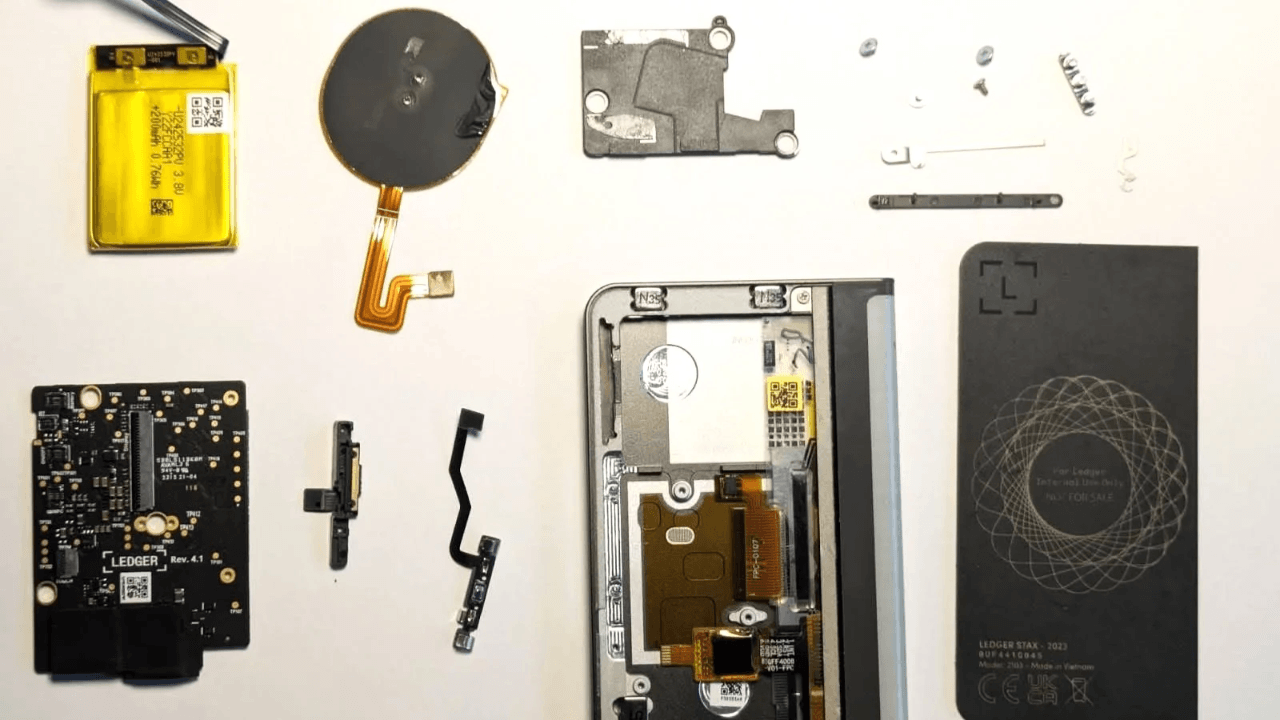
Ethereum co-founder Vitalik Buterin has proposed a way to make hardware wallets more transparent by opening secure chip designs to inspection, a fix aimed mainly at tampered chips. That threat has not caused known losses yet, and parts of his proposal are already being tested in products, but it would not make hardware wallets completely trustless.
A push for inspectable silicon
Buterin outlined the idea in his Nov. 26 post, “A shallow dive into open-source chip design,” warning that owning private keys is not enough if users cannot trust the chip securing them: “Not your silicon, not your keys.”
He argues that secure chips, including those used in hardware wallets, should be open all the way down to factory drawings so independent specialists can compare actual chips with published designs, even if such hardware is much less efficient. Professional auditors, journalists and civil society groups could audit manufacturers and distributors, according to Buterin.
Chips could be inspected by photographing their insides with infrared light, but detecting subtler tampering often requires taking a chip apart layer by layer, destroying it. That means only samples could undergo full inspection, not the chip in a user’s wallet. Buterin adds that chips need to be designed to be more inspection-friendly.
He forecasts that the hardware industry will split into “performance hardware” and “secure hardware.” The latter may be 10x less efficient or more, according to Buterin, “but it will be efficient enough for almost everything we care to do.”
Ledger CTO disputes open-source guarantee
The debate over open-source design in bitcoin and crypto hardware wallets has run for years, with manufacturers taking different approaches. During the Coldcard crisis this summer, wallets with stronger open-source credentials, such as Trezor, Bitbox and Blockstream Jade, leaned on verifiability, while more closed designs, such as Ledger, relied on certifications and audits. Buterin’s point concerns open-sourcing the hardware itself.
Ledger CTO Charles Guillemet, who is leaving the company at the end of the year, disagrees. In August, he argued that open source is not a security property and that there is no way to prove a published chip design matches the actual chip a user buys.
“You might think: ‘Then build an open-source secure element.’ That sounds elegant. It is mostly wishful thinking,” Guillemet said, emphasizing that “many eyes” checking code does not guarantee security, as the Coldcard episode showed. Coinkite, the manufacturer of Coldcard, claims its randomness bug sat in publicly available code for more than five years and was missed by at least 15 independent security research and review efforts.
According to Guillemet, closed source makes exploitation harder: “Anyone who has done offensive security knows this.” Hardware hacker Andrew “bunnie” Huang, whose infrared inspection method Buterin cites, has described the industry’s usual model in which users hand trust to vendors, so “anti-tamper measures take priority over inspectability.” Huang works from the opposite assumption: no vendor can be trusted.
In short, Ledger’s approach mainly protects against whoever gets hold of a device, while Buterin’s mainly focuses on whoever made it.
Mixed designs already in use
The choice between open- and closed-source hardware wallet designs is not black and white. Trezor Safe 7 already combines a certified, closed chip—Infineon OPTIGA—the open-design TROPIC01 chip made by Trezor’s sister company Tropic Square, and the main microcontroller. According to Trezor, the seed is not stored in either secure chip. Instead, it is encrypted on the main microcontroller using keys from both TROPIC01 and OPTIGA.
A security test of TROPIC01 this year offered support for both sides. In a lab, researchers from Ledger’s Donjon team used a laser to bypass the chip’s firmware signature check, which let them run their own code on the chip and, Trezor says, extract a subset of the secrets it protects. They said the published code showed them exactly how the check worked and which step to target.
Trezor’s argument also stands, according to the company: the flaw was disclosed publicly, a fix for future chips is in the works, and the layered design means the flaw alone cannot expose users’ PINs or funds. The question remains how many other layers attackers might bypass in the future, if any.
The trust problem remains
Chip flaws were not behind the actual incidents this year. Coldcard’s weak seed generation was caused by a firmware bug, while the implants found in Ledger and, on a smaller scale, Trezor devices were extra parts added inside the cases.
Buterin discusses a potential future attack vector: chips swapped for look-alikes. He warns that hardware-wallet manufacturers should start preparing for this possibility now.
A better way to ensure hardware has not been tampered with during manufacturing—and remains unchanged until it reaches the user—may eventually emerge. In 2023, Huang suggested checking a chip first and then, if tamper resistance is needed, sealing it in opaque epoxy to protect it from subsequent tampering.
Whether hardware wallet users will ever reach a point where they do not need to trust anyone at all remains an open question.