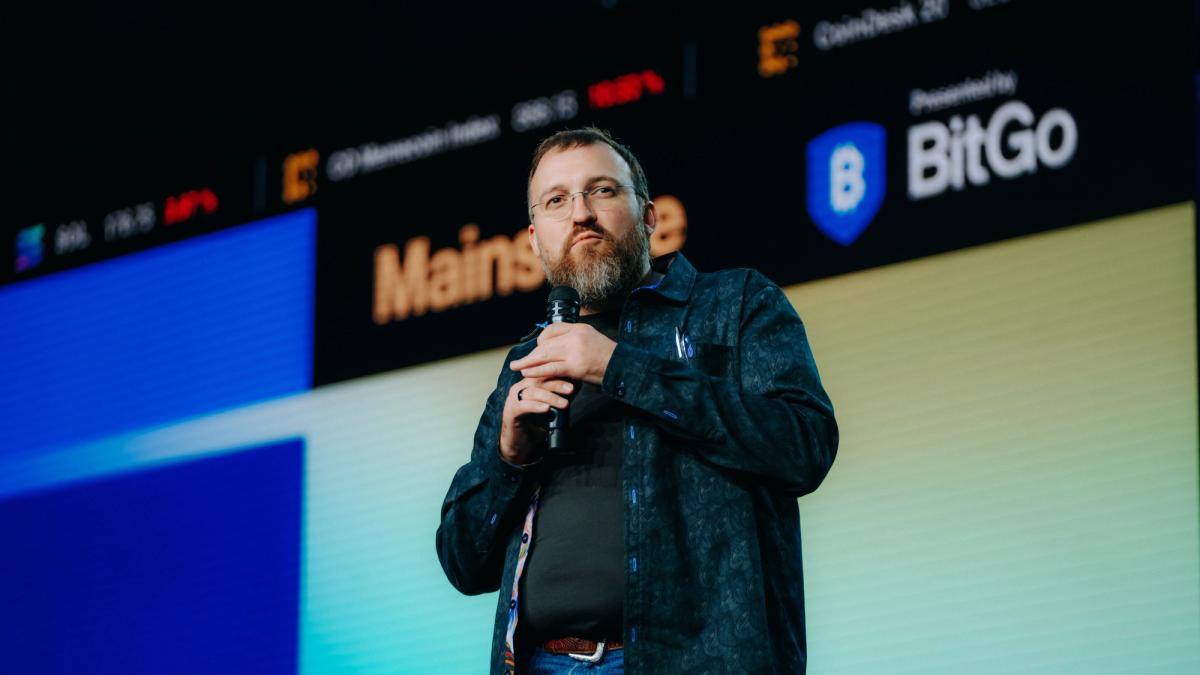
Cardano founder Charles Hoskinson announced he is personally developing a new programming language for the blockchain network. In a post on X, Hoskinson said he is collaborating with Lucas Rosa, a software engineer at Input Output Global who previously co-created Aiken, one of Cardano's main smart contract languages.
The new language would integrate three technical components: transaction intents, proof-carrying data, and Groth16 proofs. According to Hoskinson, this combination would enable applications to execute user requests while efficiently verifying that specified conditions were met.
How the Language Would Function
Transaction intents would allow users to specify what they want accomplished without detailing the steps required. For example, a trader could request a token swap only if the final price meets predetermined conditions, delegating execution details to the application.
Proof-carrying data attaches cryptographic evidence to information, demonstrating compliance with certain rules. Other applications could verify this evidence without recalculating the underlying computations.
Groth16, a widely used proof system, generates compact proofs that computers can verify quickly. These proofs can confirm a condition was met without exposing the private data involved in meeting it.
Current State and Context
Cardano developers currently write smart contracts using Plutus, which is built on the Haskell programming language, or using Aiken. Input Output Global, Hoskinson's company, has also developed Compact, a language for its privacy-focused blockchain Midnight.
Hoskinson has not yet disclosed the new language's name, released public code, or announced a timeline for developer access.