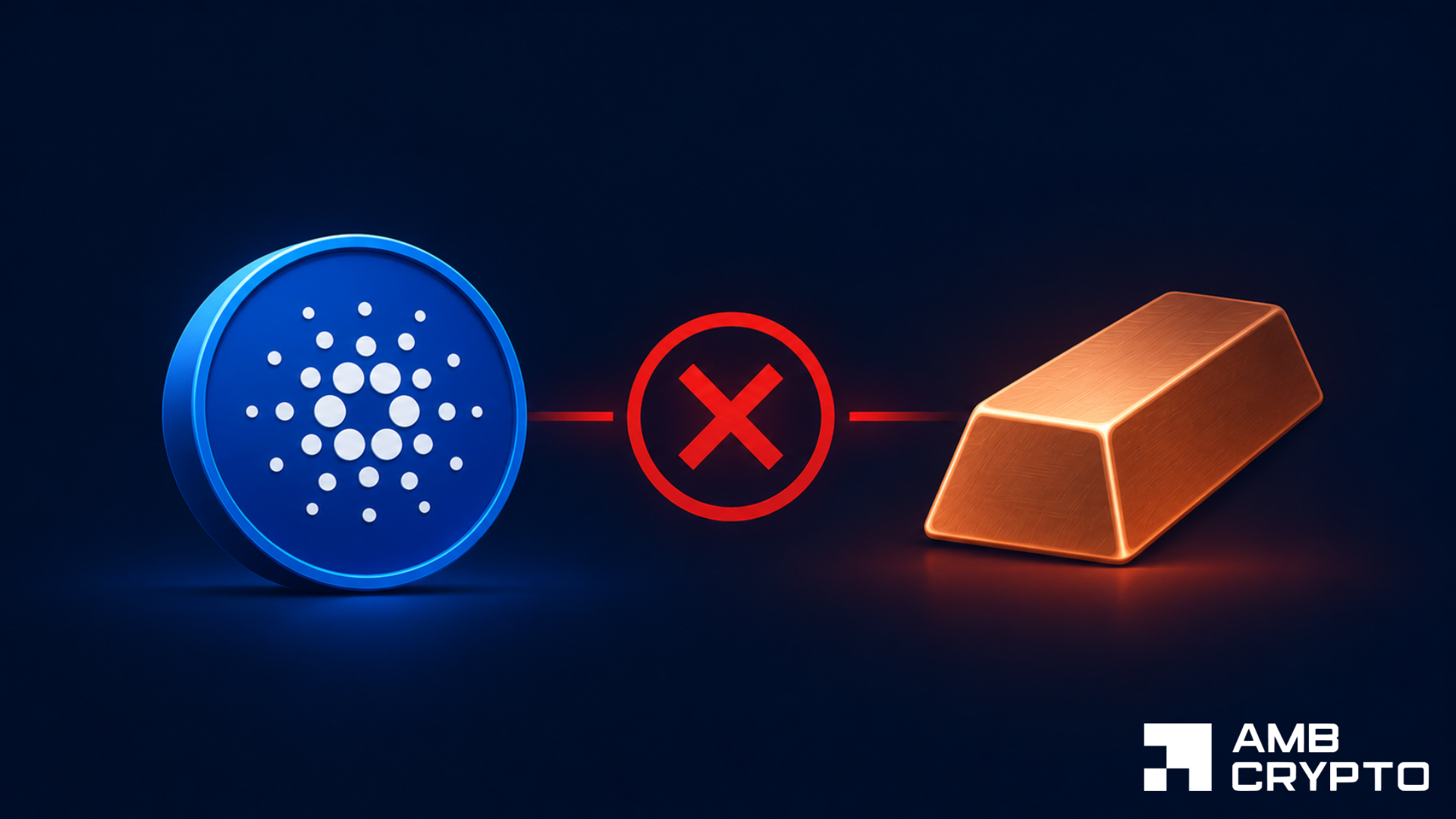
Cardano governance participants overwhelmingly rejected a proposal from Toto Finance to use the network's treasury to buy and tokenize copper, according to DRep Votes data. The vote drew attention to questions of adoption, accountability and the role of founding entities on the chain.
Toto Finance, a commodity-token issuer, had sought to create a Cardano Strategic Copper Reserve held in a U.S. warehouse and tokenized on Ethereum. Under the plan, the metal would have been sold after 18 to 24 months.
What the proposal asked for
The proposal called for a withdrawal of 22 million ADA from Cardano's treasury to fund the $5 million copper purchase and tokenization effort. It fell far short of the support required to proceed.
Why holders voted it down
Support for the proposal stood at 0.51%, against a required threshold of 67%, and none of the seven Constitutional Committee members approved it.
- Fee concerns: Representatives noted that only two-thirds of the fees would be used to actually buy the copper.
- Custody: There was no clear custody protection in place.
- Private commodity exposure: Some representatives opposed a venture into a private commodity.
- Spending cap: The copper treasury would have taken about half of the remaining budget, so the rejection was also aimed at protecting Cardano's spending cap.
A dissenting view
Some users argued that a copper supplier could back the tokens with metal it already owns. On that approach, Cardano could test demand for tokenized copper without putting the ADA treasury on the hook for storage fees and swings in the price of the metal.
Market context
The rejection comes as ADA tests the $0.14 demand zone after failing to defend the $0.19 level. At press time, the Chaikin Money Flow indicator showed capital flowing out of the token, with its reading declining from 0.09 to -0.11, while the Stochastic RSI was bouncing off oversold territory.
A reaction around $0.14 would determine the altcoin's next price move, though that may be heavily influenced by governance proposals, which could delay the tokenization of commodities.
What comes next
With the treasury proposal rejected, future real-world asset proposals face higher accountability requirements. For holders, the outcome was seen as a win in protecting the treasury.